11 © STULZ SpA . – all rights reserved EN/39B/06.2018
SAL
8. Exposure
control /
personal
protection
General protective measures Provide sufficient air exchange and/or exhaust in work rooms.
Exposure limits Pentafluoroethane/Difluoromethane/Tetrafluoroethane:
WME = 1000 ppm (ARKEMA) / TWA = 1000 ppm (WEEL - 2006)
Personal protective
equipment
Respiratory protection: in case of insufficient ventilation, wear suitable respiratory
equipment. Hand protection: leather gloves. Eye protection: safety glasses with side-
shields. Skin and body protection: protective clothing (cotton).
Hygiene measures Do not smoke. Avoid contact with the skin and the eyes. Avoid inhalation of vapours.
9. Stability and
reactivity
Conditions to avoid Keep away from heat and sources of ignition. Avoid contact with flames and red hot
metallic surfaces.
Hazardous decomposition
products.
At high temperature - Thermal decomposition giving toxic and corrosive products:
gaseous hydrogen fluoride (HF), carbon oxides.
Further information The product is stable under normal handling and storage conditions.
10. Toxicological
information
Acute toxicity
Inhalation
Experimental effects on animals: practically not harmful by inhalation. No mortality/4h/
rat: 500000 ppm. As with other volatile aliphatic halogenated compounds, through
vapour accumulation and/or inhalation of large quantities, the product can cause: loss
of consciousness and cardiac disorders aggravated by stress and lack of oxygen, risk of
mortality.
Local effects Contact with skin Ejection of liquefied gas: frostbite possible.
Repeated dose toxicity By inhalation: 3 months/rat. Studies of prolonged inhalation in animals have not shut sub
chronic toxic effects. NOAEL (No Observed Adverse Effect Level): 50000 mg/kg.
Special effects: Genotoxicity According to available experimental data. Not genotoxicity.
Carcinogenicity NORFURLANE: inhalation, rat, experimentation on animals has not shown clear
evidence of carcinogenic effect.
Toxicity to reproduction
Fertility
NORFURLANE: according to limited available data in animals - absence of toxic effects
on fertility, inhalation/mouse.
Foetal development According to available experimental data. Absence of toxic effects for foetal
development. Rabbit, rat/by inhalation.
11. Ecological
information
According to its composition not easily biodegradable; not bioaccumulable. ODP: 0
(R11 = 1) / GWP < 0,6 (R11 = 1)
12. Disposal
considerations
Disposal of product Recycle or incinerate at an approved waste disposal site. In accordance with local and
nationals regulations.
13. Transport
information
UN number 3340
Proper shipping name REFRIGERANT GAS R407C
Class 2 (ADR, ADNR, RID); 2.2 (IATA, IMDG)
Classification code 2A (ADR, ADNR, RID)
Hazard identification No 20 (ADR, ADNR, RID)
Label 2.2
EmS Number (IMDG) FC, SV
Marine Pollutant (IMDG) No
14. Regulatory
information
EC classification / labelling
Dangerous preparation D. 1999/45/EC amended by D.2001/60/CE
Further information The product does not need to be labelled in accordance with EC directives or respective
national laws.
2.5. Labels
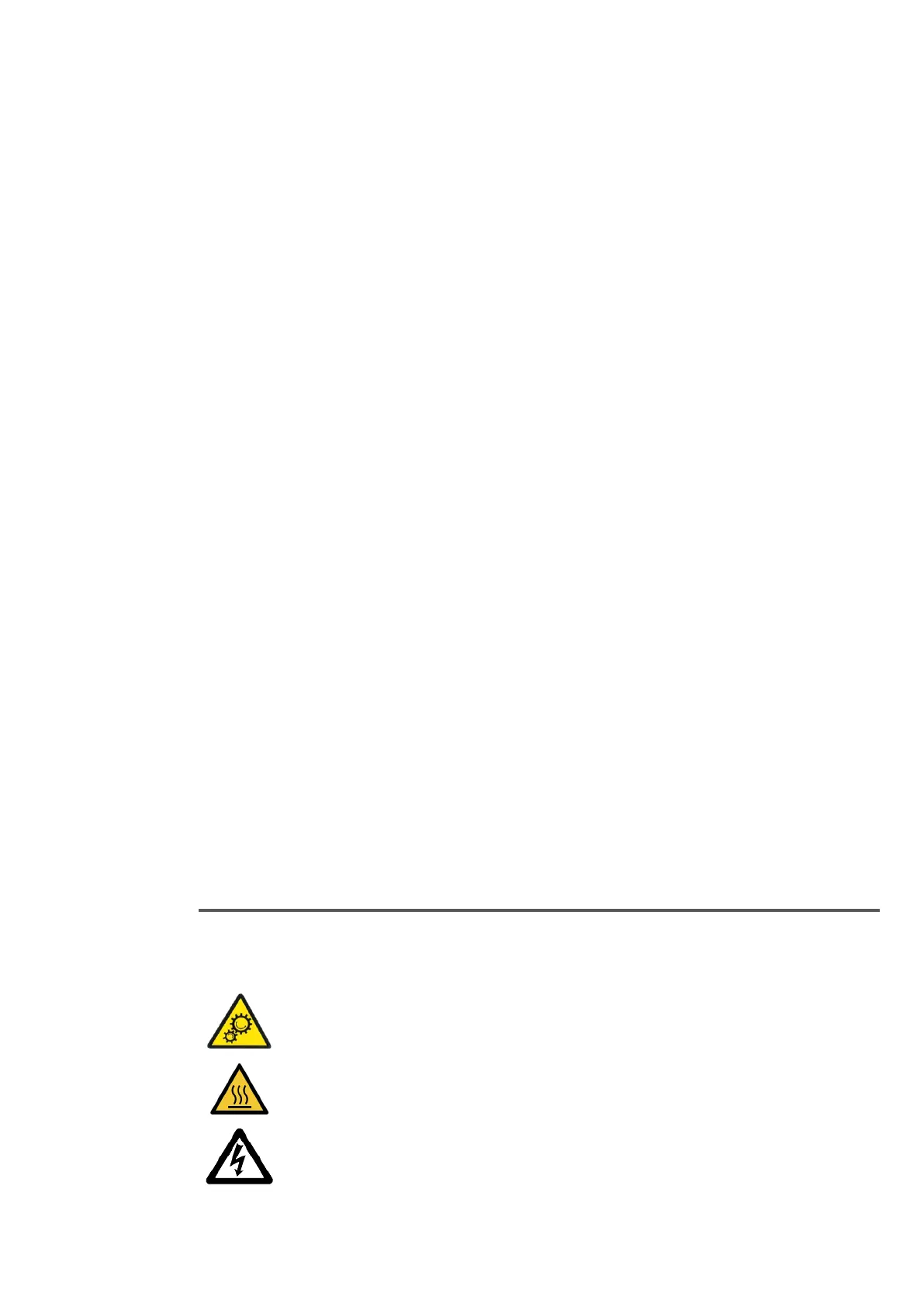
DANGER: MOVING COMPONENTS
DANGER: HOT COMPONENTS
DANGER: HIGH VOLTAGE



 To Next Page