18 SUPERMAX OWNER’S MANUAL
drums). However, even a slight offset angle of the
stock will provide for more effective stock removal.
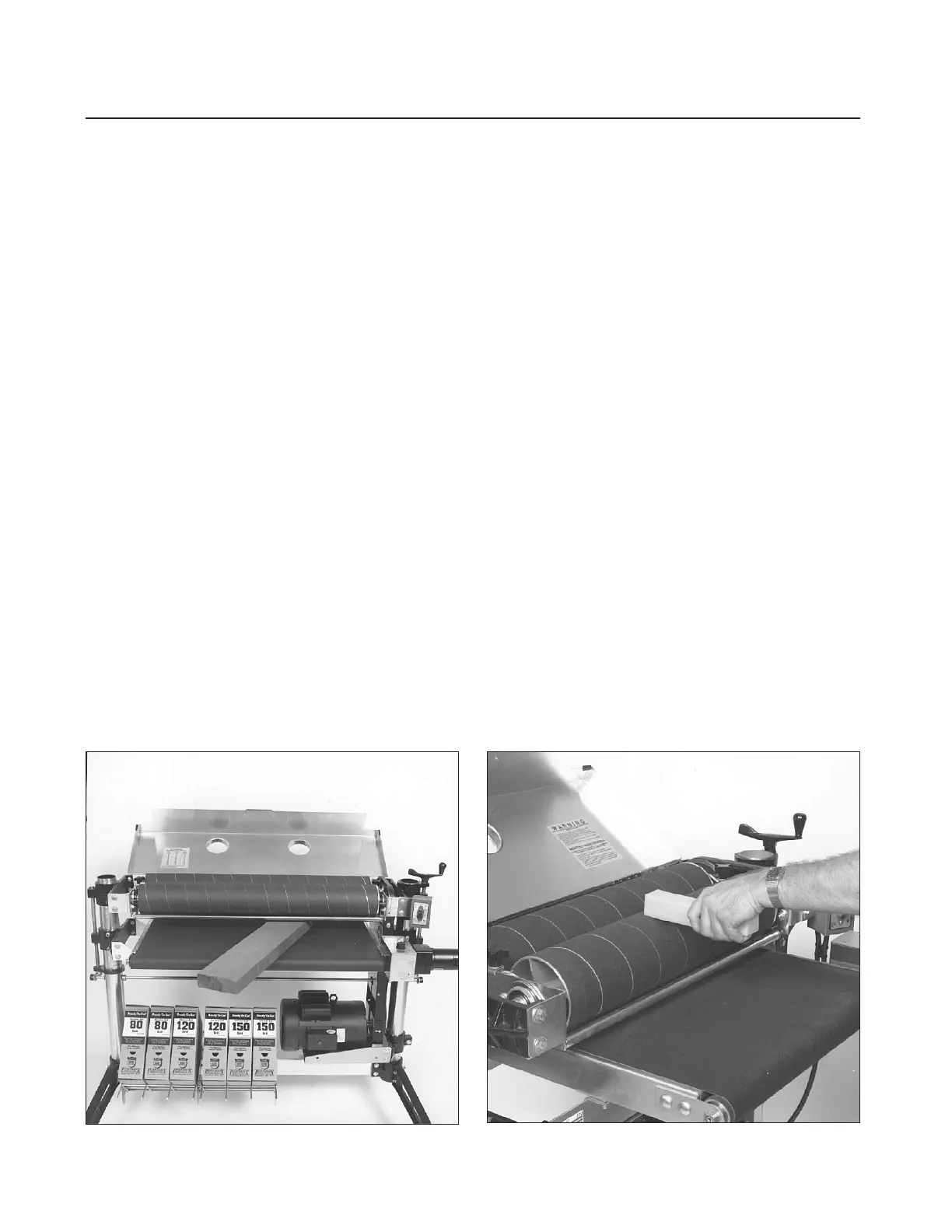
The optimum feeding angle for stock removal is
about 60° (see Fig. 17). Angling the workpiece for
stock removal provides other advantages, such as
less loading of certain areas of the drums due to
glue lines or mineral streaks in the stock, more
even wear of abrasive strips, potentially faster feed
rates, and lighter loads on the motor.
Note that to get the best final finish, however,
the stock should be fed through the machine so it
will be sanded in line with the grain of the wood
on the final one or two passes.
Cleaning Abrasive Strips. Regularly clean the
abrasive strips on the drums with commercially
available cleaning sticks, following the manufac-
turer’s directions. (See Fig. 18.) Cleaning sticks are
available from your dealer or from SuperMax
Tools. When cleaning, also brush the stick crumbs
from the drum while it is still rotating. Important:
Wear eye protection, tight-fitting clothes and keep
alert during this operation to avoid injury. Cloth-
backed abrasives can be cleaned by soaking in
paint thinner or mineral spirits for 20 minutes to
1 hour, then using a brush to remove any build-up
or burns. Dry the abrasive strips completely before
reuse. In some cases build-ups resulting from
burns can be removed with Plexiglas held on edge
over a rotating drum. Have dust collection turned
on when cleaning.
Stretching Abrasive Life. When sanding metal or
solid surface, MDF, or particle board, ceramic abra-
sive (Regalite™) will last longer than aluminum
oxide and also allow a more uniform finish.
Abrasive life can also be increased on SUPERMAX
machines by removing the abrasive strip from the
drum and reversing it. To do this, remove the strip
and use what was the trailing end as the starting
end on the left (outboard) side of the drum.
Reversing the strip will provide a fresh set of cut-
ting edges on the drum.
Keeping The Machine Clean. For best results,
make cleaning the machine a regular shop proce-
dure. Allowing excess build-up of dust and debris
can adversely affect performance through the load-
ing of the abrasives, slippage on the conveyor
table, and/or the accumulation of material inside
the drums which can throw off the center of bal-
ance. Leave the dust collector on when cleaning
dust from the drums. Also brush the conveyor belt
after cleaning operations. If not cleaned, the con-
veyor belt could allow stock to slip during sanding
operations.
Fig. 17. Offset stock feeding angle. Fig. 18. Cleaning abrasive strips.



 To Next Page