71
ELECTRICAL SYSTEMS
8.15 Generator Usage
Caution should be used before connecting a
generator to your motorhome.
WARNING: Never start or stop the
generator while electrical loads are connected
and switched on. Start the engine, let it
stabilise and then connect the electrical load.
When stopping the generator, disconnect the
electrical load and let engine stabilise before
switching off.
Whilst some generators use electronic inverter
technology, others use a more basic principle to
generate the 230V supply. Preference should
be to choose a generator which produces a
consistent sinusoidal wave form with accurate
voltage control.
The Reverse Polarity warning light on the PSU
may illuminate when using a Generator. This is
a normal side effect when using some types of
generator. Instead of connecting the neutral
conductor to earth, some generators centre-tap
the earth connection making both neutral and
live conductors 110V above earth. This 110V
difference causes the neon polarity indicator to
illuminate.
In most cases it is safe to use a generator, but
please consult the generator handbook for
further information.
8.16 Battery Charger
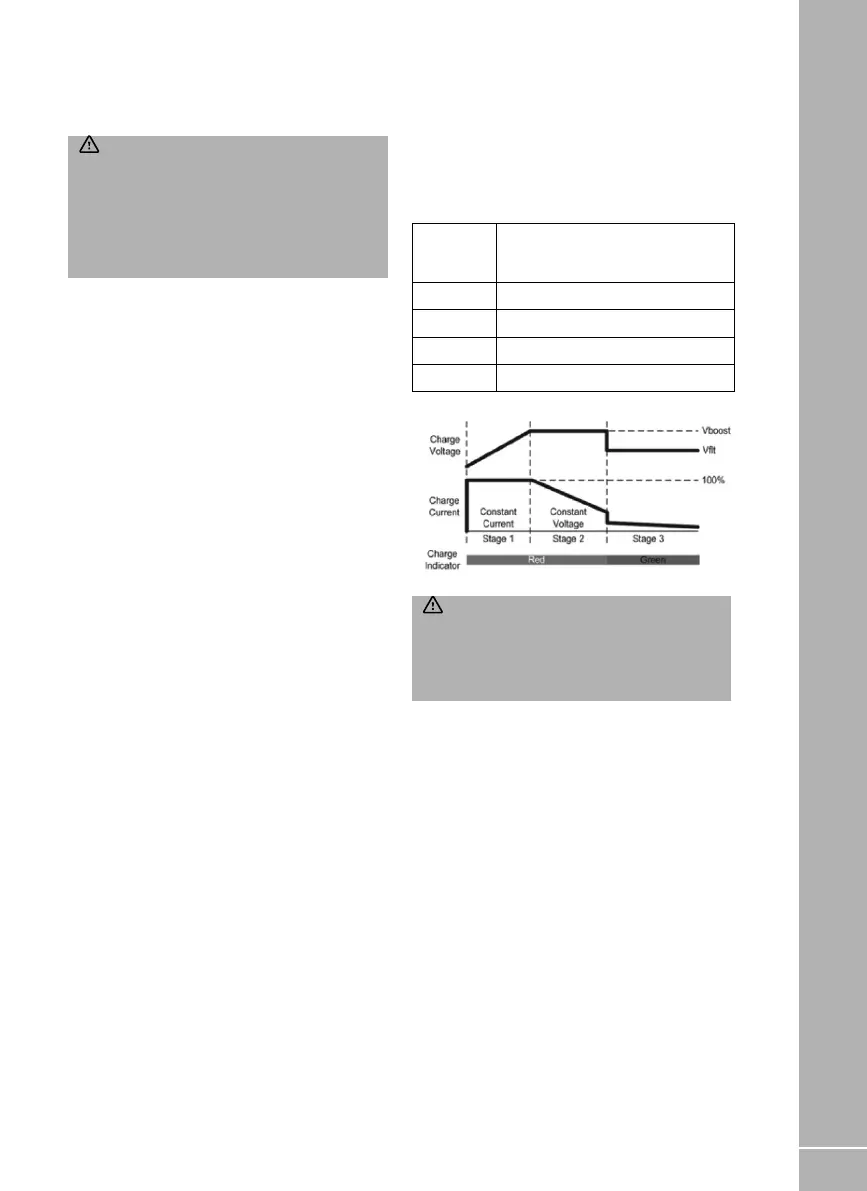
The system incorporates an intelligent three-
stage battery charger.
During stage 1 the battery voltage is increased
gradually while the current is limited to start the
charging process and protect the battery. At
stage 2 the voltage rises to 14.4V to deliver the
bulk charge to the battery. When the battery
is charged, the voltage is decreased at stage
3 to 13.6V to deliver a float charge to maintain
the battery in the fully charged state. The
charger can be left switched on continuously as
required.
The battery charger / power converter also
provides power to the leisure equipment when
the mains supply is connected. This module
supplies DC to the leisure equipment up to a
maximum of 25 Amps (300 Watts), therefore
the available power is distributed between the
leisure load and the battery, with the leisure load
taking priority as per the following example:
Leisure
Load
Available power for battery
charging
5A 20A
10A 15A
15A 10A
20A 5A
WARNING: Under heavy loads the Battery
Charger case may become hot. ALWAYS
ensure the ventilation slots have a clear flow of
air. Do not place combustible materials against
/ adjacent to the charger.



 To Next Page