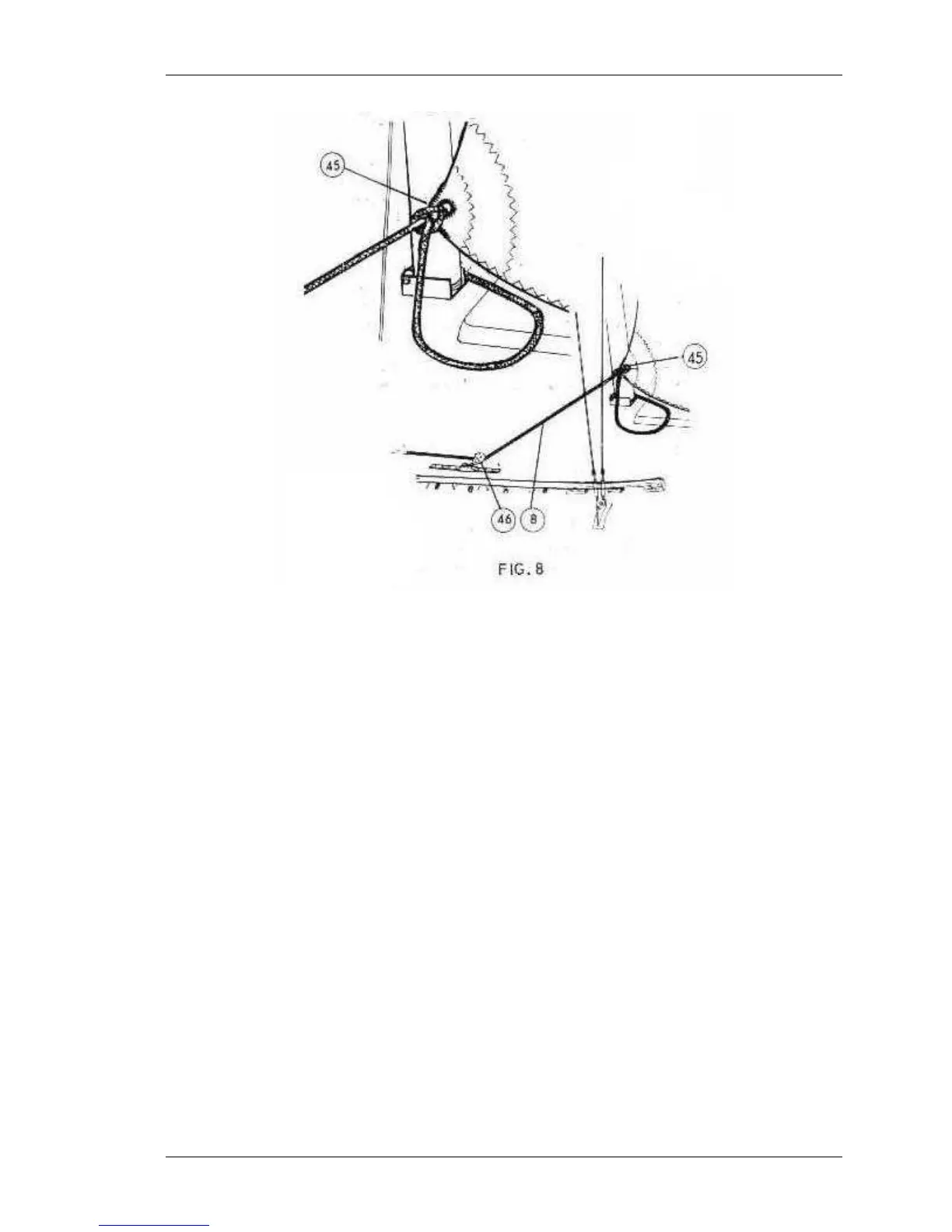
The tension in the luff of the jib (or genoa) should be considerably more than that
given to the luff of the mainsail; that is why a winch is supplied as standard
equipment. Nevertheless tension should be appropriate to the wind strength -
very tight for strong winds and less tight for light airs.
Guidelines are:
a. The luff of the jib should never be allowed to fall off to leeward .
b. Scallops should never appear in the luff of the jib .
c. In lighter winds, the tension should be such that the small wrinkles in
the sail luff disappear, but not sufficient to form creases running
parallel to the luff.
The position of the jib sheet blocks (46) affects the tension in the foot and leech
of the jib. Generally speaking, the tension in each should be approximately
equal. Moving the blocks forward tightens the leech and eases the foot. Moving
them aft has the reverse effect.
GENOA
The genoa sheets (P/S) (89) should be rove as shown, namely outside the
shrouds, through the genoa sheet blocks (90) and the cheek blocks (91),


 To Next Page