Chapter 5 Pressure/Air Handler Flow Mode
If Using a Duct Blaster Fan (Pressure Matching Method)
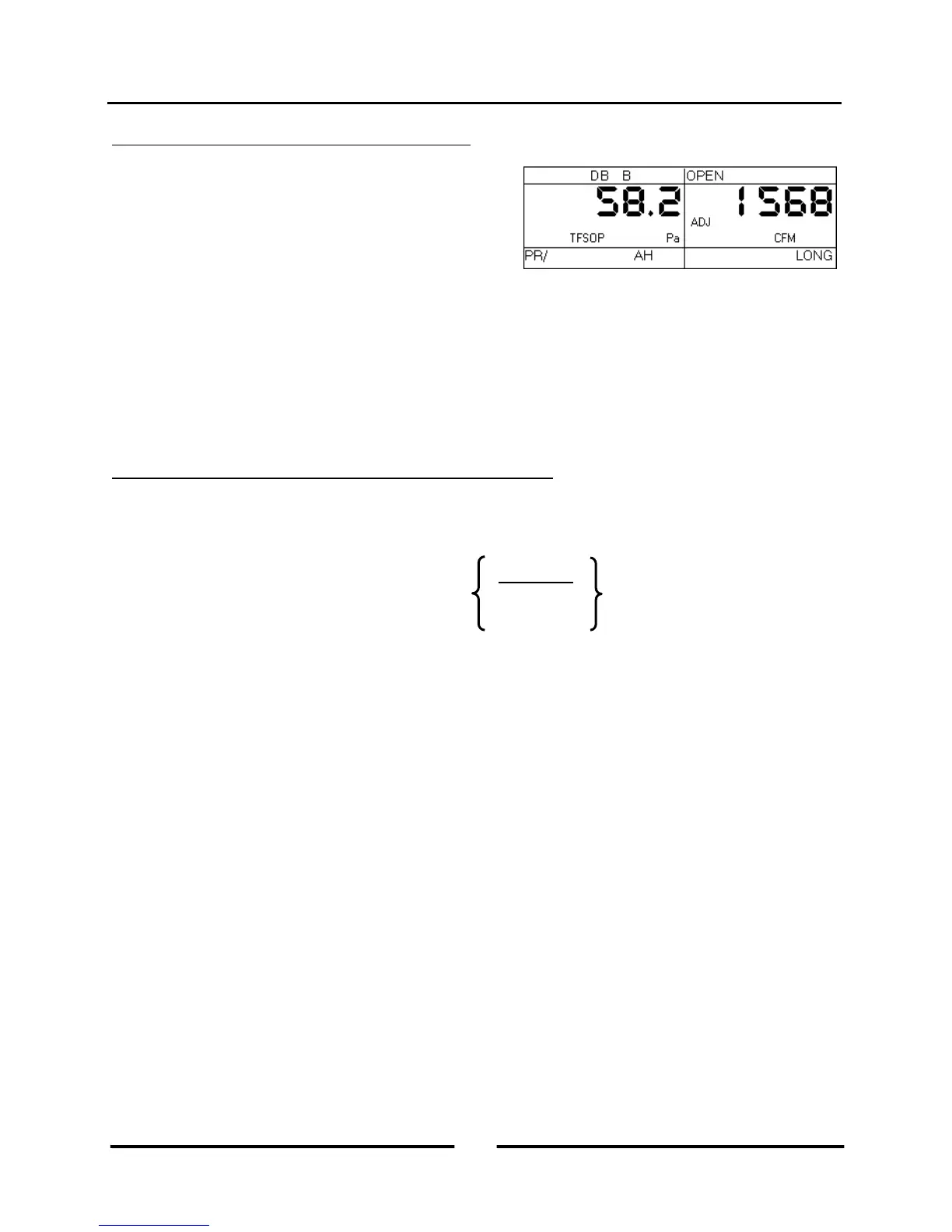
- Turn on the air handler. Now turn on and adjust the Duct
Blaster fan (along with the air handler fan) so that the
TFSOP reading on Channel A is close (within 5 Pa) to the
NSOP reading entered into the gauge in Step 1. There is
no need to exactly match the NSOP and TFSOP pressures,
because the gauge is making an adjustment to the measured
Duct Blaster fan flow using a flow resistance correction factor calculated from the NSOP and TFSOP pressure
readings. If the readings are fluctuating, change the time averaging setting to 5 second, 10 second, or long-term
average using the TIME AVG button.
Note: If you are unable to get the TFSOP to within 5 Pascals of the NSOP reading, the gauge will continue to
display an adjusted air handler flow rate using the calculated flow resistance correction factor. The greater the
difference between the NSOP and TFSOP readings, the higher the probability that the flow resistance
correction factor will introduce errors into the flow estimate.
5.8 Flow Resistance Correction Factors Used in the DG-700
The following equation is used to calculate the flow resistance correction factor used by the DG-700 in the PR/ AH
mode:
Correction Factor
22
Operating Instructions
for the DG700



 To Next Page