EasyManua.ls Logo

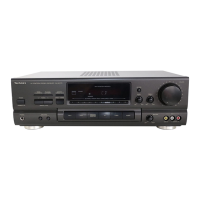
Technics SA-GX130D - User Manual

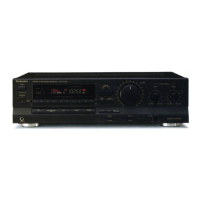
Technics SA-GX130D
28 pages
Print Icon
To Next Page IconTo Next Page
Loading...
Technics
STEREO
SYNTHESIZER
RECEIVER
SA-GX130D
Operating
Instructions
Question and Answer IconNeed help?

Do you have a question about the Technics SA-GX130D and is the answer not in the manual?

Summary

Included Accessories

Safety Precautions

General Safety Guidelines

Essential safety instructions for operating the unit to prevent hazards and ensure safe usage.

Connections and Setup

Antenna Connections

Details on connecting FM and AM antennas to the receiver unit for optimal reception.

Phono and CD Player Connections

Instructions for connecting turntables and CD players to the designated input terminals.

VCR 1 Connection

Guidance on connecting a VCR to the 'VCR 1' input terminals for audio and video signals.

Tape;VCR 2 and Remote Control Output

Connecting tape decks or second VCRs, and utilizing the remote control output terminal.

Speaker and AC Power Connections

Connecting speakers, setting the correct AC voltage for your region, and connecting power.

FM Antenna Setup

Detailed steps for connecting FM indoor and outdoor antennas for optimal reception.

AM Antenna Setup

Instructions for connecting AM loop and outdoor antennas, including mounting guidelines.

Speaker System and Power Voltage Setup

Connecting speakers, setting the correct AC voltage for your region, and connecting power.

Remote Control Operation

Remote Control Battery Installation

Guide for correctly inserting batteries into the remote control transmitter and notes on battery life.

Remote Control Usage Guidelines

Tips for effective remote control operation, including range, orientation, and environmental factors.

Front Panel Controls

Tuner Section Controls Overview

Details on front panel controls and indicators for tuning, memory, and band selection.

Amplifier Section Controls Overview

Description of front panel controls for volume, tone, input, and loudness.

Speaker and Input Selection Controls

Controls for speaker system selection, input source, and muting functions.

Tone, Loudness, and Balance Controls

Adjustments for bass, treble, loudness, and left/right sound balance.

Basic Operation and Adjustments

Standard Operating Procedure

Step-by-step guide on how to operate the receiver for listening to audio sources.

Audio Adjustments and Headphone Use

How to adjust tone, loudness, balance, and use headphones for optimal listening experience.

Radio Broadcast and Memory Functions

Manual Tuning and FM Noise Reduction

Steps for manual radio tuning and methods to reduce excessive noise in FM reception.

Automatic Memory Presetting

Instructions for automatically presetting radio stations into memory channels.

Manual Memory Presetting and Channel Designation

Procedure for manually presetting stations and assigning them to specific memory channels.

Memory Scan and Backup

Using memory scan to find stations and understanding the back-up memory function for presets.

Recording Audio

Tape Recording Procedures

Steps for recording audio onto a tape deck connected to the TAPE/VCR 2 terminals.

VCR 1 Audio Recording

Guidelines for recording audio from the receiver onto a VCR connected to the VCR 1 terminals.

Tape-to-Tape Audio Recording

How to record audio from a tape deck to a VCR, or vice versa, using the unit's connections.

Remote Control Operation

Remote Control Basic Use

Initial setup and basic operation of the remote control for receiver functions like input selection and volume.

Remote Control for CD Player

Using the remote control to operate connected Technics CD players and changers.

Remote Control for Tape Deck

Using the remote control to operate connected Technics tape decks for playback and recording.

Remote Control for TV and VCR

Operating connected TVs and VCRs using the remote control, including mode switching.

Troubleshooting Guide

FM Broadcast Troubleshooting

Solutions for common FM reception issues like noise, distortion, and indicator problems.

AM Broadcast Troubleshooting

Resolving issues with AM broadcasts, such as unusual sounds and hums.

General Operation Troubleshooting

Addressing common problems like no power, no sound, distorted audio, and speaker issues.

Remote Control Troubleshooting

Fixing issues where the remote control transmitter is not functioning correctly, including battery checks.

Maintenance and Cleaning

Cleaning the Unit

Instructions on how to clean the unit safely using appropriate materials.

Technical Specifications

Amplifier and Tuner Specifications

Detailed technical data for the amplifier and FM/AM tuner sections, including power output and sensitivity.

General Unit Specifications

General specifications covering power consumption, dimensions, weight, and power supply.

Overview

The Technics SA-GX130D is a Stereo Synthesizer Receiver designed for home audio systems, offering a range of functions for listening to various audio sources and recording.

Function Description

The SA-GX130D serves as the central hub for an audio system, integrating a stereo synthesizer tuner with an amplifier. It allows users to:

  • Listen to radio broadcasts: It supports FM, MW (Medium Wave), and LW (Long Wave) bands, including AM stereo broadcasts (reproduced in AM mono).
  • Connect various audio sources: It features inputs for a turntable (PHONO), compact disc player (CD), VCRs (VCR 1, TAPE/VCR 2), and a tape deck (TAPE/VCR 2).
  • Record audio: Users can record from any selected source to a connected tape deck or VCR.
  • Amplify sound: It drives speaker systems (A and/or B) and provides a headphone output.
  • Remote control operation: The unit can be operated using a dedicated remote control transmitter, which can also control other Technics components like CD players/changers, tape decks, TVs, and VCRs.

Important Technical Specifications

Amplifier Section:

  • Power Output (DIN 1 kHz, T.H.D. 1%): 2 x 50 W (8 Ω)
  • Total Harmonic Distortion (rated power at 40 Hz-20 kHz): 0.5% (8 Ω)
  • Total Harmonic Distortion (half power at 1 kHz): 0.03% (8 Ω)
  • Intermodulation Distortion (rated power at 60 Hz: 7 kHz = 4:1, SMPTE): 0.5% (8 Ω)
  • Power Bandwidth (both channels driven, -3 dB): 10 Hz-40 kHz (8 Ω)
  • Damping Factor: 40 (8 Ω)
  • Input Sensitivity and Impedance:
    • PHONO: 3 mV/47 kΩ
    • CD, VCR 1, TAPE/VCR 2: 200 mV/22 kΩ
  • PHONO Maximum Input Voltage (1 kHz, RMS): 150 mV
  • S/N at Rated Power (8 Ω):
    • PHONO: 70 dB (IHF, A: 80 dB)
    • CD, VCR 1, TAPE/VCR 2: 80 dB (IHF, A: 90 dB)
  • Frequency Response:
    • PHONO: RIAA standard curve ±0.8 dB (30 Hz-15 kHz)
    • CD, VCR 1, TAPE/VCR 2: 10 Hz-40 kHz (±3 dB)
  • Tone Controls:
    • Bass: 50 Hz, +10 dB to -10 dB
    • Treble: 20 kHz, +10 dB to -10 dB
  • Loudness Control (volume at -30 dB): 50 Hz, +9 dB
  • Output Voltage (VCR 1 OUT, TAPE/VCR 2 REC (OUT)): 200 mV
  • Channel Balance (250 Hz-6.3 kHz): ±1 dB
  • Channel Separation: 55 dB
  • Headphones Output Level and Impedance: 430 mV/330 Ω
  • Load Impedance (A and/or B): 8 Ω-16 Ω

FM Tuner Section:

  • Frequency Range: 87.50-108.00 MHz
  • Sensitivity (S/N 30 dB): 1.5 μV (75 Ω)
  • Sensitivity (S/N 26 dB): 1.3 μV (75 Ω)
  • Sensitivity (S/N 20 dB): 1.2 μV (75 Ω)
  • IHF Usable Sensitivity: 1.5 μV (IHF'58, 75 Ω)
  • IHF 46 dB Stereo Quieting Sensitivity: 22 μV/75 Ω
  • Total Harmonic Distortion (MONO): 0.2%
  • Total Harmonic Distortion (STEREO): 0.3%
  • S/N (MONO): 60 dB (75 dB, IHF)
  • S/N (STEREO): 58 dB (71 dB, IHF)
  • Frequency Response: 20 Hz-15 kHz, +1 dB to -2 dB
  • Alternate Channel Selectivity (±400 kHz): 65 dB
  • Capture Ratio: 1.0 dB
  • Image Rejection at 98 MHz: 40 dB
  • IF Rejection at 98 MHz: 70 dB
  • Spurious Response Rejection at 98 MHz: 70 dB
  • AM Suppression: 50 dB
  • Stereo Separation (1 kHz): 40 dB
  • Carrier Leak (19 kHz): -55 dB (-60 dB, IHF)
  • Carrier Leak (38 kHz): -50 dB (-55 dB, IHF)
  • Channel Balance (250 Hz-6.3 kHz): ±1.5 dB
  • Limiting Point: 1.2 μV
  • Bandwidth (IF amplifier): 180 kHz
  • Bandwidth (FM demodulator): 1000 kHz
  • Antenna Terminals: 75 Ω (unbalanced)

AM Tuner Section:

  • Frequency Range (MW): 531 kHz-1602 kHz (9-kHz steps) / 530 kHz-1600 kHz (10-kHz steps)
  • Frequency Range (LW): 153 kHz-279 kHz
  • Sensitivity (MW): 20 μV, 330 μV/m
  • Sensitivity (LW): 45 μV
  • Selectivity (MW at 999 kHz): 55 dB
  • Selectivity (LW at 252 kHz): 55 dB
  • Image Rejection (MW at 999 kHz): 40 dB
  • Image Rejection (LW at 252 kHz): 40 dB
  • IF Rejection (MW at 999 kHz): 55 dB
  • IF Rejection (LW at 252 kHz): 55 dB

General:

  • Power Consumption (For areas except Australia and N.Z.): 170 W
  • Power Consumption (For Australia and N.Z.): 130 W
  • Power Supply (For areas except Australia and N.Z.): AC 50 Hz/60 Hz, 110-127 V/220-240 V
  • Power Supply (For Australia and N.Z.): AC 50 Hz/60 Hz, 230-240 V
  • Dimensions (W x H x D): 430 x 125 x 305 mm
  • Weight: 6.5 kg

Usage Features

  • User-friendly connections: Clear instructions and diagrams are provided for connecting antennas, turntables, CD players, VCRs, tape decks, and speakers.
  • Voltage Selector: For regions outside Australia and New Zealand, a voltage selector (VOLT ADJ) allows users to set the appropriate AC voltage for their area.
  • Cooling Fan: The unit includes a cooling fan that operates at high output power levels to prevent overheating.
  • Remote Control Transmitter: A comprehensive remote control (RAK-SA011XH) is included, capable of operating the receiver and other compatible Technics components. It uses two UM-4, "AAA" (R03; 1.5 V) batteries with an approximate life of one year.
  • Front Panel Controls: The front panel features intuitive controls for power, speaker selection, muting, loudness, volume, tone (bass, treble), headphones, input selection, and tuner functions (band selectors, tuning buttons, memory, memory scan, FM mode).
  • 30-Channel Random Preset Tuning: Up to 30 FM/MW/LW radio stations can be programmed into memory for quick access using preset-tuning buttons. Both automatic and manual presetting methods are available.
  • Memory Scan: This feature allows users to scan through preset broadcast stations, playing each for about 3 seconds to help locate a desired station.
  • Back-up Memory: The unit retains preset memory and the most recently tuned station even when power is switched off or disconnected, for approximately one month.
  • Loudness Control: An "ON" position for the loudness button compensates for the auditory perception of sound in the low frequency range at low volumes, enhancing musical impact.
  • Tone Controls: Separate bass and treble controls allow users to adjust the low and high-frequency sound ranges to their preference.
  • Balance Control: A balance control is available to adjust the left/right sound balance.
  • Headphone Jack: A 6.3 mm phone plug stereo type jack is provided for private listening.

Maintenance Features

  • Cleaning: The unit should be cleaned with a soft, dry cloth. For very dirty surfaces, a soft cloth dipped in a weak soap-and-water solution and wrung well can be used, followed by wiping with a soft, dry cloth.
  • Chemical Avoidance: Users are explicitly warned against using alcohol, paint thinner, benzine, or chemically treated cloths, as these can damage the unit's finish.
  • Safety Precautions: The manual emphasizes several safety guidelines:
    • Use a standard AC wall outlet and avoid high-voltage sources or DC power.
    • Grasp the plug when disconnecting the power supply cord, and avoid wet hands or placing heavy items on the cord.
    • Ensure proper ventilation by placing the unit at least 10 cm (4") away from wall surfaces and keeping ventilation holes unobstructed.
    • Keep children from inserting objects into the unit.
    • Exercise extreme caution if water is spilled on the unit, immediately disconnecting power and consulting a dealer.
    • Avoid spray-type insecticides, which can damage the cabinet or be ignited.
    • Avoid direct sunlight, high temperatures, excessive vibration, or humidity, as these conditions can shorten the unit's service life.
    • Place the unit on a flat, level surface to prevent malfunctions.
    • Never use alcohol or paint thinner for cleaning.
    • Disconnect the power supply cord if the unit will not be used for a long time to prevent operational issues.
    • Do not attempt to repair or reconstruct the unit yourself; contact an authorized service center if trouble occurs.
  • Troubleshooting Guide: A detailed troubleshooting guide is provided to help users identify and resolve common issues related to power, sound, radio reception (FM and AM), and remote control functionality. This guide suggests probable causes and remedies before seeking professional service.

Technics SA-GX130D Specifications

General IconGeneral
BrandTechnics
ModelSA-GX130D
CategoryStereo Receiver
LanguageEnglish

Related product manuals