check for fresh hail from above, generally good results can be obtained.
Note
+It takes an experienced eye to identify “hooks” and “fingers” and
other radar echo characteristics which can indicate hail or torna-
does. However, the pilot can be sure that any echo with very
ragged edges or rapid changes in shape or intensity will contain
severe turbulence.
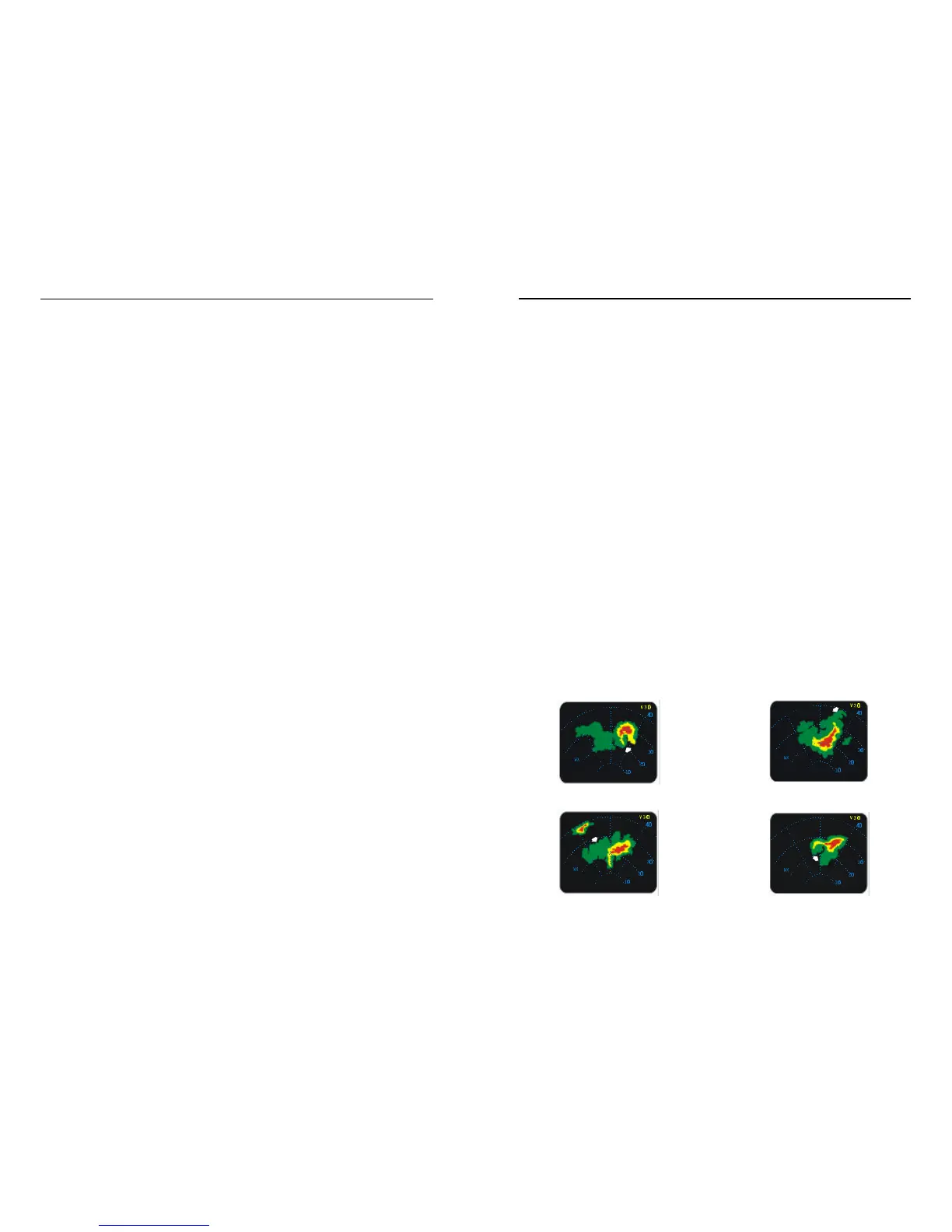
Figure 6.5.3-1.Finger
Figure 6.5.3-2.Hook
Figure 6.5.3.3.Scalloped
Edge
Figure 6.5.3-4.U-Shaped
6.5.2Tornadoes
It is possible that conclusive methods of detecting tornadoes with airborne
radar may eventually be developed. However, evidence collected to date
indicates tornadoes may be detected if the following echoes are observed:
1. A hook-shaped pendant which may be 5 or more miles long and in the
general shape of the numeral 6 strongly suggests the presence of a
major tornado, especially if the pendant is a bright one and if it projects
from the southwest quadrant (northeast quadrant in the southern hemi-
sphere) of a major thunderstorm moving eastward. The pendant may be
lost in ground clutter when viewed on the indicator and in some cases
might not be much more than a blunt projection or scalloped edge of the
parent thunderstorm echo.
2. A crescent-shaped indentation on the side of a major thunderstorm echo
3 to 7 miles long is another possible identifier of an active or potential
tornado in the vicinity.
3. The best procedure is to make wider than usual detours around sharp-
edged thunderstorms and especially those which show projections or
crescent-shaped indentations.



 To Next Page