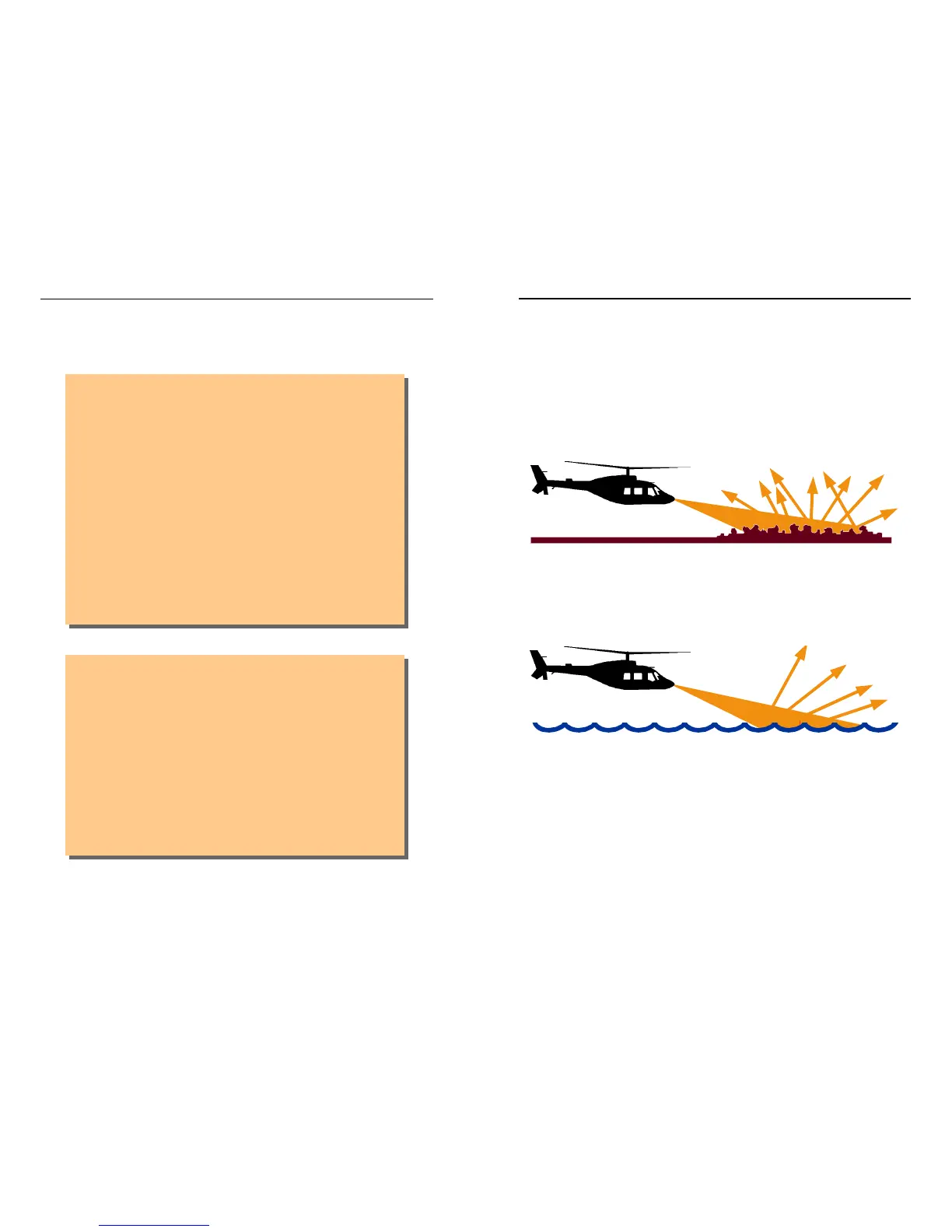
target whose intensity will vary with the degree to choppiness.
Above all, remember: Never regard any thunderstorm as LIGHT, even when
radar observers report the echoes are of light intensity. Avoiding thunder-
storms is the best policy.
DON’Tattempt to preflight plan a course between closely
space echoes.
DON’Tland or take off in the face of a thunderstorm in the
projected flight path. A sudden wind shift or low level turbu-
lence could cause loss of control.
DON’Tattempt to fly under a thunderstorm even if you can see
through to the other side. Turbulence under the storm could be
severe.
DON’Ttry to navigate between thunderstorms that cover 6/10
or more of the display. Fly around the storm system by a wide
margin.
DON’Tfly without airborne radar into a cloud mass containing
scattered embedded thunderstorms. Scattered thunderstorms
not embedded usually can be circumnavigated.
DOavoid by at least 20 miles any thunderstorm identified as
severe or giving an intense radar echo. This is especially true
under the anvil of a large cumulonimbus.
DOclear the top of a known or suspected severe thunderstorm
by at least 10,000 feet altitude. This may exceed the altitude
capability of the aircraft.
DOremember that vivid and frequent lightning indicates a
severe thunderstorm.
DOregard as severe any thunderstorm with tops 35,000 feet
or higher whether the top is visually sighted or determined by
radar.



 To Next Page