Rev. 00 / 10.02.14
1.1.7 Getting the Most
Out of Your Vehicle
1 Maintenance
The state of the art engine technol-
ogy means only 1-2 maintenance
checks are required each year.
Please review your warranty and
service manual for detail.
Optimum lubrication and tuning
result in a 3 % to 5 % improvement
in fuel economy.
2 Engine
Optimum fuel economy is reached
at max. tractive force range of your
engine.
3 Axle Alignment
Incorrect axle alignment can impact
consumption by up to 3 %.
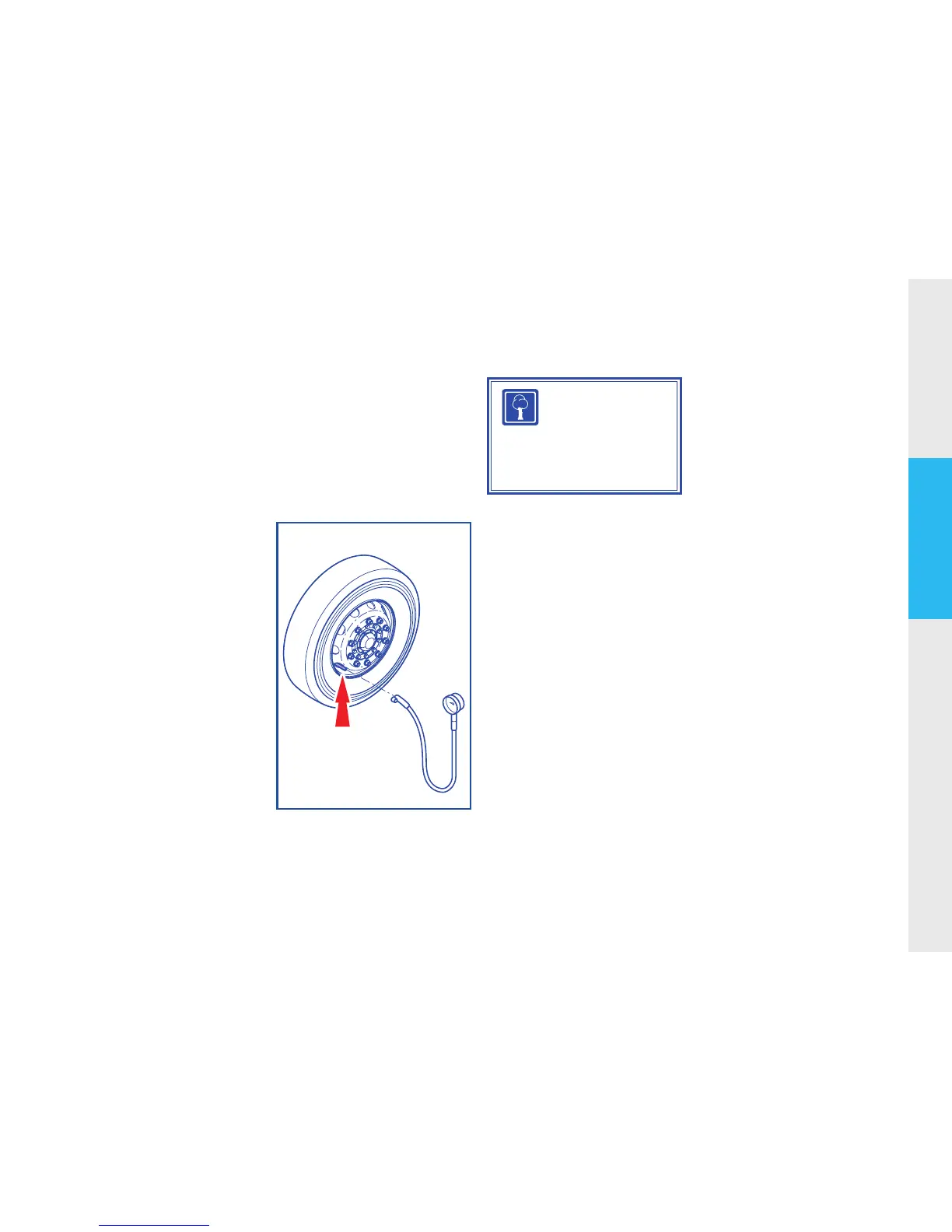
4 Tire Pressure
It is well known that a low tire pres-
sure increases fuel consumption by
up to 5 %. If the tire pressure is 20 %
below the correct pressure, the roll-
ing resistance will be about 10 %
higher and the fuel consumption
will be about 5 % higher.
Check the pressure before driving
the vehicle when tires are cold. Re-
member as the ambient tempera-
ture changes raise/fall 10ºC / 50ºF;
tire pressure changes increase/ de-
crease 0.2 bars / 2.9 psi.
5 Take a Break from Idle Time
Limit the warm up time; Excessive
idling wastes fuel, adds contami-
nants to the oil, and adds carbons
to the combustion chamber.
Idling engines use about 0.39 gal
/1.5 liters of diesel per hour. Engine
idling shutdown pays off in prevent-
ing unnecessary fuel consumption
of stationary vehicles.
6 Gearbox (Manual Operation)
Practice progressive shifting. You
do not have to, but overtaking the
shifting is always possible:
Change gears earlier (even lower
engine speeds) Shift up as soon as
you have enough rpm to grab the
next higher gear.
Hold the gear (driver’s assessment)
No need to increase revs!
7 Driving Steadily
Continuous speed adjustments cost
fuel. Adaptive cruise control is an
effective aid to keep pace with the
other trafc at minimum fuel pen-
alty.
Use the cruise and slow down
•
Electronic cruise control saves
fuel, makes driving easier.
•
Think twice about the cruise
speed you choose.
•
Every mile per hour over 55 mph
adds almost 0.66 gal/ 2.5 liters
more consumption per 62.1
miles.
•
Remember, torque moves the
load
•
Torque moves the load; horse-
power determines how fast it
moves.
•
Staying in the preferred torque
range keeps the engine operat-
ing more efciently and puts
more prot in your pocket.
SAVE THE
ENVIRONMENT
Excessive idling will in-
crease the amount of particles
released to the environment.
Avoid exessive idling.
Cutting idle time from 50 % to 25 %
can improve fuel economy by up
to 4%.


 To Next Page