TENNEY ENVIRONMENTAL
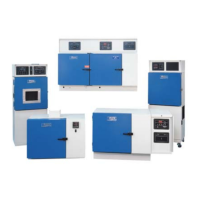
Tenney Junior Test Chambers: Models TJR and TUJR, W942, or WF4
Page 24
liquid form by heat exchange with circulating high stage refrigerant. The liquid refrigerant flows through a
drier assembly, and is metered through a capillary tube to the evaporator cooling coil in the chamber
conditioning section. Warm chamber air circulates through the cooling coil, and heat exchange occurs as the
liquid refrigerant boils, vaporizes, and absorbs heat. The vaporized refrigerant returns to the compressor
through the suction line. The cycle is repeated.
High Stage Description
The high stage system includes the compressor, an air cooled condenser, and a suction line accumulator to
guard against liquid refrigerant return to the compressor.
Refrigerant Flow:
Refrigerant flow in the high stage is from the compressor as a hot compressed gas, to the air cooled
condenser where the gas cools and condenses to liquid form. It then flows to the cascade condenser, being
metered by a capillary tube. In the cascade condenser, high stage refrigerant absorbs heat from the
circulating low stage refrigerant. As it absorbs heat, the high stage refrigerant boils and vaporizes. It then
returns to the compressor through the suction line accumulator SLA. The cycle is repeated.
Safety Devices
Low Pressure Cut-In Switch PS2:
The low stage compressor will start after a slight delay from the Low Pressure Cut-In Switch PS2, which
monitors the suction pressure in the high stage compressor. This switch will close when the suction pressure
reaches 20 PSIG. This delay prevents both compressors from hitting the power line at the same instant.
High Pressure Cut-In Switch PS1:
An Artificial Loading solenoid valve SV will be energized by the High Pressure Cut-in Switch PS1, when low
stage compressor head pressures reaches 280 PSI. This action dumps refrigerant into the expansion tank
for storage until the pressure drops to 240 PSI.
Compressor Motor Overloads:
A motor overload protective device is installed in the windings of each compressor, which will open if the
motor windings exceed a preset temperature. Probable causes are insufficient flow across the motor due to a
refrigerant loss, or a failure of the liquid injection valve provided for suction gas cooling. The motor overload
will automatically reset and restart the compressor after the motor has cooled.
NOTE: Please reference the section entitled “Servicing Cascade Refrigeration Systems” for a more detailed
description.



 To Next Page