TENNEY ENVIRONMENTAL
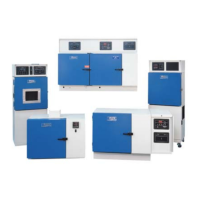
Tenney Junior Test Chambers: Models TJR and TUJR, W942, or WF4
Page 41
Cascade Condenser:
The cascade condenser is the high stage system’s evaporator and low stage system’s condenser. It can be
either tube-in-tube with the low-stage refrigerant in the outside tube, or tube-in-shell with the low-stage
refrigerant in the shell.
De - Superheater (only on 1HP units):
The de-superheater consists of coils as part of the high stage condenser with low stage discharge gas
running through them. Its purpose is to remove some heat from the low stage discharge gas and thereby
lighten the load on the high-stage system.
Evaporator Coil:
The evaporator coil is part of the low stage system in which the liquid refrigerant boils or evaporates,
absorbing heat as it changes into a vapor. Refrigerant flow to the evaporator is metered by a capillary tube
type valve.
Capillary Tube:
A capillary tube is a length of tubing of small diameter with the internal diameter held to extremely close
tolerances. It is used as a fixed orifice to meter the proper feed of liquid refrigerant.
Thermostat:
A thermostat TS is mounted on the suction return line near the low stage compressor to monitor the
temperature of the return gas flow. When a predetermined high temperature is reached, the thermostat will
energize the Artificial Loading solenoid 14SOL. The setting is normally 70 degrees Fahrenheit.
Load Limit Switch:
A high pressure cut-in sensor monitors the pressure inside the low stage compressor and will activate the
Load Limit Switch 4PS when the low stage discharge pressure reaches 280 PSIG. This will energize the
Artificial Loading solenoid 14SOL. 4PS will be deactivated when the pressure falls to 240 PSIG.
Artificial Loading:
In response to the Thermostat switch TS or the Load Limit switch 4PS, the Artificial Loading solenoid will
inject liquid refrigerant into the suction side of the low stage. It will first enter the expansion tank where the
added volume permits the charging of additional refrigerant without increasing the standby or charging
pressure beyond workable limits. Refrigerant gas is then sucked out of the expansion tank and metered
through a capillary tube to the suction side of the low stage compressor. This action will maintain a positive
cool refrigerant flow to the compressor, preventing overheating of the compressor and the discharge gas.
Expansion Tank:
An expansion tank is provided to add volume to the low stage. Added volume permits the charging of
additional refrigerant without increasing the standby or charging pressure beyond workable limits. Refrigerant
gas is sucked out of the expansion tank during system operation. It is metered through a capillary tube,
regulating the rate of gas entry into the system.



 To Next Page