7
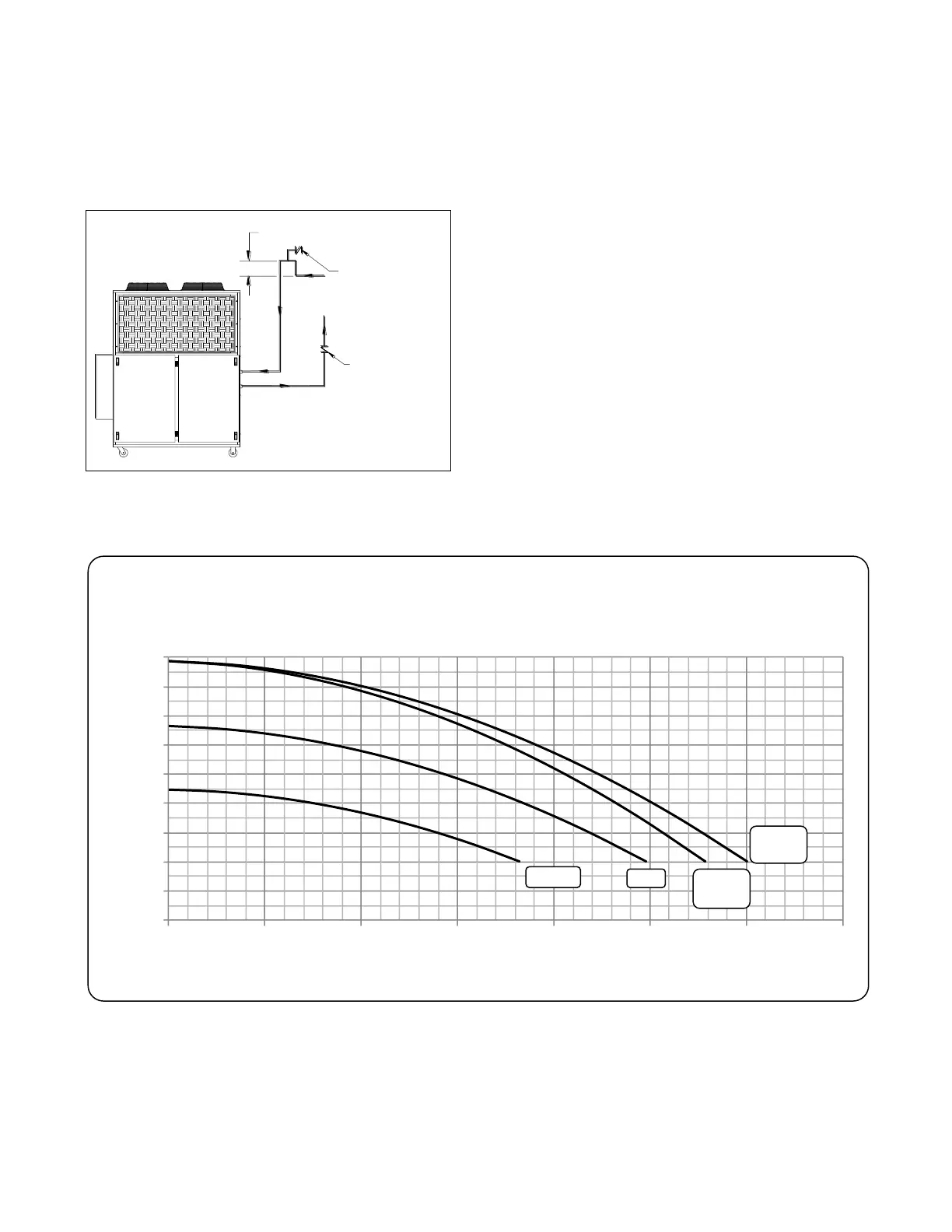
from the process. Typically, when piping is overhead
with a total run length over 90 feet there should be a
valve in the supply line and an inverted P trap with a
vacuum break valve installed as shown in Figure 1.
Figure 1 – Recommended Overhead Piping
All standard portable chillers include an internal
coolant pump and reservoir. Nominal coolant flow
rates assume a 10°F rise across the evaporator at
50°F set point and 85°F entering condenser water for
water-cooled chillers or 95°F entering air for integral
air-cooled or remote air-cooled condenser chillers.
For units with one of our internal coolant pumps
reference one of the following net pump pressure
drop curves to determine actual pumping
capabilities for your process. If you have ordered the
chiller less pump, use the following coolant circuit
pressure drop curves to select the proper pump for
your application.
Figure 2 – 4 Ton Chiller Net Pump Performances (60 Hz)
NOTE:
If piping is above chiller and exceeds 90 feet in total
length, install an inverted P-trap and vacuum break
valve in return line and add a check valve to the
supply line.
Check valve
1/2 inch vacum break valve
12 inches above highest
point in piping system
0
10
20
30
40
50
60
70
80
90
0 5 10 15 20 25 30 35
4-Ton Standard Chiller Net Pump Performance
Pump Discharge Pressure Less Coolant Circuit Pressure Loss
Based on Water at 50°F, 60 Hz
1½ hp
3 hp
3 hp
2-stage
5 hp
2-stage



 To Next Page