SAFETY AND VEHICLE IDENTIFICATION
16 CUSTOMER CARE | 877.855.2867
2
c. Disconnect the shore line power cord from the shore power receptacle
d. Turn OFF the generator (if so equipped)
3. DO NOT attempt to use water to put out the re. Water can spread some types of re, and
electrocution is possible with an electrical re.
Always have faulty or damaged wiring and electrical components inspected by a certied RV
repair technician, and repaired immediately.
Fire Extinguisher
Fire extinguishers are classied and rated by re type, A, B, and C. ese classications
identify the kinds of res or burning materials they are designed to ght.
Class A - Solid materials such as wood, paper, cloth, rubber, and some plastics.
Class B - Liquids such as grease, cooking oils, gasoline, kerosene or other ammable
liquids.
Class C - Electrical such as electrical wires or other live electrical equipment.
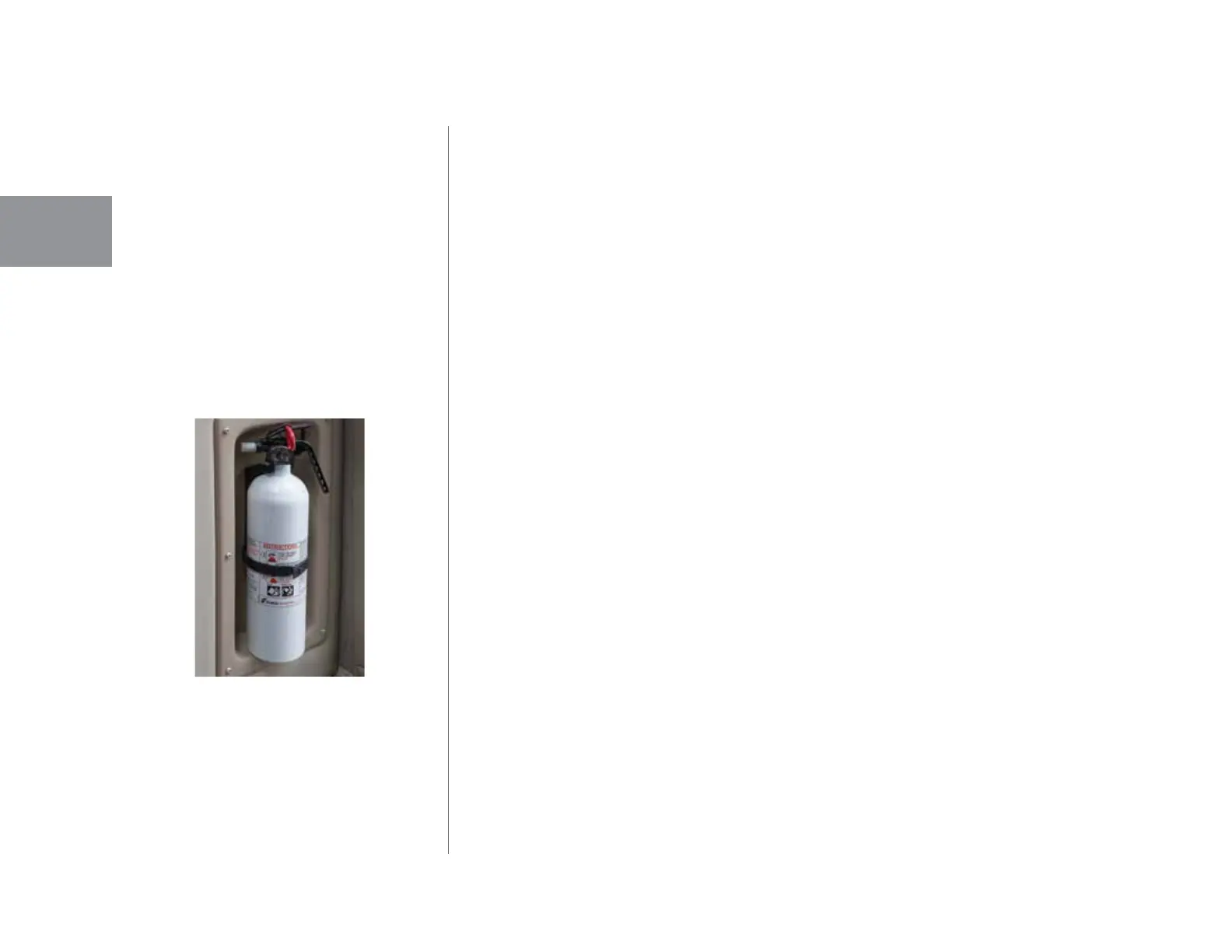
A dry-chemical re extinguisher has been installed by the entrance door. It is suitable for
extinguishing small res of the Class B or C type only.
Operation
For information on how to use your re extinguisher, refer to the re extinguisher
manufacturer’s owner's manual or the label axed to the side of the re extinguisher.
Inspection
Inspect the extinguisher at least once a week (more frequently if it is exposed to weather
or possible tampering). is should also be done before beginning a vacation or during an
extended trip.
NOTE: Know the location of the fire
extinguisher installed in your motorhome
and become familiar with its operation.
Typical Class B-C fire extinguisher


 To Next Page