18-BC117D1-1B-EN 9
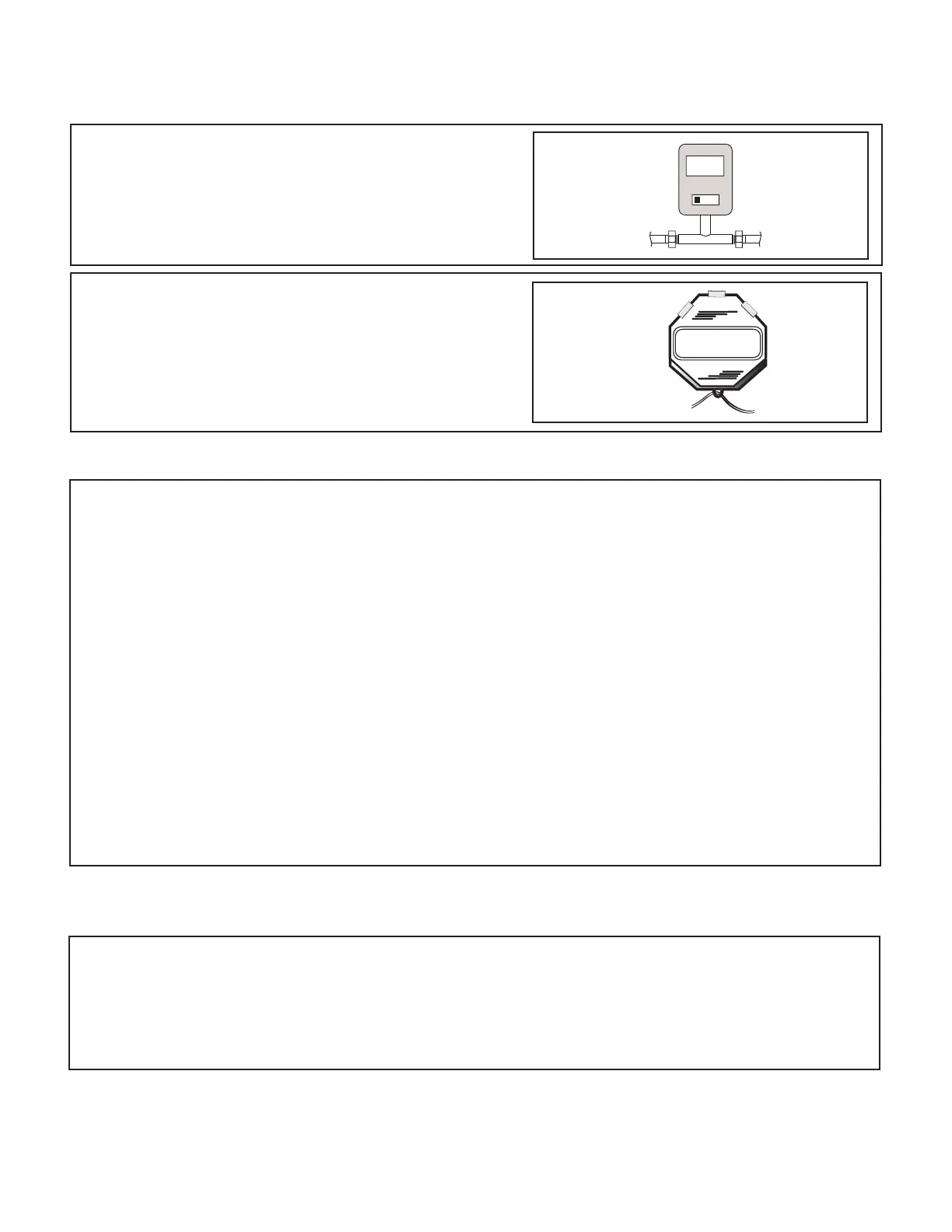
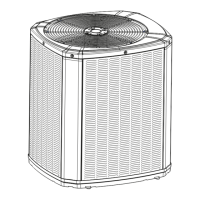
STEP 2 - Observe the micron gauge. Evacuation
is complete, if the micron gauge does not rise
above 500 microns in one (1) minute and 1500
microns in ten (10) minutes.
STEP 3 - Once evacuation is complete, blank off
the vacuum pump and micron gauge, and close
the valve on the manifold gauge set.
1 MIN.
Important: Do not open the service valves until
the refrigerant lines and indoor coil leak check
and evacuation are complete.
STEP 1 - Evacuate until the micron gauge reads
no higher than 350 microns, then close off the
valve to the vacuum pump.
0350
Microns
ON
OFF
Section 9. Evacuation and Servicing
9.1 Evacuate the Refrigerant Lines and Indoor Coil
9.2 Servicing
• If repairs must be made after system is charged, properly and safely remove or isolate refrigerant and purge
the section of the system needing repair with Nitrogen gas or oxygen free nitrogen prior to opening the circuit.
• The REFRIGERANT CHARGE shall be recovered into the correctly marked recovery cylinders.
• Ensure that the outlet for the vaccum pump is not close to any potential ignition sources and the ventilation is
available.
• Prior to recharging the system, it shall be pressure-tested with the appropriate purging gas. The system shall
be leak-tested on completion of charging but prior to commissioning. A follow up leak test shall be carried out
prior to leaving the site.
• Ensure that only appropriate refrigerant recovery cylinders are employed. Ensure that the correct number of
cylinders for holding the total system charge is available. Only use cylinders designated for the recovered
refrigerant and labelled for the refrigerant. Cylinders shall be complete with pressure-relief valve and
associated shut-off valves in good working order.
• A set of caliberated weighing scales shall be available and in good working order. Hoses shall be complete
with leak-free disconnect couplings and in good condition. Ensure any associated electrical components are
sealed.
• The recovered refrigerant shall be returned to the refrigerant supplier in the correct recovery cylinder. Do not
mix refrigerants.
• If compressors or compressor oils are to be removed, ensure that they have been evacuated to an
acceptable level to make certain that FLAMMABLE REFRIGERANT does not remain within the lubricant.
Section 10. Service Valves
10.1 Open the Gas Service Valve
Important: Leak check and evacuation must be completed before opening the service valves.
NOTE: Do not vent refrigerant gases into the atmosphere.
STEP 1 - Remove valve stem cap.
STEP 2 - Using an adjustable wrench, turn valve stem 1/4 turn counterclockwise to the fully open position.
STEP 3 - Replace the valve stem cap to prevent leaks. Tighten finger tight plus an additional 1/6 turn.


 To Next Page