EasyManua.ls Logo

Trane CLCP - User Manual

Trane CLCP
24 pages
Print Icon
To Next Page IconTo Next Page
Loading...
1010-2359-01E
CLCP-SVX01A-E4
Installation, Operation and Maintenance
CLCP
Air Handler
April 2020
Only qualified personnel should install and service the equipment. The installation, starting up, and servicing of heating,
ventilating, and air-conditioning equipment can be hazardous and requires specific knowledge and training. Improperly installed,
adjusted or altered equipment by an unqualified person could result in death or serious injury.When working on the equipment,
observe all precautions in the literature and on the tags, stickers, and labels that are attached to the equipment.
Supersedes CLCP-SVX01A-E4
CLCP-SVX01A-E4
April 2020
Aug 2018
Question and Answer IconNeed help?

Do you have a question about the Trane CLCP and is the answer not in the manual?

Overview

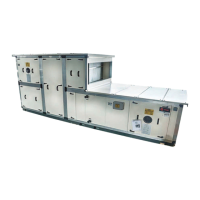
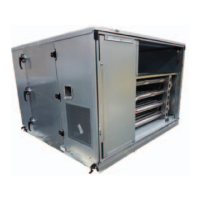
This document provides installation, operation, and maintenance instructions for the TRANE CLCP Air Handler, a central station air handler designed for various controlled air applications.

Function Description

The TRANE CLCP Air Handler is a central station air handler designed for a variety of controlled air applications. The basic unit consists of a fan, heating and/or cooling coils, filters, and air dampers. It is designed for cooling load conditions ranging from 1000-65000 nominal CFM. The unit can be configured with various modules and options as listed in the product catalog.

Important Technical Specifications

  • Cooling Load Conditions: 1000-65000 nominal CFM.
  • Fans: Double width, double inlet, centrifugal types with forward curved, backward curved, and airfoil blade designs.
  • Condensate Drain Connection: Male-threaded, 1-1/2" BSPT.
  • Motor Winding Resistance: Acceptable reading from 6 meg-ohms to infinity.
  • Maximum Allowable Voltage Imbalance: 2 percent.
  • Filter Resistance:
    • Panel filter: Maximum 130 Pa.
    • Bag filter: Maximum 260 Pa.
    • Highly efficient filter: Maximum 500 Pa.
  • Refrigerant Charge: FD coils are dehydrated and charged with a holding charge of dry nitrogen (10-20 PSIG) to prevent leaks and system contamination. Seals should not be broken until the coil is installed.
  • Motor Greasing Intervals (Standard Condition - 8 hour operation per day with rated or light loading in a clean and low vibration environment):
    • 0-30 kW: 7 years
    • 37-75 kW: 210 days
    • 90-110 kW: 90 days
  • Motor Greasing Intervals (Severe Condition - 24 hour operation per day with rated/light loading or in a dirty/dusty environment or where the motor is subject to vibration/light shock loading):
    • 0-30 kW: 3 years
    • 37-75 kW: 70 days
    • 90-110 kW: 30 days
  • Recommended Lubricants: ALVANIA GREASE 3 (SHELL), MOBILUX 3 (MOBIL), BEACON 3 (ESSO), SKF 28 (BALL BEARINGGREASE) for larger fans with standard bearings. TECO/Brook Hansen motor: Esso Unirex Lithium N3 grease. W.E motor: Shell Alvania R3.

Usage Features

  • Installation: Units can be shipped as complete units, sections, or subassemblies. Each section has a nameplate with type, serial number, customer tag, and model number.
    • Foundation: Requires a level foundation large enough to include unit dimensions plus service access. Reinforced concrete or strip foundations are suitable. Insulation materials like cork slabbing (TICO pads) or rubber pads can be placed between the unit base and the foundation to minimize noise transmission.
    • Rigging and Handling: Lifting points (75mm-diameter holes or certified lugs) are provided on the unit base frame. Slings and spreader bars must be used, and the unit lifted slowly and evenly to avoid shock load. Forklift trucks can be used by applying forks under the unit base frame. Units with base frames can be moved on roller trolleys or tubular rollers.
    • Piping: Condensate drain pans must be connected to a trap for proper drainage. For multiple drain pans, each module must be trapped individually. Chilled water piping requires independent support, swing joints or flexible fittings, and proper tightening (max 200ft-lbs) using "White Zinc" compound/pipe sealer. Steam coil piping requires free condensate flow, vacuum breakers, proper steam trap selection and installation, and pitching of pipes for drainage.
    • Refrigerant Coil Piping: Follow accepted refrigeration piping practices. Install a moisture indicator/sight glass and a liquid line shutoff valve. Minimize other valves and bends. Select a properly sized Thermal Expansion Valve (TEV) with external equalizer connections, installed vertically in the coil liquid connection. Suction lines must be sized for high refrigerant vapor velocities.
  • Operation: The unit is designed for safe and reliable operation within design specification limits. Qualified, experienced personnel should perform installation, startup, and servicing.
  • Safety: Always disconnect electrical power before accessing fan or ductwork. Observe all precautions in literature and on tags. Use personal protective equipment (PPE) when cleaning drain pans.

Maintenance Features

  • Periodic Maintenance Checklist:
    • After 48 Hours Operation: Readjust belts (they acquire permanent stretch).
    • Weekly: Observe unit for changes in running condition and unusual noise.
    • Every Month or Weekly: Check and clean/replace air filters. Change bag filters when pressure drop is 1-inch W.G.
    • Every Three to Six Months: Check fan and motor greasing, align fan and motor sheaves (pulley), adjust fan belt tension, tighten electrical connections, and inspect coils for dirt build-up or freeze-up.
    • Every Year: Inspect unit casing for corrosion, clean fan wheels and shaft, inspect condensate drain pan and line, check damper linkages, and inspect control/power box wiring. Rotate fan wheel to check for obstruction and adjust if necessary. Check gasketing, insulation, and flex connections.
  • Bearing Maintenance: Do not overlubricate. Smaller frame motors may have sealed-for-life bearings. Larger motors with open bearings require re-greasing.
  • Air Filter Maintenance: Clean or replace filters when resistance approaches maximum allowable limits. Chemical fiber filters can be soaked in water for gentle scrub and fully dried. Replace filters if efficiency drops below 85%.
  • Drain Pan Maintenance: Inspect and clean drain pans and lines every six months or more frequently. Remove standing water and solid matter, clean with mild bleach/water solution or EPA-approved sanitizer, rinse thoroughly, and allow to dry.
  • Coil Cleaning: Keep steam, hot water, and chilled water coils clean for maximum performance. Clean with steam and detergent, hot water spray and detergent, or commercial chemical coil cleaners. Rinse thoroughly. Straighten bent fins with a coil comb. Check frost protection before winter.
  • Pulley and Belt Maintenance: Ensure proper installation for full service life. Inspect and replace damaged pulleys and belts. Do not mix old and new belts or different makes. Install new belts without prying. Check pulley alignment with a straight edge. Check belt tension at least twice during the first day of operation and readjust to the maximum value when tension drops to the minimum.
  • Trouble Analysis: A comprehensive table is provided to assist in identifying causes of malfunctions and suggesting repair procedures for various symptoms like bearing noise, motor stalls, excessive vibration, fan noise, and premature belt wear.
  • Pre-Start Up Checklist: A detailed checklist for general information, casing installation, fan-motor installation, electrical installation, coil and piping installation, filter installation, mixing box/economizer dampers, and supply duct installation checks.

Trane CLCP Specifications

General IconGeneral
BrandTrane
ModelCLCP
CategoryAir Handlers
LanguageEnglish

Related product manuals