How to fix inaccurate measurement length on Triplett LVPRO10?
- JjamiebartonJul 29, 2025
If the measurement length is inaccurate on your Triplett Measuring Instruments, check the NVP and adjust it using a cable with a known length.
How to fix inaccurate measurement length on Triplett LVPRO10?
If the measurement length is inaccurate on your Triplett Measuring Instruments, check the NVP and adjust it using a cable with a known length.
What to do if my Triplett LVPRO10 tester cannot power on?
If the Triplett Measuring Instruments tester cannot power on normally, replace the battery.
Describes the main controls, ports, and connectors on the LVPRO10 tester.
Explains how to power on/off, switch units, and use the backlight.
Details various icons and indicators on the LVPRO10 tester's display.
Outlines the steps for testing twisted-pair cables using the tester.
Explains how to interpret common fault results for twisted-pair cabling.
Details how to identify and interpret a "short" fault on twisted-pair cables.
Describes the detection and display of crossed wires in twisted-pair cabling.
Explains the identification of crossed pairs in twisted-pair cabling.
Covers the detection and implications of split pairs in twisted-pair cabling.
Explains how the tester detects an Ethernet port and its limitations.
Describes how the tester identifies POE switches and standards.
Explains how the tester detects cable voltage and displays warnings.
Details how to view specific information for each wire pair on the tester.
Guides on connecting the tester to telephone networks in a star topology.
Guides on connecting the tester to telephone networks in a bus topology.
Outlines the procedure for testing coaxial cables using the LVPRO10 tester.
Shows how to interpret common fault results for coaxial cables.
Describes voltage detection on coaxial cables and associated warnings.
Explains the display elements and functions when the tester is in Tone mode.
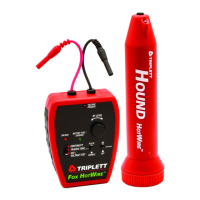
Lists the features and capabilities of the LVPRO10 Receiver.
Details the procedure for tracking twisted-pair and coaxial cables.
Covers NCV, flashlight, and low battery indication for the receiver.
Guides on setting the Nominal Velocity of Propagation (NVP) for accurate length measurements.
Explains how to determine the actual NVP of a cable for improved length accuracy.
Describes the low battery warning indicator and actions.
Provides solutions for common issues like power failure or inaccurate measurements.
Lists the technical specifications of the LVPRO10 tester.
Describes the main controls, ports, and connectors on the LVPRO10 tester.
Explains how to power on/off, switch units, and use the backlight.
Details various icons and indicators on the LVPRO10 tester's display.
Outlines the steps for testing twisted-pair cables using the tester.
Explains how to interpret common fault results for twisted-pair cabling.
Details how to identify and interpret a "short" fault on twisted-pair cables.
Describes the detection and display of crossed wires in twisted-pair cabling.
Explains the identification of crossed pairs in twisted-pair cabling.
Covers the detection and implications of split pairs in twisted-pair cabling.
Explains how the tester detects an Ethernet port and its limitations.
Describes how the tester identifies POE switches and standards.
Explains how the tester detects cable voltage and displays warnings.
Details how to view specific information for each wire pair on the tester.
Guides on connecting the tester to telephone networks in a star topology.
Guides on connecting the tester to telephone networks in a bus topology.
Outlines the procedure for testing coaxial cables using the LVPRO10 tester.
Shows how to interpret common fault results for coaxial cables.
Describes voltage detection on coaxial cables and associated warnings.
Explains the display elements and functions when the tester is in Tone mode.
Lists the features and capabilities of the LVPRO10 Receiver.
Details the procedure for tracking twisted-pair and coaxial cables.
Covers NCV, flashlight, and low battery indication for the receiver.
Guides on setting the Nominal Velocity of Propagation (NVP) for accurate length measurements.
Explains how to determine the actual NVP of a cable for improved length accuracy.
Describes the low battery warning indicator and actions.
Provides solutions for common issues like power failure or inaccurate measurements.
Lists the technical specifications of the LVPRO10 tester.
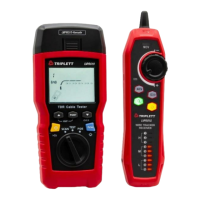
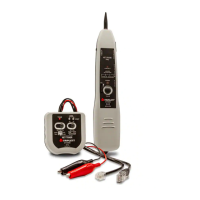
The Triplett LVPRO10 is a handheld TDR (Time-Domain Reflectometer) cable tester designed for copper cables, including CAT 5E, CAT 6, CAT 6A, and CAT 8. Its primary function is to detect and diagnose wiring conditions of twisted-pair and coaxial cables. This versatile tool can identify network service issues, short/open circuits, split pairs, and mis-wires within network cabling. Additionally, it can detect the presence of Power over Ethernet (PoE) supply and identify PoE standards (802.3AF, 802.3AT, 802.3BT). The device is characterized by its accuracy, ease of operation, and clear visual display, making it an ideal tool for network communication maintenance, engineering, and wiring.
The LVPRO10 offers several testing modes and functions:
Testing Mode (TEST): This mode is used for comprehensive cable testing.
PoE Mode (POE): In this mode, the tester identifies the presence of PoE and its standard (af/at/bt). It detects PoE on pairs 1,2-3,6 and 4,5-7,8 and is designed not to be damaged by PoE sources. If PoE is detected, "POE" appears above the powered pairs and may blink if the PoE source cycles power. The tester can identify IEEE 802.3af, IEEE 802.3at, and IEEE 802.3bt standards. For non-standard PoE devices, users need to switch to TEST mode to check for power.
Tone Mode (SCAN): This mode is used for wire tracking.
LVPRO10 Receiver (Wire Tracker): This accessory works with the LVPRO10 tester to locate and isolate cables by adjusting sensitivity.
| Type | Digital Multimeter |
|---|---|
| Audible Indication | Yes |
| Power Source | Battery |
| Display | 3-3/4 digit LCD with backlight |
| Weight | 6.2oz (175g) |
Loading...