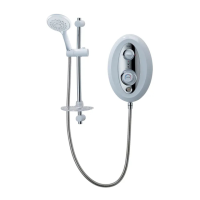
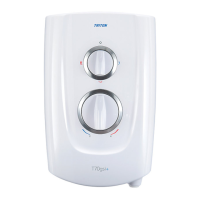
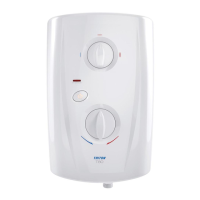
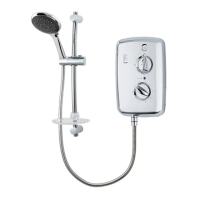
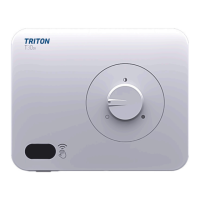
Trance 2nd generation electric shower
17
OPERATING THE SHOWER
Make sure the commissioning procedure
has been carried out.
To start the shower
Press the Start/Stop button and water will flow.
To stop the shower
Press the Start/Stop button and water will cease
to flow.
Note: If restarting immediately after stopping be
aware that a slug of hot water will be expelled
for the first few seconds.
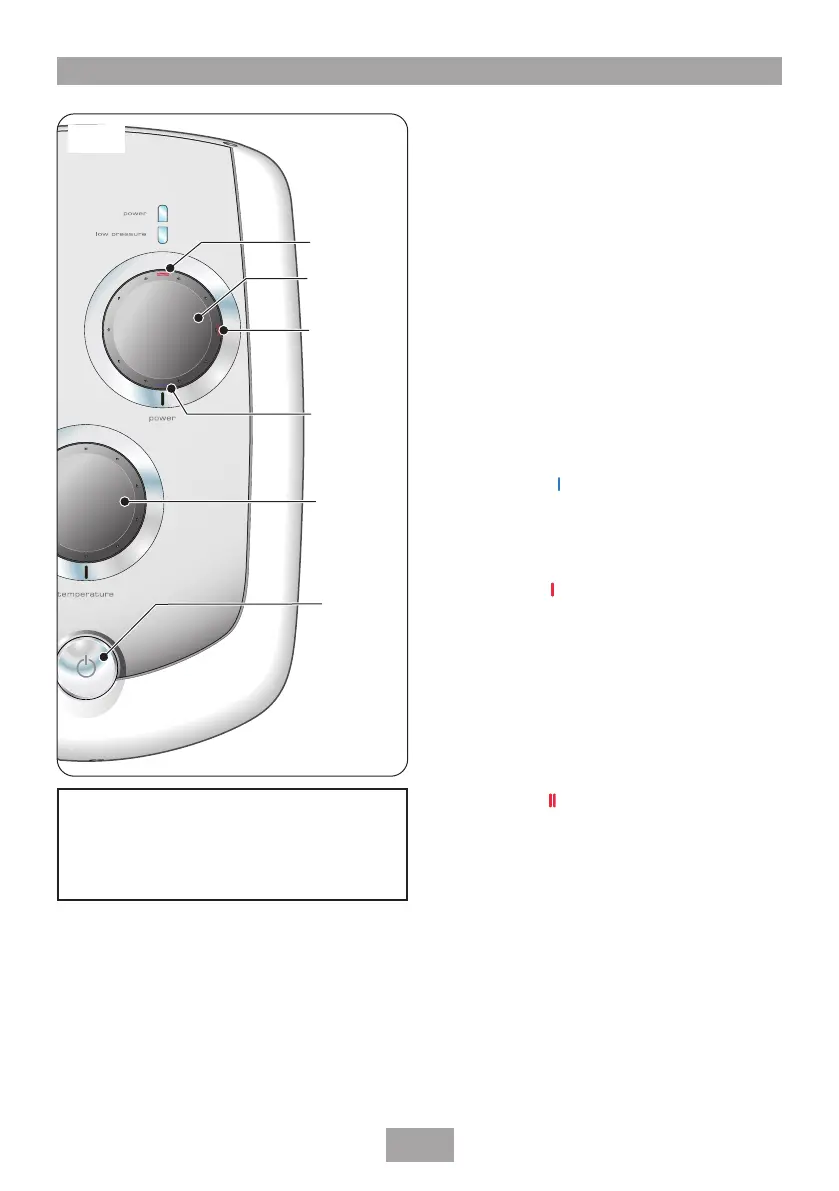
To use the power selector
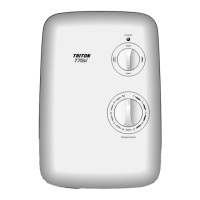
The power selector has three positions – COLD,
ECONOMY and HIGH (fig.21).
The blue symbol is for COLD water only.
Adjusting the temperature control at this setting
will only change the force of the water from
the shower head (It will not alter the water
temperature).
The red symbol is an ECONOMY setting for
using less energy when the ambient mains water
temperature is high during warmer months.
Temperature adjustment at this setting is via the
temperature control
Note: If the stated flow rate required for the unit
cannot be met due to low water pressure, it will
be necessary to operate the unit on this setting
during the warmer months because of flow rate
limitations entering the unit.
The red symbol is a HIGH power setting
which allows the highest flow achievable for
your preferred temperature. This setting should
normally be regarded as optimum shower
performance throughout the year. Temperature
adjustment is via the temperature control.
To adjust the shower temperature
The water temperature is altered by increasing
or decreasing the flow rate of the water through
the shower via the temperature control (fig.21).
After obtaining your showering temperature, the
number can be left as the normal setting and
should only need altering to compensate for
seasonal changes in ambient water temperature.
N-002-A
Note: In normal use, it is in order to leave the
water supply permanently on to the shower
unit, but as with most electrical appliances,
the unit must be switched off at the
isolating switch when not in use.
9
8
7
6
5
4
3
2
1
Temperature
control
Start/Stop
button
Power
selector
High
Cold
Economy
Fig.21



 To Next Page