Need help?
Do you have a question about the TruXedo Sentry and is the answer not in the manual?
Details warranty against defects in materials or workmanship for the truck bed cover.
States the warranty is exclusively for the initial owner and not transferable.
Lists specific usage and care instructions that must be followed to maintain warranty.
Explains the process for repair or replacement of defective components.
Outlines the procedure for initiating warranty claims, including RMA and shipping.
Provides instructions on how to register the product online for warranty validation.
Troubleshooting tips for issues connecting the cover assembly to the side rails.
Guidance for resolving problems where the rear header fails to latch correctly.
Recommendations for cleaning, care, and periodic maintenance of the truck bed cover.
This document describes the Sentry and Sentry CT truck bed covers, providing instructions for installation, usage, maintenance, and warranty information.
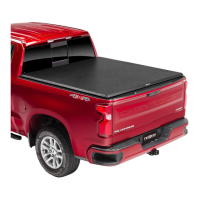
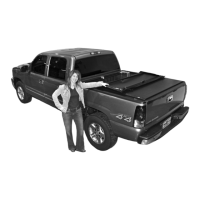
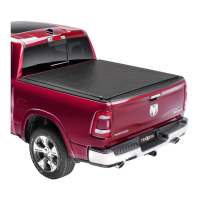
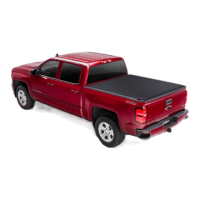
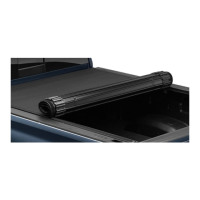
The Sentry and Sentry CT are hard roll-up tonneau covers designed to secure and protect the cargo area of a pickup truck. They consist of a cover assembly, side rails (driver and passenger), clamps, and a bulkhead seal (for select models). The cover assembly rolls up towards the cab, allowing full access to the truck bed, and can be rolled back to cover the bed, where it latches securely at the tailgate. The hard roll-up design provides enhanced security and durability compared to soft covers.
The installation process begins by ensuring the truck bed is clean and free of debris. The serial number for the cover is located on the cover itself for future reference. The driver side rail is positioned on the truck's bed rail, centered between the tailgate and the cab. It's crucial to align the rail so that the foam is compressed equally on both sides, approximately 50%. The rail sits on top of the truck's bed rails.
Next, the cover assembly needs to be squared for proper operation, ensuring that the attachment holes on the driver and passenger side rails are lined up across from each other. Clamps are then attached, starting in the middle and evenly spaced along the driver side rail, leaving about 8 inches on each end. These clamps should be finger-tightened to ensure the teeth engage with the grooves of the side rail, then fully tightened with a 1/2-inch socket or wrench. This clamping process is repeated for the passenger side rail.
For pickups with factory bed caps, a bulkhead seal is provided and must be installed. The area where the seal will be placed needs to be thoroughly cleaned with soap and water to remove dirt and debris, followed by isopropyl alcohol to remove wax or grease. After the surface dries, the backing paper is peeled off, and the seal is adhered from one bed rail edge to the other. Any excess material is trimmed with scissors or a utility knife, and pressure is applied to ensure good adhesion. The bulkhead seal should be positioned flush with the inside edge of the bulkhead, tight against the rail endplug seal and bedcap.
The cover assembly is then placed on the side rails towards the front of the truck bed (near the cab). The rail may need to be slightly forced upward to allow the screw head to drop into the slot. To connect the cover assembly to the side rails, the right and left header guides are slid into the locked position, indicated by a clicking sound for secure attachment. Again, the rail might need to be forced upward slightly to allow the header guides to slide.
Finally, the cover is unrolled to the tailgate. Both ends of the cover, near the tailgate, are pushed down to engage the driver and passenger slam latches. A clicking sound confirms a correctly installed cover.
To open the cover, the release cable is pulled down and held, then the tail header is lifted and rolled towards the cab. When driving with the cover open, both retainer straps must be secured to the retaining loops to prevent accidental release, which could lead to personal injury or property damage. The cover should not be stowed against the cab window. To release a strap, the tab is pushed up.
There are two methods for closing the cover:
After closing, the hook and loop fasteners along both sides of the truck bed cover must be secured along the entire length before driving. This prevents wind from lifting the cover and causing damage. If the truck has a key lock tailgate, the bed cover is secured until the tailgate is unlocked and opened. It is crucial to ensure the cover is securely latched on both sides before operating the vehicle.
Several safety instructions are provided to ensure safe operation and prevent damage:
The cover should be cleaned with mild automotive soap and water only. Vinyl conditioners containing silicone or petroleum (e.g., Armor All®) should not be used, as they can cause the vinyl to shrink. The cover can be cleaned in a car wash. Avoid using vinyl conditioners that contain silicon, petroleum, or citrus-based products on the truck bed cover, as they may crack and shrink the vinyl top surface.
It is recommended to periodically check that the cover is securely attached to the truck bed. Inspect the clamps and front header guide slides to ensure they were properly installed and have not come loose during operation. Periodically inspect and service the rear latch closures. Clean away any excess dirt or grime and lubricate with silicone spray. Covers that are used frequently or are subject to vibrations and impacts from rough roadways may require adjustment.
After the initial installation, the cover should be left closed and latched for a 24-hour period. This allows the fabric to completely set to the metal substrate.
Ice buildup within hinge sections can occur if the cover is stowed in an open position. To prevent potential damage, the cover should be closed during winter precipitation.
 General
| Finish | Matte Black |
|---|---|
| Profile | Low-Profile |
| Operation | Roll-up |
| Type | Hard Roll-Up |
| Installation | No Drilling Required |
| Locking Mechanism | Tailgate Lock |
| Compatibility | Specific truck make and model (e.g., Ford F-150, Chevy Silverado, Ram 1500) |

 To Next Page