EasyManua.ls Logo

Vaillant ecoTEC plus 824 - User Manual

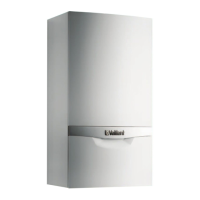
Vaillant ecoTEC plus 824
184 pages
Print Icon
To Next Page IconTo Next Page
Loading...
Supplied By www.heating spares.co Tel. 0161 620 6677
For the installer
ecoTEC plus 612
ecoTEC plus 615
ecoTEC plus 618
ecoTEC plus 624
ecoTEC plus 630
ecoTEC plus 637
ecoTEC plus 824
ecoTEC plus 831
ecoTEC plus 837
ecoTEC pro 28
ecoTEC pro 24
Instructions for installation and servicing
ecoTEC
Wall hung room sealed fan assisted condensing boiler
GB

Table of Contents

Questions and Answers

  • J
    Justin BoydAug 25, 2025
    Why won't my Vaillant ecoTEC plus 824 Boiler start?
    • T
      tmunozAug 25, 2025
      If your Vaillant Boiler fails to ignite, it could be due to faults in the gas supply, such as a defective gas meter, air in the gas line, low gas flow pressure, or a tripped fire protection tap. It can also be caused by issues with the gas fitting, incorrect gas setting, a defective igniter, interrupted ionization current, faulty earthing, or defective electronics. Diagnose and rectify issues in the gas supply and fittings.
  • R
    richardramosAug 31, 2025
    Why is there no pressure change when the pump turns on in my Vaillant ecoTEC plus 824?
    • C
      Craig WyattSep 1, 2025
      If no sudden change in pressure is detected when turning on the pump in your Vaillant Boiler, it could be due to a defective water pressure sensor or pump, or too little water in the appliance. Ensure sufficient water supply and inspect the pump.
  • C
    charles15Sep 1, 2025
    What to do if the drinking water outlet probe stopped in my Vaillant ecoTEC plus 824 Boiler?
    • W
      William TownsendSep 1, 2025
      If the drinking water outlet probe has stopped (
  • A
    ashleyevansSep 2, 2025
    Why does my Vaillant ecoTEC plus 824 show a flame when the gas valve is off?
    • C
      Carolyn JohnsonSep 2, 2025
      If your Vaillant Boiler shows a secondary light, where the ionization signal reports a flame even when the gas valve is turned off, it could be due to defective gas solenoid valves or a defective flame detector. Inspect and replace the gas valves or flame detector.
  • B
    boyerjermaineSep 2, 2025
    What causes a short circuit in the tank sensor of my Vaillant ecoTEC plus 824?
    • J
      Jacob CollinsSep 2, 2025
      A short circuit in the tank sensor of your Vaillant Boiler can be caused by a defective NTC, an earth leak/short circuit in the cable loom, or a damp plug connection. Inspect and replace the NTC or repair damp connections.
  • P
    Patrick StrongSep 3, 2025
    What does it mean 'No valid DSN in AI and/or BMU' in Vaillant ecoTEC plus 824?
    • E
      Erin MaddoxSep 3, 2025
      If your Vaillant Boiler displays 'No valid DSN in AI and/or BMU', it indicates a spare part failure where the AI and motherboard were interchanged at the same time. Replace faulty components to resolve DSN issue.
  • T
    Tricia ButlerSep 3, 2025
    What to do if my Vaillant ecoTEC plus 824 Boiler appliance does not start and ignition fails?
    • R
      Rachel WilliamsSep 3, 2025
      If your Vaillant Boiler fails to start and ignition attempts fail, there may be faults in the gas supply, such as a defective gas meter or gas pressure detector, air in the gas, gas flow pressure too low, or a disengaged fire protection tap. There may be faults in the gas valve, wrong gas setting, defective igniter (ignition transformer, ignition cable, ignition plug), stopped ionization current (cable, electrode), faulty earthing in the appliance or defective electronics. Inspect the gas supply and ignition components for faults.
  • P
    Paula ClarkSep 4, 2025
    What to do if the flame goes off during operation of my Vaillant ecoTEC plus 824 Boiler?
    • L
      Luis MeyerSep 4, 2025
      If the flame goes off during operation and subsequent ignition attempts fail, it could be due to a temporarily stopped gas supply or faulty earthing of the appliance. Check the gas supply and earthing connections.
  • C
    Colleen CookSep 4, 2025
    Why is there a dry fire in my Vaillant ecoTEC plus 824?
    • B
      Briana YoungSep 4, 2025
      A dry fire in your Vaillant Boiler can occur due to too little water in the appliance, a defective water pressure sensor, a defective cable to the pump or water sensor, a blocked or defective pump, or a pump output that is too low. Ensure sufficient water supply and check the pump and sensors for faults.
  • E
    Elizabeth SparksSep 5, 2025
    What to do if my Vaillant ecoTEC plus 824 shows water shortage and large temperature difference?
    • J
      Joshua RodgersSep 5, 2025
      If your Vaillant Boiler indicates a water shortage and a large temperature difference between the flow and return NTC, the pump might be blocked or defective, the pump output might be too low, or the flow and return NTCs might be interchanged. Check and unblock or replace the pump and verify the NTC placement.

Summary

1 Introduction

1.1 Notes on the documentation

Information to help users throughout the documentation. Covers applicable documents and retention.

1.2 Introduction

Details on boiler installation and servicing by competent persons, and CORGI registration.

1.3 General Notes

Describes boiler design for sealed central heating systems, mounting, and flue options.

1.4 CE marking

Explains the CE marking compliance with EU directives for gas appliances and EMC.

1.5 Gas council numbers

Lists gas council numbers for various Vaillant ecoTEC appliance models.

2 Boiler specifications

2.1 Technical data

Provides detailed technical specifications for ecoTEC boilers including outputs, dimensions, and electrical data.

2.2 Dimensions

Illustrates the physical dimensions of the boilers with a legend for connections and components.

2.4 Installation

Diagrams showing function elements of combination and system boilers for installation.

2.5 Type plate

Information on the location of the Vaillant ecoTEC type plate attached at the factory.

3 General requirements

3.1 Preliminary remarks for room sealed appliances

Guidance on installing Vaillant boilers with approved flue systems and installation instructions.

3.2 Related documents

Lists relevant regulations, British Standards, and publications for boiler installation.

3.3 Contents included with delivery

Details the components included in the Vaillant ecoTEC package unit for system and combination boilers.

3.4 Installation site

Specifies requirements for the installation location, including space for servicing and air circulation.

3.5 Gas supply

Details requirements for gas supply, meter connection, pipework, and leak testing.

3.6 Flue pipe

Emphasizes the use of genuine Vaillant flue pipes and describes standard and optional flue systems.

3.7 Flue termination

Provides details on flue termination positions and clearances according to BS 5440.

3.8 Air supply

Discusses air supply requirements and ventilation for cupboard or compartment installations.

3.9 Electrical supply

Outlines requirements for the 230V electricity supply, connection methods, and earthing.

3.10 Guide to system requirements

Covers water circulation systems, filling, pressure relief, and expansion vessels.

3.11 Pump specifications

Details the circulating pump specifications and by-pass valve adjustments.

3.12 Condensate trap

Describes the siphonic condensate trap or normal condensing water trap.

4 Boiler installation sequence

4.1 Transporting the appliance

Provides detailed manual handling recommendations for lifting and moving the boiler.

4.2 Required minimum distances;assembly clearances

Specifies minimum clearances around the boiler for installation and servicing.

4.3 Flue exit

Instructions for marking and preparing the flue exit hole based on flue system type.

4.4 Fitting the boiler hanging bracket

Details on fixing the hanging bracket securely to the wall for boiler mounting.

4.5 Installing the flue system

Guidance to install the flue system referring to separate air/flue duct installation instructions.

4.6 Fitting the boiler

Instructions for lifting and engaging the boiler onto the hanging bracket.

4.7 Removing the front case

Step-by-step guide on how to remove the front casing of the boiler.

4.8 General instructions for heating system

Cautionary advice on cleansing the heating system before connecting the appliance.

4.9 Gas connection

Details on making the gas connection, including safety, pipework, and leak checks.

4.10 Cold water mains inlet and hot water outlet

Instructions for connecting cold water and hot water pipes for combination boilers.

4.11 Condensate drain pipe

Describes the condensate trap and connection to the discharge pipework.

4.12 Heating connection

Instructions for connecting heating flow and return pipes and pressure relief valve.

4.13 Connecting the flue system to the boiler

Reference to separate air/flue duct installation instructions for connecting the flue system.

4.14 Electrical connection

Covers general electrical requirements, main supply connection, and wiring diagrams.

4.15 Controls

Details Vaillant controls, accessories, and connection details for external electrical controls.

4.16 Thermostatic radiator valves

Discusses the use of thermostatic radiator valves with the boiler's automatic by-pass.

4.17 Frost protection

Explains the integral frost thermostat and the need for additional protection measures.

4.18 Circulating pump

Information on the built-in circulating pump and its automatic overrun period.

4.19 Anticycling ‘economiser’ control

Describes the anticycling control to prevent energy-wasteful short cycling of the boiler.

4.20 Automatic pump spin control (APS)

Explains the APS feature that spins the pump to prevent seizure during periods of non-operation.

5 Commissioning Part I

5.1 Preliminary electrical checks

Checks for short circuit, earth continuity, resistance to earth, and correct polarity.

5.2 Gas supply

Inspection, leak check, and purging of the gas installation according to regulations.

5.3 Cold water supply

Procedure for filling and purging the hot water circuit for combination boilers.

5.4 Filling and bleeding the heating system

Detailed steps for filling and bleeding the heating system, including using test programs.

5.5 Initial system flush (“cold”)

Instructions for flushing the heating system to remove installation residues.

5.6 Filling the condensate siphon

Guidance on filling the condensate siphon with water to prevent fume escape.

5.7 Adjusting the pumping capacity

Information on adjusting the two-stage pump capacity for ecoTEC plus boilers.

5.8 Adjusting the by-pass

Details on adjusting the appliance's by-pass valve for pressure control.

5.9 Checking the gas supply

Procedure for checking gas inlet working pressure and gas rate.

5.10 Refitting the case

Instructions for refitting the front casing and securing clips after commissioning.

5.11 Adjusting the central heating output (range rating)

How to adjust the boiler's central heating output range rating.

5.12 Gas changeover

Information on converting the appliance between natural gas and LPG modes.

6 Functional checks (commissioning part II)

6.1 Functional checks

Procedure for performing functional checks on the appliance after installation.

6.2 Handing over to the user

Guidance on instructing the user about boiler operation, controls, and maintenance.

7 Inspection and maintenance

7.1 Initial inspection

Recommendations for regular inspection and servicing of the boiler for safe operation.

7.2 Servicing the burner module

Detailed steps for removing, cleaning, and refitting the burner module and its components.

7.3 Cleaning the condensate siphon

Instructions for cleaning the condensate siphon to prevent fume escape.

7.4 Checking the expansion vessel

Procedure for checking the expansion vessel charge pressure every three years.

7.5 Recommissioning the boiler

Steps for recommissioning the boiler after maintenance tasks are completed.

7.6 Test operation

Checks to perform after any maintenance task, including gas/water leaks and burner operation.

8 Troubleshooting

8.1 Logical fault finding procedure

A systematic approach to diagnosing and resolving boiler faults before using fault codes.

8.4 Test programs

Details on triggering special functions and test programs via the appliance controls.

8.5 Resetting parameter to factory settings

Instructions on how to reset individual or all parameters to factory default settings.

9 Parts replacement

9.1 Safety instructions

Crucial safety instructions to follow before and during component replacement.

9.2 Replacing burner

Step-by-step guide for replacing the burner module, including safety precautions.

9.3 Replacing fan or gas valve

Procedure for replacing the fan or gas valve, ensuring correct component positioning.

9.4 Replacing expansion vessel

Instructions for replacing the expansion vessel, including pressure checks.

9.5 Replacing primary heat exchanger

Guidance on replacing the primary heat exchanger, including safety and disconnection steps.

9.6 Replacing electronics and display

Steps for replacing electronic components and setting the appliance variant number.

9.7 Check CO2 content and if necessary set (air ratio adjustment)

Procedure for checking and adjusting CO2 content for optimal combustion.

10 Recycling and disposal

11 Vaillant service

12 Appendix

EC declaration of conformity

Document confirming the appliance's compliance with relevant EU directives.

PART 1 CONCENTRIC 60;100 Flue Installation

Requirements

Regulations and standards to be observed for flue installation.

Planning the air;flue duct layout

Details on alternative termination accessories and planning flue duct layout.

Installation of the sliding sleeve

Instructions for installing the sliding sleeve to allow flue fitting flexibility.

Installation of the horizontal air;flue duct

Steps for installing horizontal air/flue duct systems, including top and side outlets.

Installation of the black terminal kit

Guidance on assembling and installing the black terminal kit for horizontal air/flue ducts.

Installation of the variable termination kit

Instructions for installing the variable termination kit, including flue terminal clearances.

Installation of the vertical air;flue duct

Procedure for installing vertical air/flue duct systems, including pitched and flat roof installations.

Fitting air;flue duct extensions

Instructions on how to add extensions and install elbows for air/flue ducts.

PART 2 CONCENTRIC 80;125 Flue Installation

Requirements

Regulations and standards to be observed for flue installation.

Planning the air;flue duct layout

Details on alternative termination accessories and planning flue duct layout for 80/125 systems.

Changing the appliance connection piece

Instructions for changing the appliance connection piece for different air/flue duct systems.

Installation of the sliding sleeve

Guidance for installing the sliding sleeve for 80/125 air/flue duct systems.

Installation of the horizontal air;flue duct

Steps for installing horizontal air/flue duct systems with extensions for 80/125 diameter.

Installation of the vertical air;flue duct

Procedure for installing vertical air/flue duct systems for 80/125 diameter.

Fitting air;flue duct extensions

Instructions on adding extensions and installing elbows for 80/125 air/flue ducts.

Vaillant ecoTEC plus 824 Specifications

General IconGeneral
ModelecoTEC plus 824
CategoryBoiler
TypeCombination Boiler
Output24 kW
Dimensions (H x W x D)720 x 440 x 338 mm
Efficiency89.3%
Energy Efficiency ClassA
MountingWall-mounted
ERP RatingA
DHW Output (kW)24 kW
Maximum Working Pressure3 bar
Weight34 kg
FuelNatural Gas
Warranty5 years

Related product manuals