M
X
800 SERIES PROGRAMMERS GUIDE 205
CHAPTER 9
TCP/IP Ethernet
The M
x
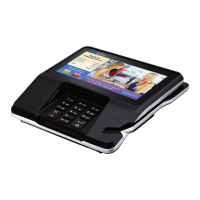
800 series terminal supports TCP/IP networking on the Ethernet port. The
network configuration and program APIs are contained in this chapter. The M
x
800
series fully support the Linux sockets interface for client and server network
programming. The networking API is contained in the svc.h header file and the
libvfisvc shared library.
Networking is currently supported only on the Ethernet port, the eth0 device.
Network
Configuration
Configuration variables are read for network configuration in bringing the interface
up at boot time and user control.
Network
Configuration
Environment
Variables
The following table of configuration variables is read by the system on power up/
reboot and in bringing the interface up. Either the *DHCP or *IFCONFIG
environment variable must be defined to bring up the eth0 network interface.
These configuration variables must be set within the usr1 account.
Table 19
Variable Name Values Definition
*DHCP 1 If *DHCP is present and the system
supports ethernet, then it will attempt
to initialize its connection via DHCP.
*DNS1 IP Address in the form
xxx.xxx.xxx.xxx
If not DHCP, DNS1 is used as the
name server IP address.
*DNS2 IP Address in the form
xxx.xxx.xxx.xxx
If not DHCP, DNS2 is used as the
name server IP address.
*IFCONFIG Per Linux – No need to
set MAC address as the
system will do this for
you.
Typically used:
“eth0 xxx.xxx.xxx.xxx
netmask xxx.xxx.xxx.xxx”
If not DHCP, use *IFCONFIG to set
the following parameters:
• host static IP address
• netmask
• broadcast (optional)
*GATEWAY IP Address in the form
xxx.xxx.xxx.xxx
Use to define the address of the
gateway (router).
*TELNET 1 If *TELNET is present and the system
supports Ethernet, then it will start the
Telnet server daemon.








 To Next Page