Marine engine environment
13
Other factors affecting performance
It is important to keep the exhaust backpressure at a
low level. The power losses caused by backpressure
are directly proportional to the increase of backpres-
sure, which also increases the exhaust temperature.
Thermal values differ between markets and influence
engine output. Environmental fuel, which is compulso-
ry in some markets, has a low thermal value. Engine
output may be reduced up to 10% compared with fuel
specified in the ISO standard.
The weight of the boat is another important factor af-
fecting boat speed. Increased boat weight has a major
effect on boat speed, especially on planing and semi-
planing hulls. A new boat tested with half filled fuel
and water tanks and without a payload easily drops
2-3 knots in speed when tested fully loaded with fuel,
water and equipment for travelling comfort. This situa-
tion arises because the propeller is often selected to
give maximum speed when the boat is tested at the
factory. It is therefore advisable to reduce propeller
pitch by one or more inches when encountering hot
climate and user load conditions. The top speed will
be somewhat reduced but the overall conditions will
improve and provide better acceleration, even with a
heavily loaded boat.
With this in mind it is important to remember that fi-
breglass boats absorb water when they rest in water,
making the boat heavier over time. Marine growth, an
often overlooked problem, also has a serious effect on
boat performance.
Propeller selection
Naval architects, marine engineers or other qualified
people should choose the propeller. The required en-
gine performance data to make the proper propeller
selection is available in technical literature.
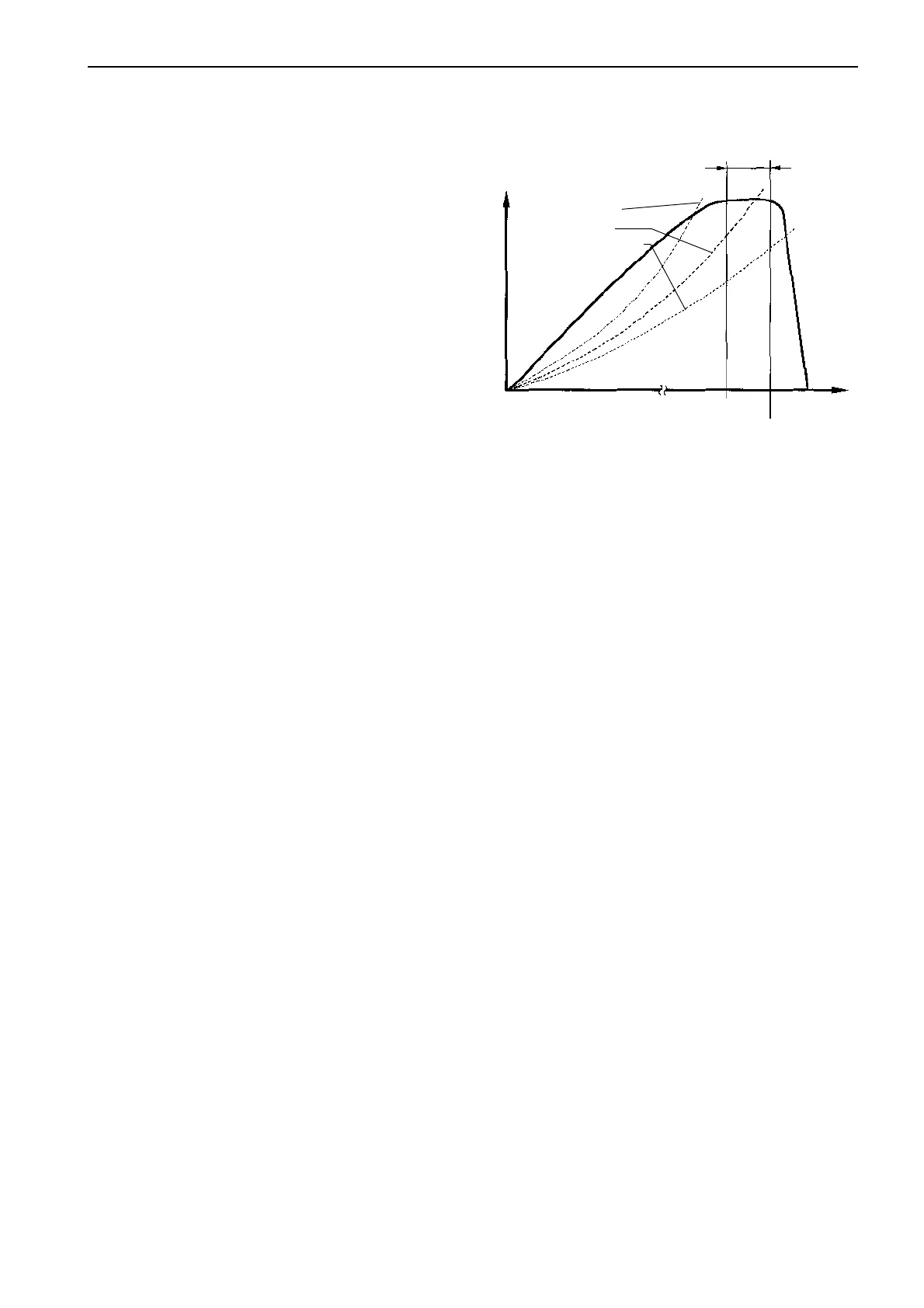
With regard to the propeller selection it is important to
achieve correct engine rpm. For this purpose we rec-
ommend Full Throttle Operating Range.
In order to achieve good all-round performance the
propeller should be selected within this range.
When the prototype and first production boat is built, a
Volvo Penta representative and a boat manufacturer
should undertake a fully loaded trial of the vessel as
near as possible to the conditions that the boat will
meet in the field. The most important conditions are:
• Full fuel and water on board
• Ballast evenly distributed throughout the boat to
represent the owner’s equipment including such
things as outboards, inflatable dinghies etc.
• Genset/air conditioning equipment and all domestic
appliances fitted.
• Adequate number of people onboard.
Once the vessel is subjected to these conditions a full
engine/propeller trial should be undertaken where all
engine parameters are checked, i.e. engine rpm, fuel
consumption, rel. load, ref. rpm (EDC) boost pressure,
exhaust temperatures, engine room temperatures etc.
When the correct propeller has been established
based on the tests, the engine rpm should be within
the ” Full Throttle Operating Range” at full load.
However, it is advisable to reduce pitch some more to
handle varying weather conditions and marine growth.
For this reason boat manufacturers must follow the
actual situation of their differing markets.
Propeller (too big)
Propeller (OK)
Propeller (too small)
Rated
Gover-
nor cut
out
100% of full
output.
Full throttle
operating
range
Engine output, kW
rpm



 To Next Page