Electrochemical corrosion
100
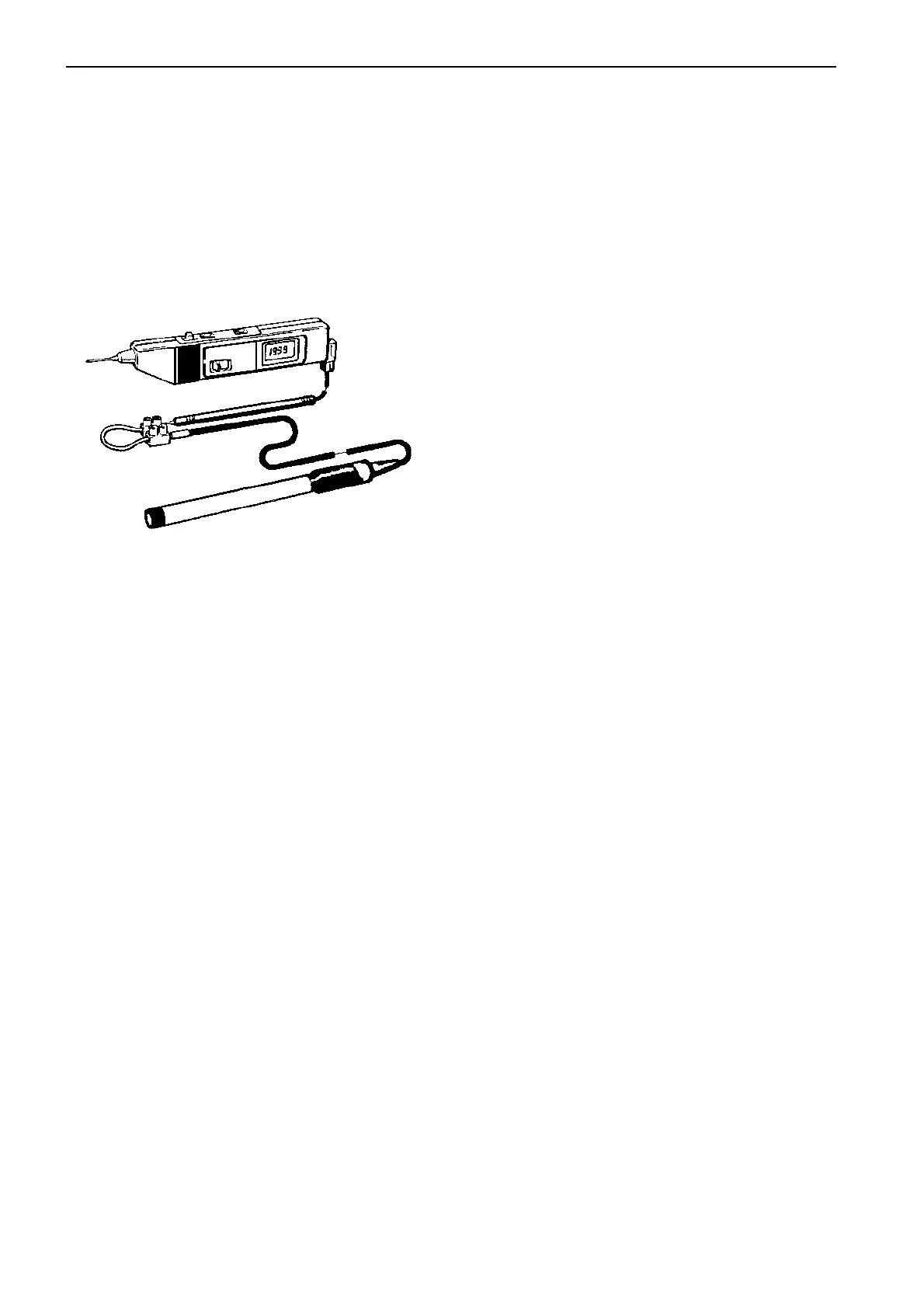
The calomel electrode (Hg/HgCl), 885156-0, is a refer-
ence electrode which shall be connected to the digital
probe tester 9988452-0. The probe tester is used to
measure potential differences.
NOTE! If other multimeters are used, accuracy is re-
quired to 1 mV.
Depending on the method used, the measurement re-
sult can provide a mean voltage value for the entire
measurement object, e.g. shaft line or the voltage
which an individual part produces. Examples of such
point checks are rudders, water intakes etc.
NOTE! The calomel electrode can be used in water
with a varying salt content or in freshwater.
The process measures the potential difference be-
tween the measurement object and the calomel elec-
trode. The calomel electrode has a known constant
electrode potential. Thus the potential differences re-
corded must always be related to a particular refer-
ence electrode and the same electrolyte, i.e. the
same water and water temperature. The water flow
rate must also be the same if results from different
measurements are to be compared.
Checking electrochemical
corrosion
Measuring galvanic currents and stray
currents in water
Volvo Penta has produced a method for measuring
galvanic currents and stray currents using a calomel
electrode.
Measurement theory
Anodic protection operates by sending out an electric
current, the protection current, to oppose the corrosion
current. When the protection current increases and the
corrosion current decreases, the potential of the pro-
tected object decreases. When a given potential is
reached, the corrosion current will have disappeared
and the object has complete cathodic protection.
Thus a given electrode potential for the metal provides
a guide as to when cathodic protection is in place and
whether it is sufficient. The calomel electrode can
measure whether this protection potential is provided.



 To Next Page