Exhaust system
68
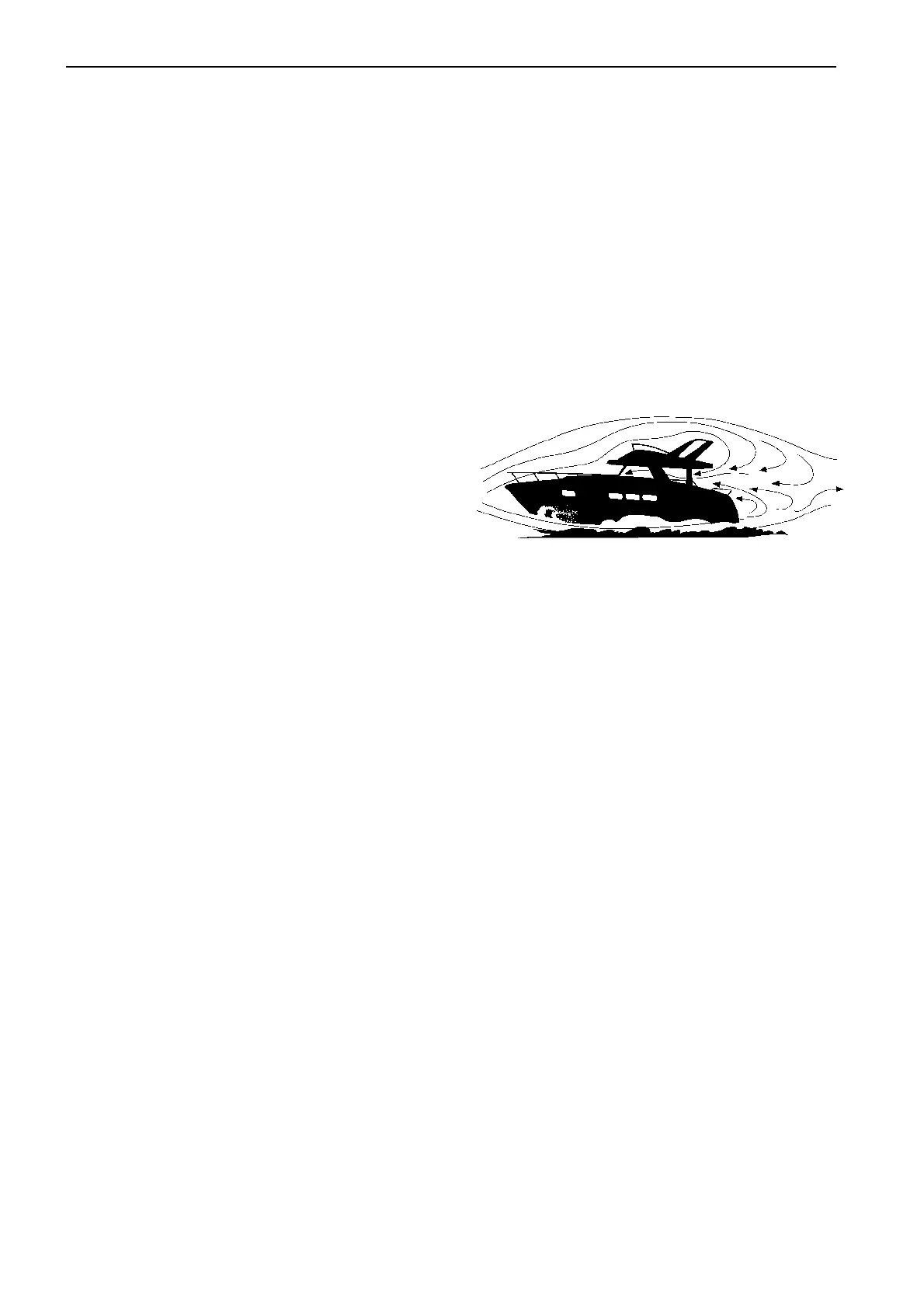
"Wagon-back effect"
As long as we continue to use combustion engines as
sources of power, we will always be faced with the
problem of exhaust emissions. Even though the level
of exhaust emissions from modern combustion en-
gines has now been minimised, smoke and fumes are
still given off when fuel is burnt.
When we also have a sheer body in motion, another
problem arises. It is the phenomen we call the Wagon-
back effect".
On a boat with a sheer, broad transom and high super-
structure, the result of the "wagon-back effect" is that
the exhaust fumes are drawn up towards the after-
deck, dirtying the cockpit and making for unpleasant
conditions for those on board. The problem originates
with what is known as recirculating air. When a boat
moves forward and creates a backward current of air,
an underpressure forms in the boat and the exhaust
fumes are drawn into it.
To avoid such a problem, it is of outmost importance
to design and locate the exhaust outlet properly.
The dry exhaust system for inboard diesel engines is
mainly used for slower vessels, commercial operation.
A dry system might be neccessary to avoid freezing
when engines are operated in cold climates with tem-
peratures below 0°C (32°F) . The dry system in gener-
al requires less maintenance and has longer service
life. Insulation of the system is usually required as
temperatures are dangerously high and heat radiation
into the engine room is negative for engine operation.
Volvo Penta does not market complete dry exhaust
systems but provides some of the key components.


 To Next Page