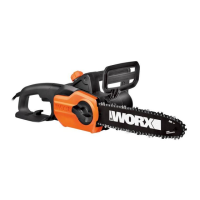
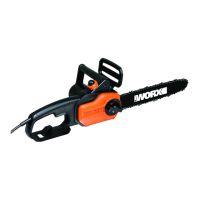
The WORX Electric Chain Saw is a powerful and versatile tool designed for various cutting tasks, including felling trees, limbing, and cross-cutting logs. This electric chain saw is engineered for ease of use, safety, and efficient performance, making it suitable for both experienced users and those new to chain saw operation.
Function Description
The primary function of the WORX Electric Chain Saw is to cut wood using a rapidly moving chain with sharp teeth. It operates by drawing power from an electrical outlet, eliminating the need for fuel and reducing emissions. The chain saw is equipped with a motor that drives a sprocket, which in turn propels the saw chain around a guide bar. This continuous motion allows the chain to efficiently slice through wood.
Key components contributing to its function include:
- Rear Handle and Front Handle: These provide a secure two-handed grip for optimal control and balance during operation.
- On/Off Switch/Trigger and Lock-Out Button: These controls ensure safe activation, preventing accidental starts. The lock-out button must be pressed before the trigger can be engaged.
- Oil Filler Cap and Oil Level Window: The oil reservoir, accessed via the oil filler cap, holds bar and chain oil, which is automatically dispensed to lubricate the chain and guide bar during operation. The oil level window allows users to monitor the oil supply.
- Chain Stop Lever (Hand Guard): This critical safety feature is designed to quickly stop the chain in the event of kickback or other emergencies, protecting the operator.
- Guide Bar and Chain: The guide bar supports and guides the saw chain, while the chain's sharp teeth perform the cutting action. The chain is specifically designed for low kickback to enhance safety.
- Chain Tensioning Knob: This knob allows for easy adjustment of chain tension, which is crucial for safe and efficient cutting.
- Gripping Teeth: These teeth, located at the base of the guide bar, help to secure the saw onto the wood, providing leverage and stability during cuts.
- Bar and Chain Storage/Transportation Cover: This cover protects the guide bar and chain when the saw is not in use, ensuring safe storage and transport.
- Extension Cord Holder: This feature helps to manage the extension cord, preventing accidental disconnection during operation.
Usage Features
Operating the WORX Electric Chain Saw involves several steps to ensure safety and effectiveness:
Assembly and Tensioning:
Before initial use, the chain saw requires assembly of the chain and guide bar. Users must ensure the chain is correctly oriented and seated on the drive sprocket, with the bar tensioning plate facing outwards. The chain cover is then fitted and tightened using the chain tensioning knob. Proper chain tension is vital; new chains stretch and require frequent checking and adjustment. The correct tension allows the chain to be lifted approximately half the drivelink depth from the guide bar in the center, and it should rotate freely without kinks. The built-in ratchet mechanism of the tensioning knob helps maintain tension.
Lubrication:
The chain saw is not pre-filled with oil, so it is essential to fill the oil reservoir with recommended bar and chain oil (ISO VG32 grade) before use. The oil filler cap should be cleaned, unscrewed, and oil added until the reservoir is full, taking care to prevent dirt from entering. The oil level window allows for continuous monitoring of oil levels during operation. Using non-approved or recycled oil will void the warranty and can damage the product. The automatic oiler's function can be checked by running the saw and observing an oil pattern on cardboard.
Switching On and Off:
To start the chain saw, the lock-out button must be pressed with the thumb, followed by fully pressing and holding the on/off switch/trigger. The lock-out button can then be released. To turn off the saw, simply release the on/off switch. It is important not to stop the saw by activating the chain stop lever after sawing.
Safety Mechanisms:
The chain stop lever (hand guard) is a crucial safety feature. In the event of kickback, the operator's hand often strikes this lever, activating it to quickly stop the chain. Regular function checks of this lever are recommended: push it forward to the "stop" position, start the saw (the chain should not move), then release the on/off switch and pull the lever back to the "run" position.
Cutting Techniques:
- General Cutting: Always use a firm, two-handed grip with thumbs and fingers wrapped around the handles. Maintain solid footing and balance, with feet shoulder-width apart. The saw should be running at full speed before contacting wood. Slowly place the moving chain against the wood, keeping the wood as close to the saw body as possible to prevent bouncing or skating. Use light pressure, allowing the saw to do the work, to avoid overloading the motor.
- Felling a Tree: Plan an escape path before starting cuts. Make a notching undercut (1/3 the tree's diameter, perpendicular to the fall direction) with the lower horizontal cut first. Then, make the felling back cut at least 50mm higher than the notching cut, keeping it parallel to create a hinge that guides the tree's fall. Use wedges if needed to open the cut and direct the fall.
- Bucking a Log (Cutting into Lengths): Ensure firm footing and even weight distribution. Support the log with limbs, logs, or chocks if possible. For logs supported along their entire length, cut from the top (overbuck) to avoid contacting the ground. For logs supported on one end, cut 1/3 diameter from the underside (underbuck) first, then finish with an overbuck cut. For logs supported on both ends, cut 1/3 diameter from the top (overbuck), then finish with an underbuck cut for the remaining 2/3.
- Limbing a Tree (Removing Branches): Leave larger lower limbs to support the log off the ground. Cut small limbs in one pass. For branches under tension, cut from the bottom up to avoid binding the chain saw.
- Cutting Wood Under Tension: Exercise extreme caution as wood can spring back, causing severe injury.
- Kickback Prevention: Always use both hands, maintain a firm grip, and keep all safety items in place. Avoid overreaching, cutting above shoulder height, or letting the guide bar nose touch anything when the chain is moving. Do not attempt to cut through two logs simultaneously or bury the guide bar nose for plunge cuts. Use only the low-kickback chain and guide bar supplied or recommended by the manufacturer.
General Safety Practices:
- Wear safety glasses, hearing protection, and other protective equipment (head, hands, legs, feet).
- Do not operate the chain saw in a tree or on unstable surfaces like ladders.
- Carry the chain saw by the front handle with the chain switched off and away from the body.
- Always apply the guide bar cover during transport or storage.
- Keep handles dry, clean, and free from oil and grease.
- Cut wood only; do not use the chain saw for plastic, masonry, or non-wood building materials.
- Ensure the work area is clean, well-lit, and free of bystanders.
- Avoid operating in explosive atmospheres or wet conditions.
- Use an extension cord suitable for outdoor use and a ground fault circuit interrupter (GFCI) if operating in damp locations.
Maintenance Features
Regular maintenance is crucial for the longevity, safety, and performance of the WORX Electric Chain Saw:
Pre- and Post-Use Inspection:
- Before and after each use, inspect the saw for any damage, including guards or other parts. Check for misalignment, binding of moving parts, or broken components. Do not use a damaged saw; have it repaired by an authorized service center.
- Unplug the chain saw from the power source before any adjustments, accessory changes, or servicing.
Chain Maintenance:
- Tensioning: Regularly check and adjust chain tension, especially with new chains that tend to stretch. A loose chain increases kickback risk, can jump out of the guide bar groove, and causes rapid wear to the chain, bar, and sprocket.
- Sharpening: Keep the chain sharp. A dull chain cuts slowly, requires more force, produces sawdust instead of chips, and causes undue wear on the sprocket, guide bar, chain, and motor. Follow manufacturer's instructions for sharpening.
- Replacement: Replace the chain when cutters are too worn to sharpen or when the chain stops functioning correctly. Only use replacement chains specified in the manual.
Guide Bar Maintenance:
- Cleaning: Clean the bar rails that carry the chain before storing the tool or if they appear dirty. This should be done every time the chain is removed. Use a wire brush, screwdriver, or similar tool to clear residue from the inner groove and thoroughly clean oil passages.
- Inspection: Check the guide bar's condition each time the chain is sharpened. A worn, bent, cracked, or overheated guide bar is unsafe, damages the chain, and makes cutting difficult. If the rail top is uneven, use a flat file to restore square edges and sides. Replace the guide bar if it is worn, bent, cracked, or shows excessive heating/burring. Use only guide bars specified for the saw.
- Sprocket Lubrication: Lubricate the guide bar sprocket using a grease gun. Insert the gun tip into the lubrication hole and inject grease until it appears at the outside edge of the sprocket tip. Rotate the sprocket by hand and repeat the lubrication for ungreased sections.
General Maintenance:
- Keep the chain saw clean, dry, and lubricated.
- Keep handles dry, clean, and free from oil and grease.
- Ensure all screws and nuts are tight.
- Inspect the power cord frequently for damage. If damaged, have it repaired by an authorized service center. Never carry the saw by the power cord or yank it to unplug. Keep the power cord away from heat, oil, and sharp edges.
- When servicing, use only identical replacement parts to maintain safety.
Storage:
- Store the chain saw in a high or locked place, out of children's reach.
- Store it in a dry place.
- Always store with the bar and chain cover in place.
By adhering to these function, usage, and maintenance guidelines, users can ensure safe, efficient, and prolonged operation of their WORX Electric Chain Saw.



 To Next Page


 General