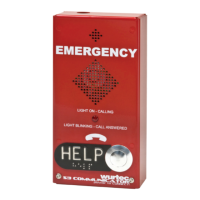
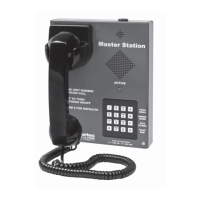
The Wurtec S3 Command Center is a telecommunications device designed to facilitate calls between emergency elevator telephones and the Public Switched Telephone Network (PSTN). It is built to meet the communication safety requirements for elevators as outlined in the ASME A17.1 elevator safety code, working in conjunction with Wurtec S3 Communicator emergency elevator telephones.
Physical Specifications and Requirements:
The Command Center is typically located in areas such as the lobby, security desk, machine room, or fire command room, though its placement is not strictly limited to these locations. It must be mounted vertically in an indoor, temperature-controlled environment, with an operating temperature range of 0°C to 40°C. The installation area should be low-humidity and have low ambient audible noise, protected from dirt and airborne particles.
Electrical Requirements:
- External Power: 24V DC, with a maximum current of 3A.
- Battery Voltage: 12V DC.
- Battery Type: Rechargeable 9Ah.
- TELCO Line Voltage: 24-52V DC.
- TELCO Line Current: 23mA.
Wiring Requirements:
- TELCO to Command Center: 24AWG UTP (Unshielded Twisted Pair).
- Command Center to Elevator: 24AWG STP (Shielded Twisted Pair), conforming to ASME A17.1.
- Command Center to Station: 24AWG UTP.
- Command Center to Command Center (future): 24AWG UTP / 4 pair CAT 5.
- Tools: 3/32" slot screwdriver, wire strippers/cutters (typically 24-22 AWG, depending on cable).
- Protective Gear: Safety glasses, ESD strap.
Initial Setup and Power-Up:
Before applying power, all expansion cards must be properly inserted, and all external and internal phone line connections should be in place. The power supply output should be approximately 24V. Upon power-up, the Command Center automatically detects the installed expansion cards. Internal lines are displayed with odd-numbered extensions (001-015) and identified as FXS. External lines, if installed, are displayed with even-numbered extensions (002-016) and identified as FXO.
Operator Interface and Display:
The Command Center features an LCD display that provides status information, including voltage and current of the highlighted line.
- Line Labels: Displays "EXT" on the far left, followed by default extensions. Lines are numbered 001-016 by default. Internal lines are always odd-numbered, external lines are always even-numbered.
- Middle Text: Displays either the line name or the voltage and current, depending on settings.
- Right Text: Shows line status: "1" for OFF hook, "0" for ON hook, "X" for not connected, and "!" for incoming call or call on hold.
- Color Coding:
- Green: Good connection and on standby (0).
- Yellow: Line in use/off hook (1).
- Red: External card inserted but no line connected (X) or incoming call (!).
Keypad and Navigation:
- SELECT Key: Selects the highlighted item.
- ARROW Keys: Scroll up, down, left, and right to highlight selections.
- PAGE ON/OFF: Pages all phones connected to the Command Center.
- SPEAKER ON/OFF: Enables/disables the speakerphone.
- END ALL CALLS: Disconnects all calls in progress.
- CONVERSATION VOLUME: Increases in-call volume.
- MENU VOLUME: Increases local menu volume.
- NUMBER PAD: Standard 12-key dial pad.
- MENU: Accesses settings.
- BACK: Returns to the previous menu in programming mode.
- HOLD: Displays on the home screen; presses to hold the current call.
- EXIT: Enabled in programming menu.
- JOIN: Displays on the home screen; joins a call in progress.
- SAVE: Enabled when changing settings.
- STOP: Enabled in site ID recording mode.
Programmable Parameters:
- Remote Programming: All local programming options can be accessed remotely.
- Recording Site Message: Users can record a site ID message via the MENU and SELECT buttons.
- Password: Allows changing or disabling the password (reserved for future release).
- Line Name Menu: Configures line information display, allowing users to enable line names instead of just extensions and status. Line names and extension numbers are programmable with alphanumeric and special characters.
- External Line Display: External lines can be configured to be displayed or hidden from the user.
Basic Operation from the Command Center:
- Answering a Station Call: Can be answered by picking up the handset or pressing SPEAKER ON/OFF. If from an S3 Communicator, press "1" to talk or "2" to listen to the site ID message (if not set to immediate two-way calling).
- Calling a Station: Can be done by using SELECT with the handset off-hook (scrolling to the desired extension and pressing SELECT) or with the handset on-hook (call automatically on speakerphone).
- Ending a Station Call: Place the handset back on the receiver or press SPEAKER ON/OFF if on speakerphone.
- Holding a Station Call: Only possible if the phone is on speakerphone. The HOLD button becomes active when another caller is calling in.
- Answering a Station Call with a Call on Hold: Press HOLD to answer the next call in the queue. Priority is dictated by the first caller and whether the call was already answered.
- Joining Multiple Station Calls: Press JOIN on the left side of the display for calls in progress. This allows communication with all active parties.
- Calling Multiple Stations (Paging): Press PAGE ON/OFF. This is a one-way announcement feature. S3 Communicator phones connect automatically; other phones may require manual pickup. The page remains "on" until END ALL CALLS is pressed.
- Ending Call with Multiple Stations: Press END ALL CALLS to disconnect all calls. Individual calls cannot be hung up if a page was initiated.
- Calling Outside Line: Scroll to highlight the external line and press SELECT, then dial. Alternatively, lift the handset or press SPEAKER ON/OFF, then dial "99" for an outside line, followed by the number.
- Answering Outside Line: Similar to answering a station call.
Basic Operations from a Station:
- Answering Command Center Call: S3 Communicators answer automatically. S3 Communicator Master Stations can also lift the handset. POTS telephones can pick up for immediate two-way calling.
- Calling Command Center: Dial extension "0" from any connected station.
- Ending Command Center Call: S3 Communicators disconnect automatically. Other phones require placing the handset back on the hook.
- Holding Command Center Call: Refer to the phone's manufacturer instructions.
- Calling Another Station: Dial the desired extension. Only one station can be called at a time.
- Calling Outside Line: Lift handset, dial "99" for an outside line, then the number.
- Answering Outside Line: Depends on the device calling.
Basic Operation from an S3 Communicator Station:
- Programming the S3 Communicator: Full instructions are in the S3C manual, on Wurtec.com, or via technical support.
- Calling Command Center: Program extension "0" as an emergency number. S3C Master Stations can dial "0" directly.
- Calling Outside Line: Program "99*[PHONE NUMBER]" as an emergency number. S3C Master Stations can dial "99" then the number.
- Calling Another Station: Program the extension as an emergency number. S3C Master Stations can dial the station number directly.
- Answering Calls: S3Cs answer automatically with an audible beep and flashing LED. Calls end automatically with an audible "they have hung up" message and LED off.
Connecting to Other Command Centers:
Calls can be placed between Command Centers, similar to elevator phones or outside lines, requiring additional hardware and cabling.
- Calling another Command Center: Select the extension connected to the other Command Center (e.g., EXT 001), which will answer with an automated response. Dial "0" to ring the other Command Center.
- Calling S3 Communicators sharing a line: Select the extension connected to the S3 Communicators (e.g., EXT 003), which will respond with an automated message asking which phone (1-8 or 0 for all) to talk to.
- Calling an outside line from a connected Command Center: Dial "99" to get a dial tone, then the number. If calling through another Command Center, dial "99" twice.
Advanced Operations:
- Programming S3C from Command Center: Any connected or externally accessible S3C can be programmed.
- Ethernet Connectivity: Reserved for future release.
- USB Firmware Upgrade: The Command Center firmware is field-upgradeable. Requires a Windows 7 or greater laptop/PC with USB 2.0 and internet connection, and Microchip FLIP software. Firmware files are obtained from Wurtec support. The upgrade process involves pressing F/W Update and Reset pushbuttons, connecting via USB, and executing a batchisp command in a CMD line window.
Troubleshooting:
- Keypad Not Working: Ensure power is on and phone is off-hook.
- Arrow Keys Not Working: Disabled during a call; ensure power is on.
- Busy Tone When Calling Out: Dial "99" first for an outside line. Verify external line status is green "0". If red "X", the Command Center doesn't recognize the line; check for at least 24VDC.
- No Response to Touch Tone Remotely: Verify phone is not set to "pulse" dialing. Landline phones should work. Cell phone issues may occur due to reception or compatibility; onsite programming is recommended.
- Handset Not Working: Verify proper connection. Handset is disabled if speakerphone is active; place handset back on receiver. If speakerphone was activated without returning the handset to the receiver, both may malfunction; ensure phone is on hook and speakerphone is off.
Maintenance:
The Command Center is designed for minimal maintenance. The battery is the only component requiring regular maintenance and should be replaced every 5 years. Daily checks are recommended to acknowledge any warning or error messages displayed.
Certificates and Compliance:
- FCC Part 15, Class A: The equipment complies with Class A digital device limits, providing reasonable protection against harmful interference in a commercial environment. Operation in a residential area may cause interference, requiring the user to correct it.

 Need help?
 General

 To Next Page