Need help?
Do you have a question about the York YLCA and is the answer not in the manual?
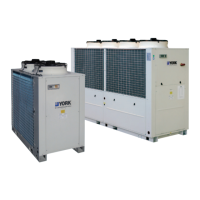
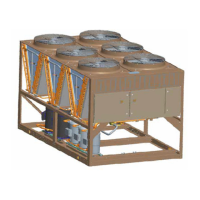
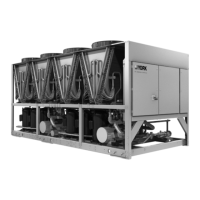
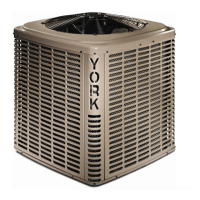
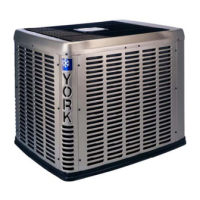
Overview of air-water cooling units and heat pumps, their design, and components.
Details various YLCA/YLHA PLUS models and their cooling/heating capacities.
Outlines technical details: sheeting, compressors, heat exchangers, fans, and control panels.
Describes the hydro kit, protecting grids, and soft start feature for the units.
Lists optional features and accessories like remote controls and kits.
Explains the use and installation of rubber antivibration supports for noise and vibration reduction.
Explains the multipurpose controller, its main functions, and controlled devices.
Details the central control module, fan speed control, and probe types used in the system.
Outlines the different access levels (Factory, Super User, User, Direct) for parameter configuration.
Presents wiring diagrams for YLCA 5+15 and YLCA 20+27 units, explaining component connections.
Explains symbols on the unit's display and the functions of the control buttons.
Illustrates control layout and introduces tables for parameter classification.
Lists and describes parameters associated with temperature and pressure probes.
Details parameters for compressor operation, timing, and hour counters.
Shows graphical representations of operational timing and compressor/pump delays.
Lists parameters for fan control, speed adjustment, and management during operating modes.
Details parameters controlling the defrost cycle, including start/end conditions and duration.
Outlines parameters for antifreeze protection, including set points and heater activation.
Lists parameters for unit model, ventilation circuits, pump operation, and digital inputs.
Details parameters for configuring alarm conditions, delays, and reset methods.
Lists parameters for setting cycle points, regulation types, and offset values.
Provides a table of alarms, their types, and reset methods.
Explains alarm resets, forced defrost, clearing counters, and pump/remote operations.
States the need for regular maintenance for optimal operation and unit longevity.
Clarifies that only trained personnel should perform maintenance, not users.


 To Next Page

 General