Minimum& Maximum Records
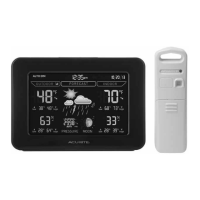
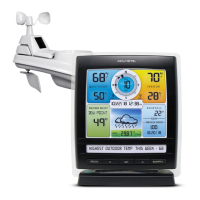
The display unit features Minimum & Maximum records display
mode. The minimum and maximum values for indoor and outdoor
temperature and humidity are recorded and kept until midnight every
day, when the records are reset for the next day.
Minimum Records
To view the minimum records, press the "adjust down" button ( T)
located on the back of the display unit. The minimum recorded
values will display for about 8 seconds (note the
"±'' icon indicating
minimum records being displayed). To manually reset the records
being displayed, press and hold the "adjust down" (
T ) button
while viewing the records.
Maximum Records
To view the maximum records, press the "adjust up" button ( ..._)
located on the back of the display unit. The maximum recorded
values will display for about 8 seconds (note the
'r.p' icon indicating
maximum records being displayed). To manually reset the records
being displayed, press and hold the "adjust up" ( ..._ ) button while
viewing the records.
Momentary Backlight
The display unit features a momentary blue backlight for easy
night-time viewing. The button to activate the backlight is located on
the very top edge of the display unit housing. Pressing the button will
give you about 10 seconds of illumination. Note that excessive use of
the backlight will reduce the battery life.
Momentary Backlight Button
I
n
8
Atmospheric Pressure
Atmospheric Pressure is defined as the pressure at any location on
the Earth, caused by the weight of the column of air above it. At sea
level, atmospheric pressure has an average value of one atmosphere
and gradually decreases as altitude increases. Also called
barometric pressure.
The weight of the air mass, or atmosphere, that envelopes Earth
exerts pressure on all points of the planet's surface. Meteorologists
use barometers to measure this atmospheric pressure (also called
barometric pressure). At sea level the atmospheric pressure is
approximately 1 kilogram per square centimeter ( 14.7 pounds per
square inch), which will cause a column of mercury in a mercury
barometer to rise 760 millimeters (30.4 inches). Subtle variations in
atmospheric pressure greatly affect the weather. Low pressure
generally brings rain. In areas of low air pressure, the air is less
dense and relatively warm, which causes it to rise. The expanding
and rising air naturally cools, and the water vapor in the air
condenses, forming clouds and the drops that fall as rain. In high
pressure areas, conversely, the air is dense and relatively cool, which
causes it to sink. The water vapor in the sinking air does not
condense, leaving the skies sunny and clear.
This weather forecaster features a current barometric pressure
display, as well as a trend arrow icon (rising, falling or steady).
These two features can assist you in forecasting changes in the
weather.
inHg
29.
□ S
9



 To Next Page