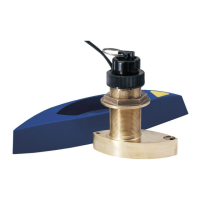
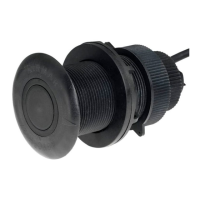
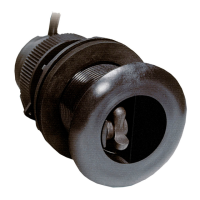
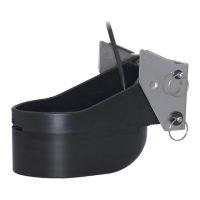
Cutting the Standard Fairing
High-Performance Fairing
—For your safety it is mandatory to follow
the Installation Instruction Supplement that comes with the fairing.
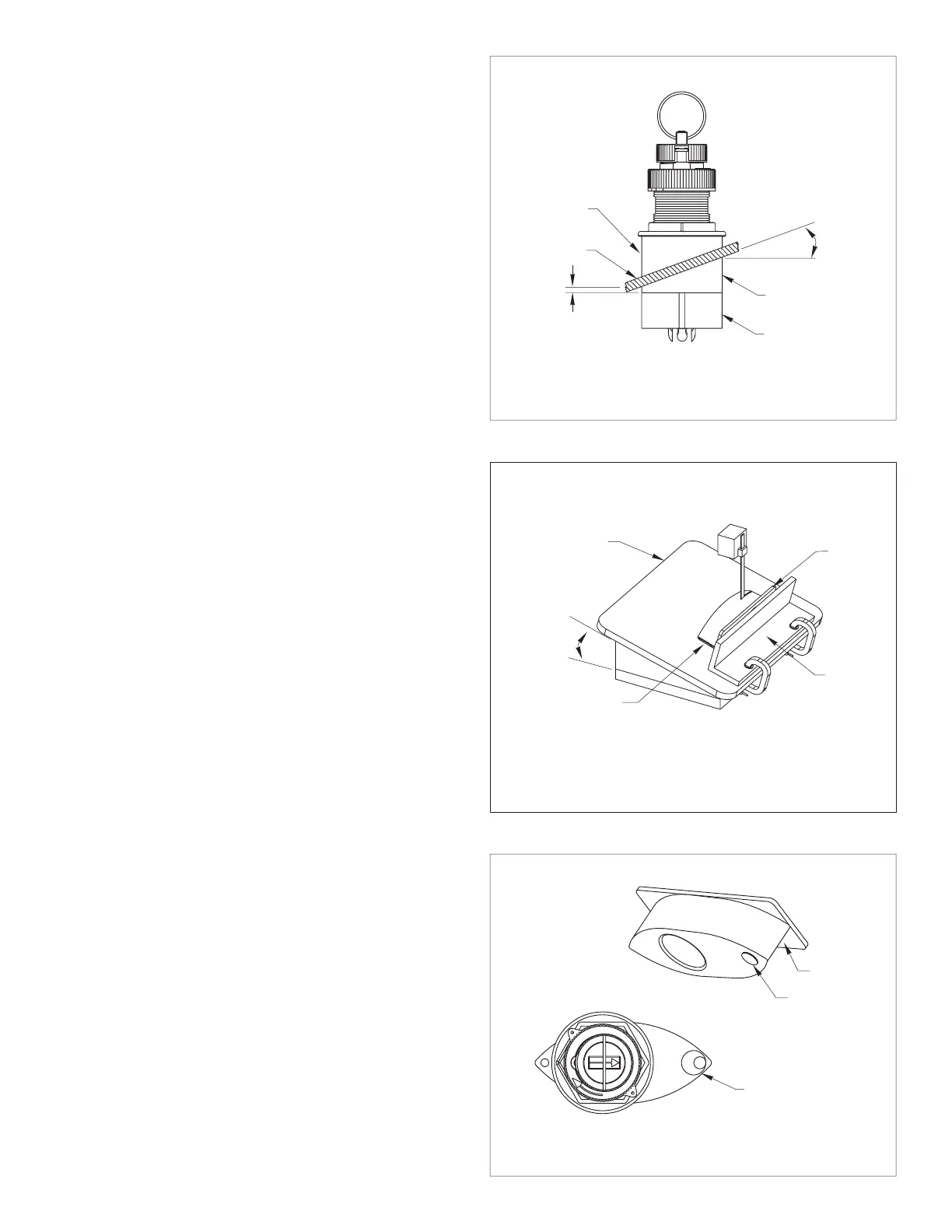
1. Measure the deadrise angle of the hull at the selected location
using an angle finder or a digital level (see Figure 3).
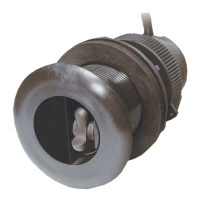
2. Tilt the band saw table to the measured angle and secure the
cutting fence (see Figure 4).
Caution:
The BUTTON always points forward toward the bow. Be
sure to orient the fairing on the band saw so the angle cut
matches the intended side of the hull and not the mirror image.
3. Place the Standard Fairing on the table, so the cutting guide
rests against the fence. The button will point toward you for
installation on the port side and away from you for installation
on the starboard side of the boat (see Figures 4 and 5).
4. Adjust the cutting fence. The Standard Fairing
must
be between
6–12mm (1/4–1/2") at its thinnest dimension (see Figure 3).
Warning
: Always wear safety goggles and a dust mask.
5. Recheck steps 1 through 4. Then cut the fairing.
6. Shape the fairing to the hull as precisely as possible with a rasp
or power tool.
7. Use the remaining section of the fairing for the backing block.
Bedding the Housing
1. Apply a 2mm (1/16") thick layer of marine sealant over the
surface of the multisensor housing that will contact the fairing
and up the stem. The sealant
must
extend 6mm (1/4") higher
than the combined thickness of the fairing, hull, backing block,
and hull nut (see Figure 2). This will ensure there is marine
sealant in the threads to seal the hull and hold the hull nut
securely in place.
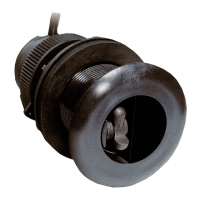
2. Slide the fairing onto the stem and mate the button with the
recess in the housing (see Figure 5).
3. Apply a 2mm (1/16") thick layer of marine sealant to the side of
the fairing that will contact the hull (see Figure 2).
4. Apply a 2mm (1/16") thick layer of marine sealant to the side of
the backing block that will contact the hull interior.
Installing the Housing
Caution
: Never strike the multisensor.
1. From outside the hull, push the stem of the multisensor housing
through the mounting hole using a twisting motion to squeeze
out excess sealant.
Be sure
the button on the fairing is mated
with the recess in the multisensor and it is pointing forward
toward the bow (see Figure 5).
Take care to align the assembly
parallel to the centerline of the boat
.
2. From inside the hull, slide the backing block onto the stem and
seat it firmly against the hull. Screw the hull nut in place.
Tighten it with slip-joint pliers (see Figure 2).
Wood hull
—Allow the wood to swell before tightening.
Cored fiberglass hull
—
Do not over tighten,
crushing the hull.
Caution
: Be careful to avoid cross threading the cap nut.
3.
Being sure
the valve assembly is seated firmly in the housing,
carefully screw the cap nut in place.
HAND-TIGHTEN
only.
Do not
over tighten.
4. Remove any excess sealant on the outside of the fairing and
the hull to ensure smooth water flow over the multisensor.
3
Figure 4. Cutting the Standard Fairing
cutting
guide
band saw
table
deadrise
angle
end with button
for installation
on port side
fence
button
Figure 5. Airmar Standard Fairing
BOW
➤
6–12mm (1/4–1/2")
backing
hull
Standard Fairing
multisensor
deadrise
fairing thickness
angle
slope of hull
parallel to
waterline
block
Figure 3. Deadrise angle and fairing thickness
(B744V shown)
at thinnest point
recess in
housing
cutting
guide
Copyright © 2005, 2007 Airmar Technology Corp.
Copyright © 2005 Airmar Technology Corp.
Copyright © 2005 Airmar Technology Corp.


 To Next Page