Residential HRV/ERV
11
Locating the Air Exchanger
The device must be located in a place where the temperature is always above freezing.
Choose a location for the device where the ducts will be short with minimal use of
elbows. This ensures that the system functions optimally.
Ducting Materials
WARNING: Always validate with the Building Code in eect before designing your ducting.
The Building Code takes preseance over the recommandations below.
1. Where ducting passes through concealed spaces (walls, ceiling-oor assemblies), it is
recommanded to use metal ducts and to minimise the use of exible ducts to oer less
resistance to airow and permit duct cleaning.
2. Where the ducting remains permanently accessible, 5 to 10 feet of insulated exible
duct should be used between the HRV/ERV and all interior supply and exhaust registers
to reduce fan noise passing the ducting to interior spaces.
Connecting the Ducts
For the air exchanger to run optimally, place the ducts so they are as straight as possible.
Ducts should be kept short and have as few bends or elbows as possible to maximize airow.
Forty-ve degree elbows are preferred to 90-degree elbows. Use “Y” tees rather than straight
tees whenever possible.
All ducts going through unheated areas must be insulated. The ducts between the exterior
vent hoods and the HRV/ERV must be insulated and covered with a vapor barrier. See the
next section “Vent Hood Locations”.
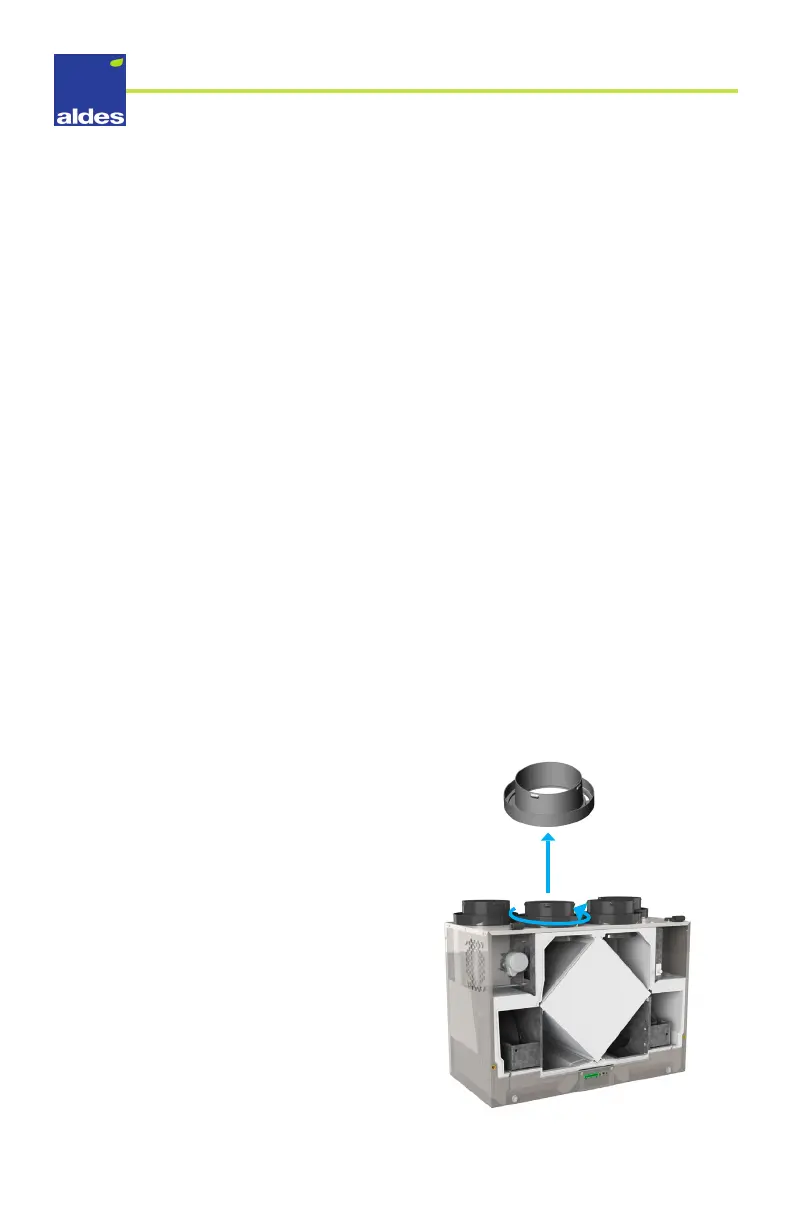
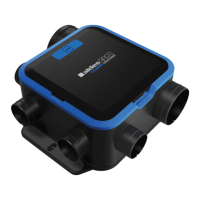
These units are equipped with twist-in collars to simplify the process of connecting exible
duct to your ventilator. Flexible duct is recommended to provide vibration isolation
between the unit and duct system. Start
by determining the required duct length
to reach each respective collar, and cut
as required. Remove each duct collar by
unscrewing them from the locking tabs.
Connect the ducts to the removed collars
using duct tape and exible duct straps.
If rigid duct is used, avoid attaching with



 To Next Page