Residential HRV/ERV
31
Adding Accessories to the VentZone® System
Due to the operation of the VentZone® System, most Aldes controllers cannot be utilized. If
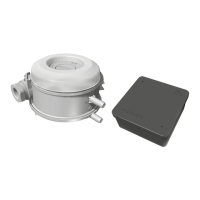
desired, the VentZone® System can be used with the Aldes Humidity Controller (P/N 611224).
Use of this controller requires one additional ZRT-1-6-24 to be controlled by said controller in
order to prevent unwanted pressurization of the home.
V. MEASURING & BALANCING AIRFLOW
Measure and Balance
The installer must measure and balance the airow brought in from the outside and the
exhaust airow so that the dierence between the two is less than 10% of the maximum
airow. This airow balance is especially important in homes using a combustion device or
in those located in areas where the ground emits radon.
If the airows are not properly balanced, then:
• The HRV/ERV may not operate at its maximum eciency
• A negative or positive air pressure situation may occur in the house
• The unit may not defrost properly
Excessive positive pressure may drive moist indoor air into the external walls of the
building, where it may condense (in cold weather) and degrade structure components.
It may also cause key holes to freeze up.
Excessive negative pressure may have several undesirable effects. In some geographic
locations, soil gases such as methane and radon gas may be drawn into the home
through basement/ground contact areas. Excessive negative pressure may also cause
the backdrafting of vented combustion equipment.
CAREFULLY READ THE WARNINGS IN THE SECTION “PRECAUTIONS & GUIDELINES”
ON PAGE 5.
Fresh and stale airflow can be measured and balanced by two methods: Door-Port
Balancing or In-Duct Balancing
Door-Port Balancing
Door-port balancing is used to determine and adjust the airow rates of the supply and
exhaust air streams by measuring the static pressure loss across the HRV/ERV core. The
recommended tool for this procedure is a dierential pressure gauge (with a 0.0-0.25 in. w.g.
range) or a digital manometer.
Note: The airow chart on the door of the unit is for use with the lters that come with the
unit. If other lters are used, in-duct measurements of airow may be made using pitot tube,
airow probes, or hot-wire thermal anemometer as described in later sections.



 To Next Page