Residential HRV/ERV
4
In the cooling season, the reverse occurs. Fresh outdoor air is cooled by the air-conditioned
exhaust air. If the outgoing air is drier than the fresh air, the ERV will transfer moisture to the
outgoing air. This process reduces the humidity load on the air conditioning system, which
would otherwise result in the continuous introduction of humid summer air to the home.
NOTE: It is important to understand that an ERV is not a dehumidier by itself, but it will
assist the air conditioner by removing much of the latent heat (water vapor) from the fresh
air entering the home.
Ventilating with HRV/ERVs
Today’s modern, tight homes require fresh outdoor air to maintain a healthy indoor air
environment. The amount of ventilation you require in your home will depend upon:
• Number of occupants and their activity levels
• How your home was built
• Your personal preferences for fresh air
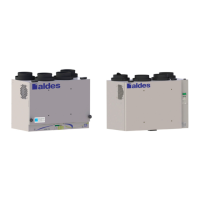
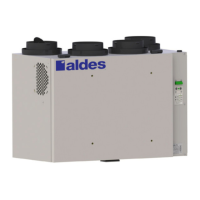
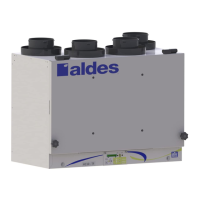
The Aldes HRV/ERV introduces fresh air to your home while recovering energy from the air
it exhausts. Specically, an HRV/ERV that is properly installed, operated and maintained will:
• Exhaust stale, contaminated air
• Recover the majority of the energy from the exhausted stale air
• Use the recovered energy to pre-heat or pre-cool outside air drawn into the house
• Distribute the fresh air throughout the house
During seasons when your windows and doors are closed (winter and summer if air
conditioned), the HRV/ERV should be set to operate continuously on low speed with the
option of going to high speed as the need arises. For example, if you are entertaining and
many people are present, you should temporarily switch the unit to high speed.
You may wish to use an intermittent operational mode if your home is unoccupied for long
periods.



 To Next Page