CHAPTER 4: DEVELOPING WELD SCHEDULES
DUAL PULSE 125
STORED ENERGY RESISTANCE WELDING POWER SUPPLY
990-270 4-5
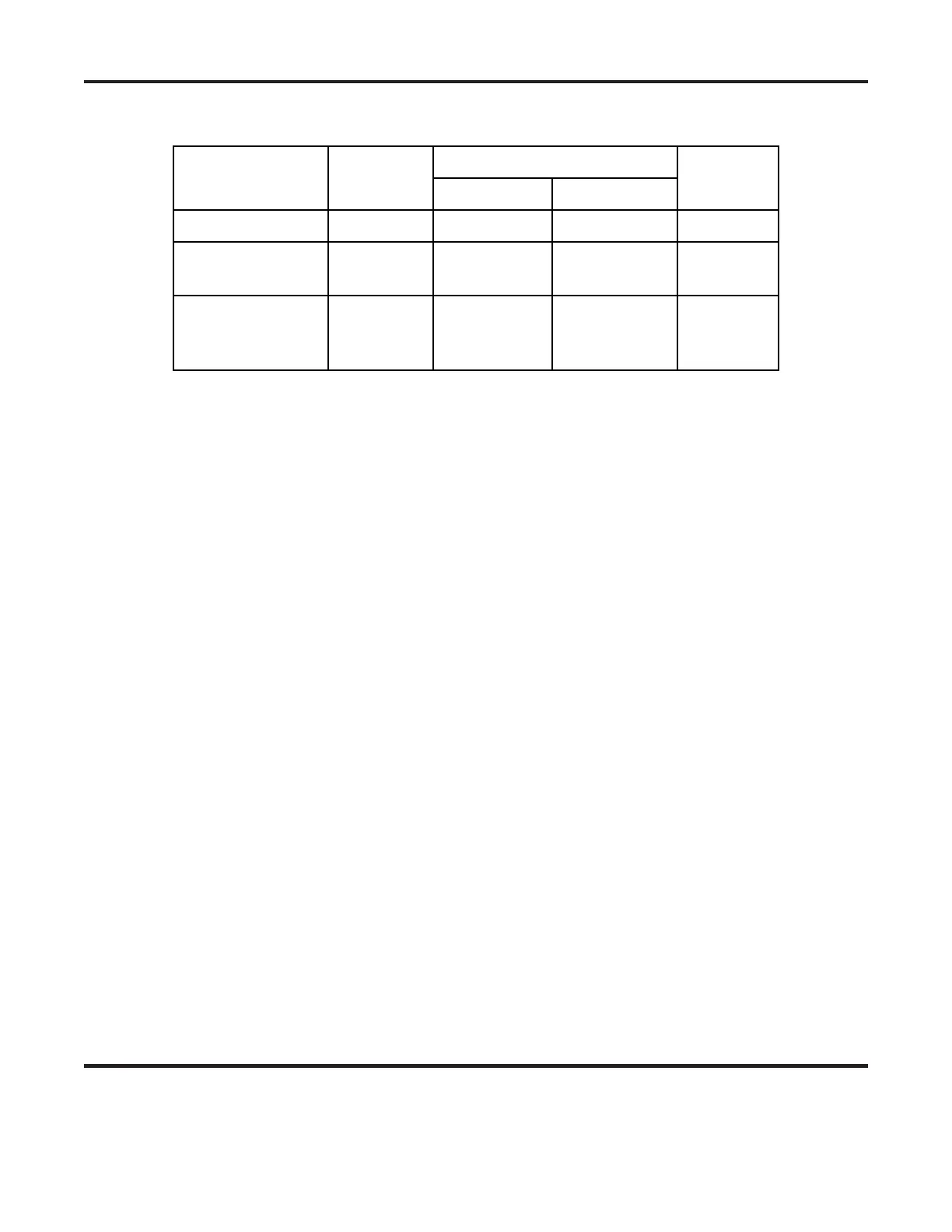
Table 4-1. Causes of Imperfect Welds
Problem Energy
Electrode
Time
Force Size
Weak Weld Too Low Too High Too Large Too Short
Blow Holes.
Expulsion.
Too High Too Low Too Small Too Long
Burned, Pitted
or Cracked
Electrodes
Too High
Too Low.
Requires
Maintenance
Poor
Maintenance
Too Short
Electrode Force and %ENERGY
The heat of resistance welding is produced, in part, by the resistance of the interface between the work
pieces to the flow of electricity (the contact resistance).
Sufficient electrode force is required to contain the molten material produced during the weld.
However, as the force is increased, the contact resistance decreases.
Lower contact resistance requires additional energy to produce the heat required to form a weld.
The higher the electrode force, the greater the energy (current and/or time) required to produce a given
weld. Low force usually results in lower bond strength. Increased force requires higher energy but
usually results in a stronger bond. Energy is proportional to time and the square of the welding current.
Polarity
Users of stored energy equipment have found that the direction of current flow can have a marked effect
on the weld characteristics of some material combinations. This effect occurs when welding:
Materials with large differences in resistivity, such as copper and nickel.
Identical materials with thickness ratios greater than 4 to 1.
Since polarity can be an important consideration in resistance welding of some material combinations,
be sure to check the weld schedule results using both positive and negative polarity. Polarity can be
changed by reversing the weld cable connections, Connecting the lower electrode to the (-) power output
terminal. Refer to Chapter 2. The general rule is that the more resistive material, or the thinner
material, should be placed against the negative (-) electrode.
Weld Strength Profiles



 To Next Page