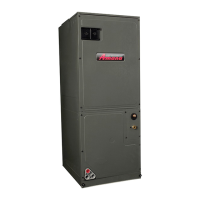
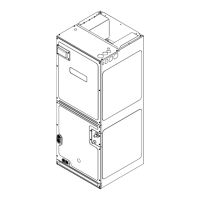
AVPTC**14**
© 2016-2017 Goodman Manufacturing Company, L.P.
5151 San Felipe, Suite 500, Houston, TX 77056
www.goodmanmfg.com - or - www.amana-hac.com
P/N: IOA-4021D Date: December 2017
AIR HANDLERS
INSTALLATION & OPERATING INSTRUCTIONS
is a registered trademark of Maytag Corporation or its related companies and is used under license. All rights reserved.
ATTENTION INSTALLING PERSONNEL
Prior to installation, thoroughly familiarize yourself with this Installa-
tion Manual. Observe all safety warnings. During installation or repair,
caution is to be observed. It is your responsibility to install the product
safely and to educate the customer on its safe use.
RECOGNIZE THIS SYMBOL AS A
SAFETY PRECAUTION.
Contents
1 Important Safety Instructions ............................................... 2
2 Shipping Inspection .............................................................. 3
3 Codes & Regulations ............................................................. 3
4 Replacement Parts ............................................................... 3
5 Pre-Installation Considerations ............................................. 3
6 Installation Location ............................................................. 3
7 Refrigerant Lines .................................................................. 5
8 Condensate Drain Lines......................................................... 8
9 Ductwork ............................................................................. 9
10 Return Air Filters .................................................................. 9
11 Electric Heat ......................................................................... 9
12 Electrical and Control Wiring ............................................... 10
13 Achieving 1.4% and
2.0% Airflow Low Leakage Rate ........................................ 11
14 24 Volt Wiring .................................................................... 11
15 Auxiliary Alarm Switch ........................................................ 12
16 AVPTC Motor Orientation ................................................... 12
17 Circulator Blower ............................................................... 13
18 Heat Kit Selection ............................................................... 16
19 Troubleshooting ................................................................. 16
20 ComfortNet™ System ........................................................ 17
21 Start-Up Procedure ............................................................ 19
23 Communications Troubleshooting Chart ............................. 20
24 Air Handler Advanced Features Menu ................................ 21
25 Troubleshooting ................................................................. 22
26 Diagnostic Codes ................................................................ 26
27 Wiring Diagrams ................................................................. 27
O
NLY
PERSONNEL
THAT
HAVE
BEEN
TRAINED
TO
INSTALL
,
ADJUST
,
SERVICE
OR
REPAIR
(
HEREINAFTER
, “
SERVICE
”)
THE
EQUIPMENT
SPECIFIED
IN
THIS
MANUAL
SHOULD
SERVICE
THE
EQUIPMENT
. T
HE
MANUFACTURER
WILL
NOT
BE
RESPONSIBLE
FOR
ANY
INJURY
OR
PROPERTY
DAMAGE
ARISING
FROM
IMPROPER
SERVICE
OR
SERVICE
PROCEDURES
. I
F
YOU
SERVICE
THIS
UNIT
,
YOU
ASSUME
RESPONSIBILITY
FOR
ANY
INJURY
OR
PROPERTY
DAMAGE
WHICH
MAY
RESULT
. I
N
ADDITION
,
IN
JURISDICTIONS
THAT
REQUIRE
ONE
OR
MORE
LICENSES
TO
SERVICE
THE
EQUIPMENT
SPECIFIED
IN
THIS
MANUAL
,
ONLY
LICENSED
PERSONNEL
SHOULD
SERVICE
THE
EQUIPMENT
. I
MPROPER
INSTALLATION
,
ADJUSTMENT
,
SERVICING
OR
REPAIR
OF
THE
EQUIPMENT
SPECIFIED
IN
THIS
MANUAL
,
OR
ATTE MPTING
TO
INSTALL
,
ADJUST
,
SERVICE
OR
REPAIR
THE
EQUIPMENT
SPECIFIED
IN
THIS
MANUAL
WITHOUT
PROPER
TRAINING
MAY
RESULT
IN
PRODUCT
DAMAGE
,
PROPERTY
DAMAGE
,
PERSONAL
INJURY
OR
DEATH
.



 To Next Page
 General