What does error #3 mean on Ampcontrol HPB?
- HhollypierceSep 12, 2025
Error Indication #3 (level 0, position 1) on your Ampcontrol relay indicates a combination of faults causing errors #1 and #2. Refer to the solutions for Errors #1 and #2.
What does error #3 mean on Ampcontrol HPB?
Error Indication #3 (level 0, position 1) on your Ampcontrol relay indicates a combination of faults causing errors #1 and #2. Refer to the solutions for Errors #1 and #2.
What does 'Hardware fault' mean on Ampcontrol HPB Relays?
If the HDM displays “Hardware fault” on your Ampcontrol relay, it indicates that the CCMB has not been detected. Check all wiring to the CCMB and earthing.
Details how to safely operate the HPB unit, covering modifications, knowledge requirements, handling, installation, and operation.
Procedures for checking equipment upon delivery, including damage assessment and notification.
Guidelines for inspecting equipment to ensure it matches specifications and is free from damage.
Recommendations for proper storage conditions to maintain equipment integrity and warranty validity.
Cautions and environmental considerations for safely unpacking the equipment and its components.
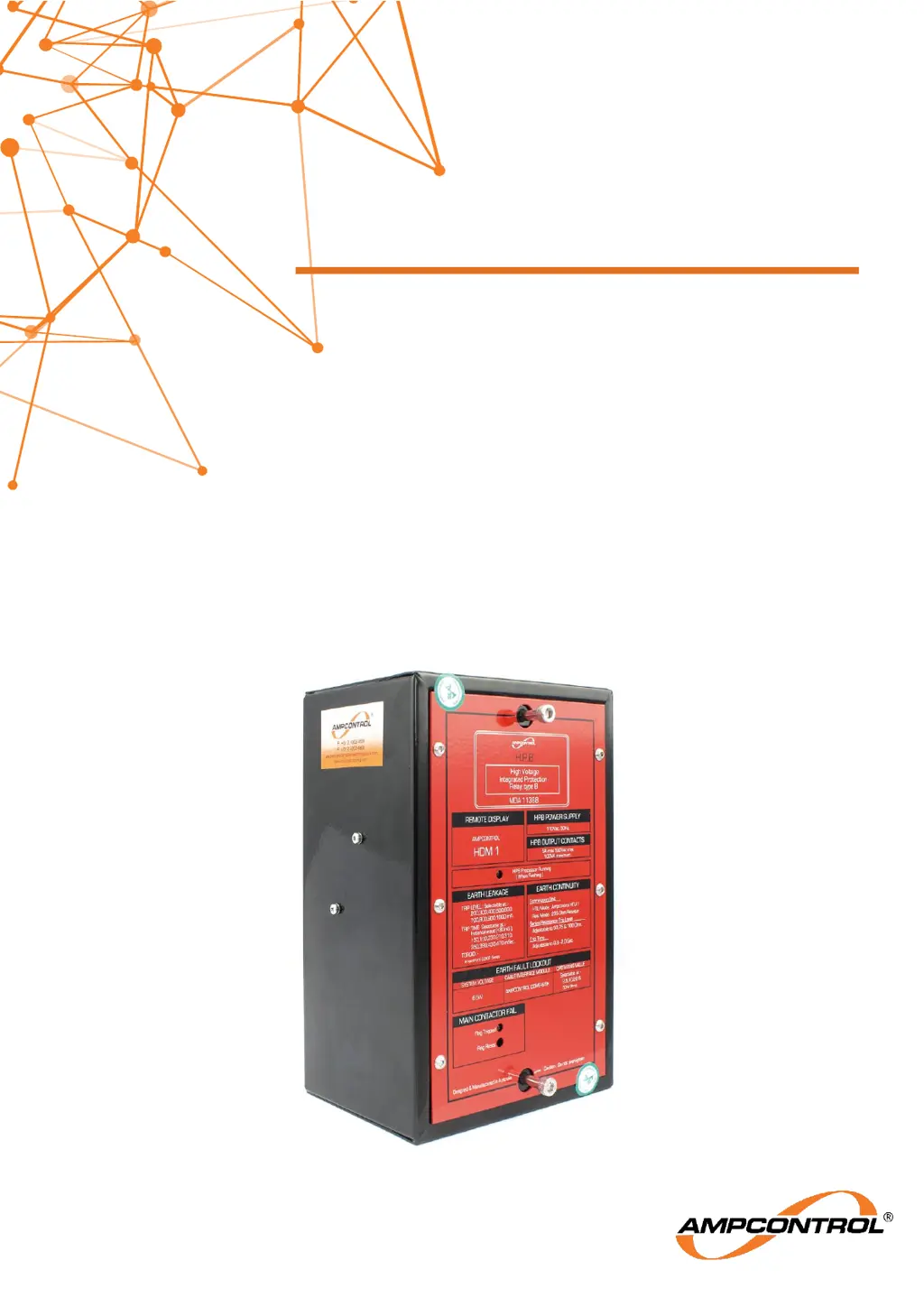
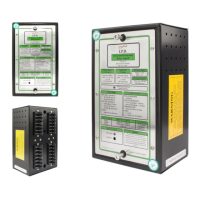
Overview of the HPB Integrated Protection Relay, its technology, and applications in mining operations.
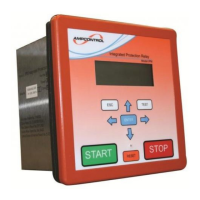
Details the functionality and features of the HDM for local display, monitoring, and configuration of the HPB Relay.
Critical safety and operational warnings regarding HPB installation, including understanding the manual and system design.
Essential installation requirements and safety practices to ensure correct and safe operation of the HPB unit.
Guidance on mounting, wiring, and connecting the HPB relay and associated modules for proper installation.
Instructions for mounting the HPB relay enclosure, including considerations for ventilation and space.
Information on the housing and mounting of the HDM for external switchgear integration.
Description of the CCMB for 6.6kV and 22kV systems, detailing its function in interfacing with power circuits.
Explanation of toroid function and potential issues like nuisance tripping due to installation errors.
Best practices for installing toroids to ensure accurate measurements and prevent operational problems.
Guidelines for managing high and low voltage wiring to reduce induction and ensure system integrity.
Precautions for routing low voltage circuits to prevent contact with higher voltages and minimize interference.
Details on high voltage circuits within the HPB, including supply and relay contacts, and their separation from other wiring.
Information on the HPB's earth connections and recommendations for proper earthing practices for safety.
Describes the HTU-1 for machine communication, its connection, power, and function in parameter configuration.
Explains the selectable codes used to identify different machine types connected to the HPB system.
Details on assigning unique numbers to machines for identification and management within the HPB system.
Guidance on adjusting HTU receiver sensitivity for optimal performance in various installation environments.
Details the Earth Leakage protection function, its measurement via toroid, and adjustable trip sensitivity/time delay.
Explains the Earth Fault Lockout test, including 'megger test' procedures for 6.6kV and 22kV systems.
Describes the Earth Continuity function, testing pilot core continuity, and configuration modes (Resistor/HTU).
Details the over-current protection, including CT usage, range/multiplier settings, and trip accumulator functionality.
Explains the selectable inverse time over-current characteristics and their trip curves.
Describes the short circuit protection, its definite time characteristic, and selectable trip levels/times.
Explains phase current balance protection, its calculation, trip level settings, and trigger conditions.
Details the Main Contactor Fail protection, covering failure to open and failure to maintain insulation.
Describes the under voltage protection, including trip level selection and delay for outlet shutdown.
Explains how the CCMB provides line voltage metering, displayed as a percentage on the HDM.
Covers settings related to the power system, stored in the HPB relay's non-volatile memory.
Covers settings related to the load, stored in HPB or HTU memory based on Pilot Mode.
Step-by-step procedure for viewing and modifying HPB relay settings via the HDM Remote Display Module.
Describes the five digital inputs (MCI, start, stop, lock, reset) and their function activation.
Information on HPB output relays for main contactor and circuit breaker control, including RL3 for lockout testing.
Details the eight open collector outputs for driving LEDs or external relays, used for additional indication.
Explains how to energize and de-energize the outlet using Start and Stop inputs, including remote stop requirements.
Outlines the sequence of operations required to energize an outlet, including fault checks and the lockout test.
Guides on diagnosing and resolving faults related to the pilot circuit, including open circuit and continuity issues.
| Mechanical Life | 10, 000, 000 operations |
|---|---|
| Electrical Life | 100, 000 operations |
| Category | Relays |
| Contact Rating | 10A at 250V AC, 10A at 30V DC |
| Operating Temperature Range | -40°C to +70°C |