Floppy disk
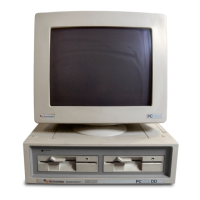
A removable 5.25 or 8 inch diameter magnetic disk, that is used to store computer data.
Housed inside a protective square envelope. Much greater data storage capacity than a
cassette, much faster, more expensive.
Flowchart
A diagrammatic representation of the progression of program steps and logical processes
tracing the sequence of events during program execution.
Forth
A high speed programming language, with speed and complexity falling between a High-level
language and Machine code. Not a beginners language.
Function key
A key on the keyboard that has been assigned a specific task -which may in addition to, or
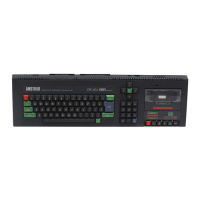
instead of the main purpose inscribed upon it. The CPC464 has a number of keys that may be
defined as function keys, whereupon a single keystroke can issue up to 32 characters of text
in the form of commonly used instructions, or instructions controlling peripheral equipment,
such as modems or printers.
Gate
Logical gates permit the passage of data when certain conditions are fulfilled. There are
many different types (OR, AND, XOR etc). See the entry for Boolean algebra.
Graphics
The part of the screen display of the computer that is not related to the display of 'characters'
eg. drawing lines, circles, graphs etc. In conjunction with an appropriate printer, a paper
print copy may also be obtained.
Graphics character
A shape or pattern specially designed to be useful in creating images. The CPC464 has a
complete set of these described in Appendix Ill.
Graphics cursor
Similar to the text cursor, but addressing the graphics screen. An invisible concept on the
CPC464 - but nevertheless an indispensible facility for locating drawn graphics. Not to be
confused with graphics characters (Appendix 11) which are still part of the 'character set',
and printed at the text cursor.
Graphics mode
Early microcomputers required to be specifically set to either handle characters or graphics.
Modern personal computers are capable of mingling text and graphics simultaneously.


 To Next Page