SOUND
Sound effects are generated by a loudspeaker within the computer itself. If you are using the MP1
modulator power supply and a domestic television, turn the TV’s volume control to a minimum.
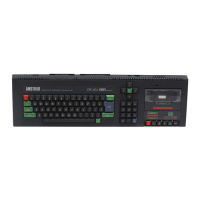
The level of sound can be adjusted by use of the VOLUME control on the right hand end of the
computer. The sound can also be fed to the auxiliary input socket of your stereo system, using the
(I/O) socket at the left hand end of the computer back panel. This will enable you to listen to the
sound generated by the computer in stereo, through your hi-fi loudspeakers or headphones.
The SOUND command has seven parameters. The first two of these must be used, the rest are
optional. The command is typed in as:
SOUND channel status, tone period, duration, volume, volume envelope, tone envelope, noise period.
In the following examples, we will type in 1 as the channel status - in other words, its reference
number.
TONE PERIOD
Refer to Appendix VII and you will see that the note middle c, has a tone period of 478. Type in:
new
10 sound 1,478
run
You will hear a short note which is middle c lasting 0.2 second.
DURATION
When no duration of the sound is specified it will last 0.2 second. The unit of duration is in 0.01
second. To make a note last 1 second, 100 would be used; to last 2 seconds, 200 would be used. Type
in:
10 sound 1,478,200
run
You will hear the note middle c lasting 2 seconds.
VOLUME
This number specifies the starting volume of a note. The number is in the range 0 to 7. If however, a
volume envelope is specified, the range is extended from 0 to 15. If no number is used, 4 is assumed.
Type in:
10 sound 1,478,200,3
run
Note the volume of this sound. Now type it in using a higher volume number:
10 sound 1,478,200,7
run
You will now hear that this is much louder.


 To Next Page