If you need to adjust the bobbin tension, use a small screwdriver to rotate the larger screw (Tension adjustment
screw) in small increments (5-minute turns, turning left to loosen and right to tighten tension). Turn the screw to
the right to increase bobbin tension and to the left to decrease tension.
B. Using “M” Big Bobbins in Your Machine
Your Beginner Longarm Quilting Class instruction and manual includes details about setting your bobbin tension
for different thread combinations in the top and bottom. It is always a good idea to test your tension on fabric
and batting similar to your quilting project so that you can make adjustments before you begin quilting on a quilt
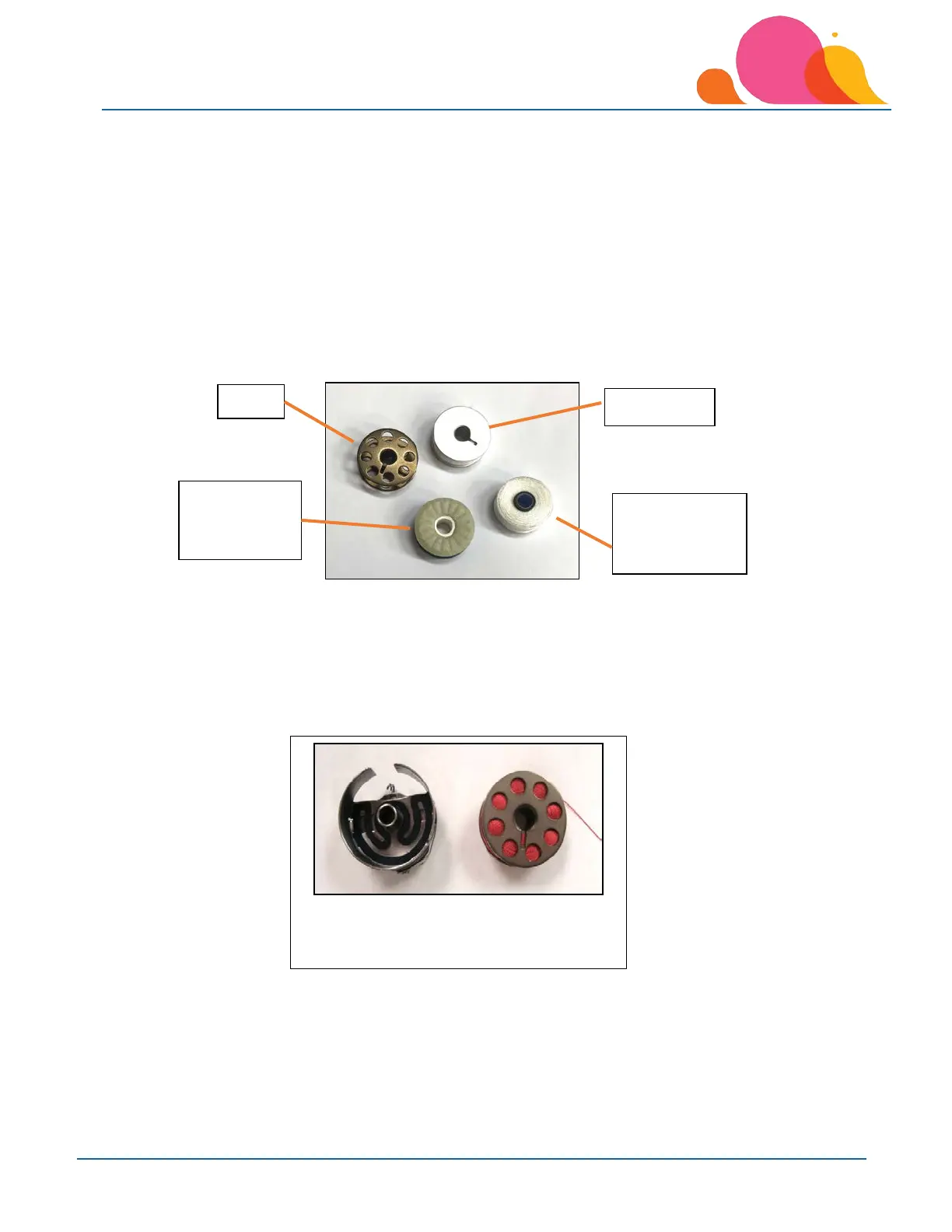
top. Bobbins are available in several different materials, including aluminum, metal, pre-wound versions, and
magnetic core.
“M” Bobbin cases will have a pigtail thread guide in the center of the opening. This helps keep the bobbin thread
in line with the needle on larger bobbins, producing a better stitch. You can choose to bypass the pigtail thread
guide on the case if you find it exerts too much pressure for some threads. The photos below describe how to
insert the thread into the guide (be sure to place your bobbin into the case so that it rotates clockwise when you
pull the thread through the exit hole).
Guide the tail through the slot on the case (Photo C), and then under the flat tension finger on the outside of the
case (Photo D). If you need to adjust the bobbin tension, use a small screwdriver to rotate the larger screw in
small increments (5 minute turns, turning left to loosen and right to tighten tension). Turn the screw to the right
to increase bobbin tension and to the left to decrease tension.
with
Cardboard
(Magnetic
Core)
When inserting a bobbin into the case, the
thread should exit the bobbin in a clockwise
manner.



 To Next Page