30
thellerports.Alsothereisnoventtube.AGMbatteriesare
ideal for long term storage. In addition, an AGM battery is an
excellent choice for use in vehicles where acid spills could
occur (atv's etc.)
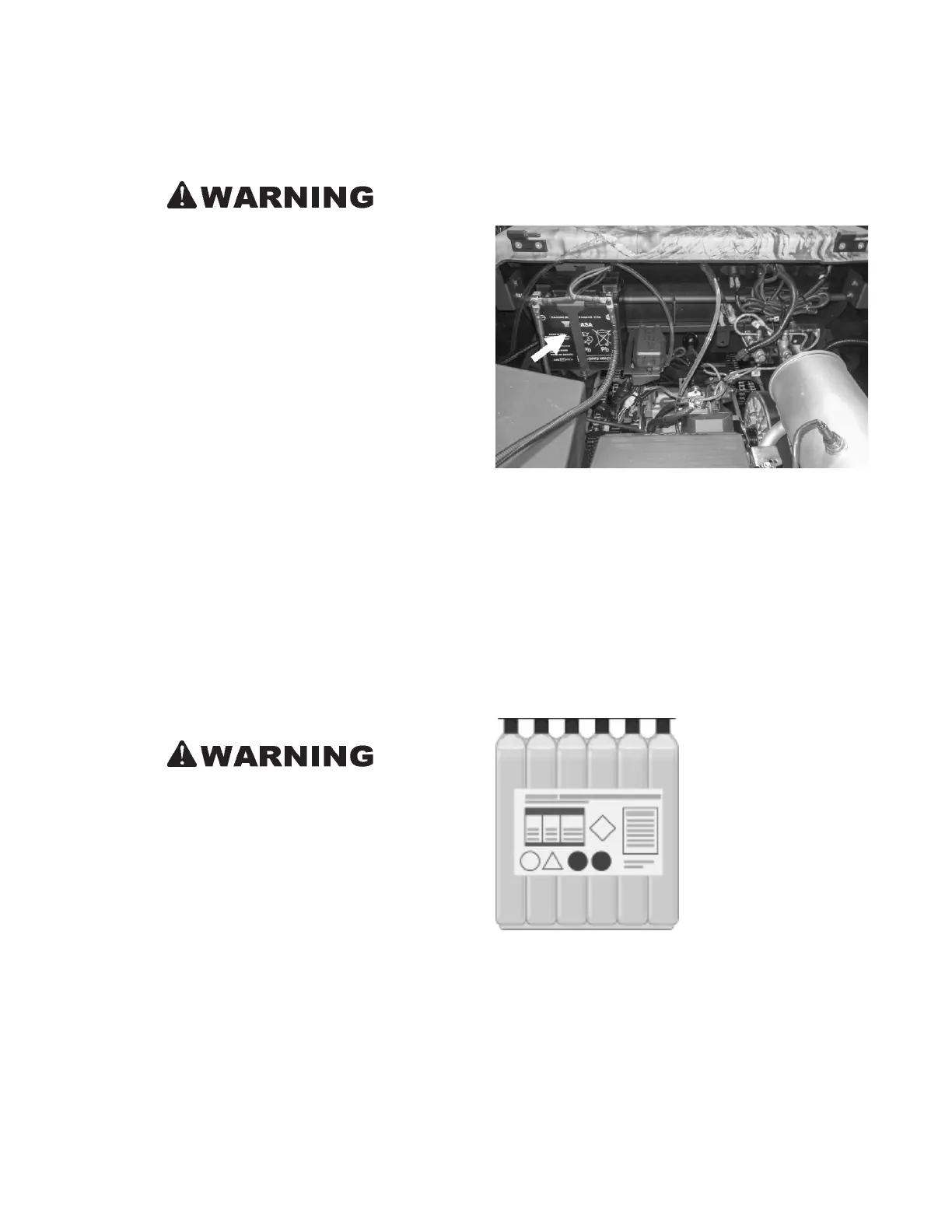
Figure 7-1. battery location
Activating and Charging AGM Batteries
Activating an AGM battery is a simple process and
diersfromactivatingaConventionalbattery.Un-activated,
AGM batteries can be stored for long periods of time as
long as they are kept in a cool, dry location and out of
directsunlight.Alsothefoilsealingstripcoveringtheller
ports should not be removed until the battery is ready to be
activated. Use only the electrolyte container that comes with
thebatteryforllingthecellsasithasahigherconcentration
of sulphuric acid than the acid used for Conventional
batteries.
The electrolyte container that
is shipped with a dry AGM
battery contains the correct
amount of battery acid and
is more concentrated than
the electrolyte used in a con-
ventional battery. All AGM
battery electrolyte contain-
ers are not the same. Each
contains the proper amount
ofelectrolyteforitsspecic
battery.
Beforelling,readtheelectrolytehandlinginstructionsand
precautions on the label. Do not smoke when activating a
battery or handling battery acid. Always wear plastic gloves
and protective eyewear and be sure to read the Battery Safety
section that comes with your battery. The following seven
steps should be used to activate an AGM battery:
1. The battery must be out of the vehicle and placed on a
level surface.
7.1 ELECTRICAL SYSTEM
Detailed information on standard workshop and safety
procedures and general installation practices is not
included here. ARGO assumes no responsibility or li-
ability for PERSONAL INJURY or VEHICLE DAMAGE
which results from any procedure performed, including
those procedures outlined here. Before performing any
procedure, an individual must have determined to his/
her satisfaction that personal injury or vehicle damage
will not result from the procedure, working environment
or tools selected.
7.1.1 General
To prevent damage to the electrical system:
• Never weld on the vehicle. If welding is required, take
your vehicle to an authorized Argo dealer.
• Connect battery booster cables properly, positive to
positive and negative to negative. Connect negative cable
last,disconnectrst. It is not a recommended practice
to boost your argo if the battery is dead. If possible,
avoid the use of booster cables from an external bat-
tery source. Damage can occur to the engine ignition
system.
• Connect switch terminals properly, especially the ground
wire.
7.1.2 AGM Battery - (Yuasa) ARGO Part No. 10005B
(Yuasa)
Battery uid contains sulphuric acid. If battery uid
comes in contact with skin or eyes, ush thoroughly with
water. If swallowed, call physician or poison control
centre immediately. KEEP AWAY FROM CHILDREN.
Serious personal injury can occur. Always wear rubber
gloves and safety glasses when servicing the battery.
Batteries can explode and cause serious personal in-
jury if exposed to ame or sparks. Never smoke while
servicing the battery.
The battery is located under the hood on the right hand side
of the vehicle at the dash (intake side of vehicle) Figure 7.1
AGMbatterieslookdierentthanotherbatterytypes.They
are more compact because there is no free electrolyte mak-
ingthemmore“volumeecient”inthattheytakeupless
space for their energy storing capacity. Because they are
lledwithelectrolyteonlyonetimeduringactivationthere
arenollercaps.Insteadasealingplugpermanentlycovers
SECTION 7
MAINTENANCE INFORMATION









 To Next Page