2 4 4 C h eck in g an d fi lling
- Do not expose the battery to an open
flame, electric sparks or an open light.
- Do not smoke.
- Do not interchange the positive and neg -
ative cables.
- When working on the battery, be sure
not to short-circuit the terminals with
tools or other metal objects. This would
cause the battery to heat up very quickly,
wh ich could lead to damage or explosion
and personal injury.
- When a battery is charged, it produces
hydrogen gas which is explosive and
could cause personal injury.
- Always keep the battery well out of the
reach of children.
- Before work is done on the electrica l sys-
tem, disconnect the negative ground ca-
ble.
- Before performing any work on the elec-
trical system, switch off the engine and
ignition as well as any electrical equip -
ment . The negative cable on the battery
must be disconnected . If you are just go-
ing t o rep lace a light bu lb, then it is
enough to sw itch off the lights.
- Before disconnect ing the battery, switch
off the anti-theft alarm system! Other-
wise you will set off the alarm.
- When disconnecting the battery, first
disconnect the negative cable and then
the positive cable .
- Before reconnect ing the battery, make
sure all electrical consumers are switch-
ed off. Reconnect the positive cable first
and then the negative cable . Never inter-
change the cables - this could start a fire!
- Never charge a froze n or a thawed-out
battery . It could explode! If a battery has
frozen, then it must be rep laced. A dis-
charged battery can freeze over at 32°F
(0°C).
- Make sure the vent hose is always attach-
ed to the opening on the side of the bat-
tery.
- Never use batteries which are damaged.
There is the danger of an explosion! Al-
ways replace a damaged battery .
A WARNING
=
California Proposition 65 Warning:
- Battery posts, terminals and related ac-
cessories contain lead and lead com-
pounds, chemicals known to the State of
California to cause cancer and reproduc-
tive problems . Wash hands after han-
dling.
(D Note
- Do not disconnect the vehicle battery
when the ignit ion is switched on or when
the engine is runn ing, otherwise, you will
damage electron ic components in the
electrical system.
- If your vehicle is going to stand for a
long per iod of time withou t be ing driven,
pro t ect the battery from "freezing ", oth-
erw ise it will be damaged and will then
have to be replaced .
Battery charging
Starting the engine requires a well charged
battery.
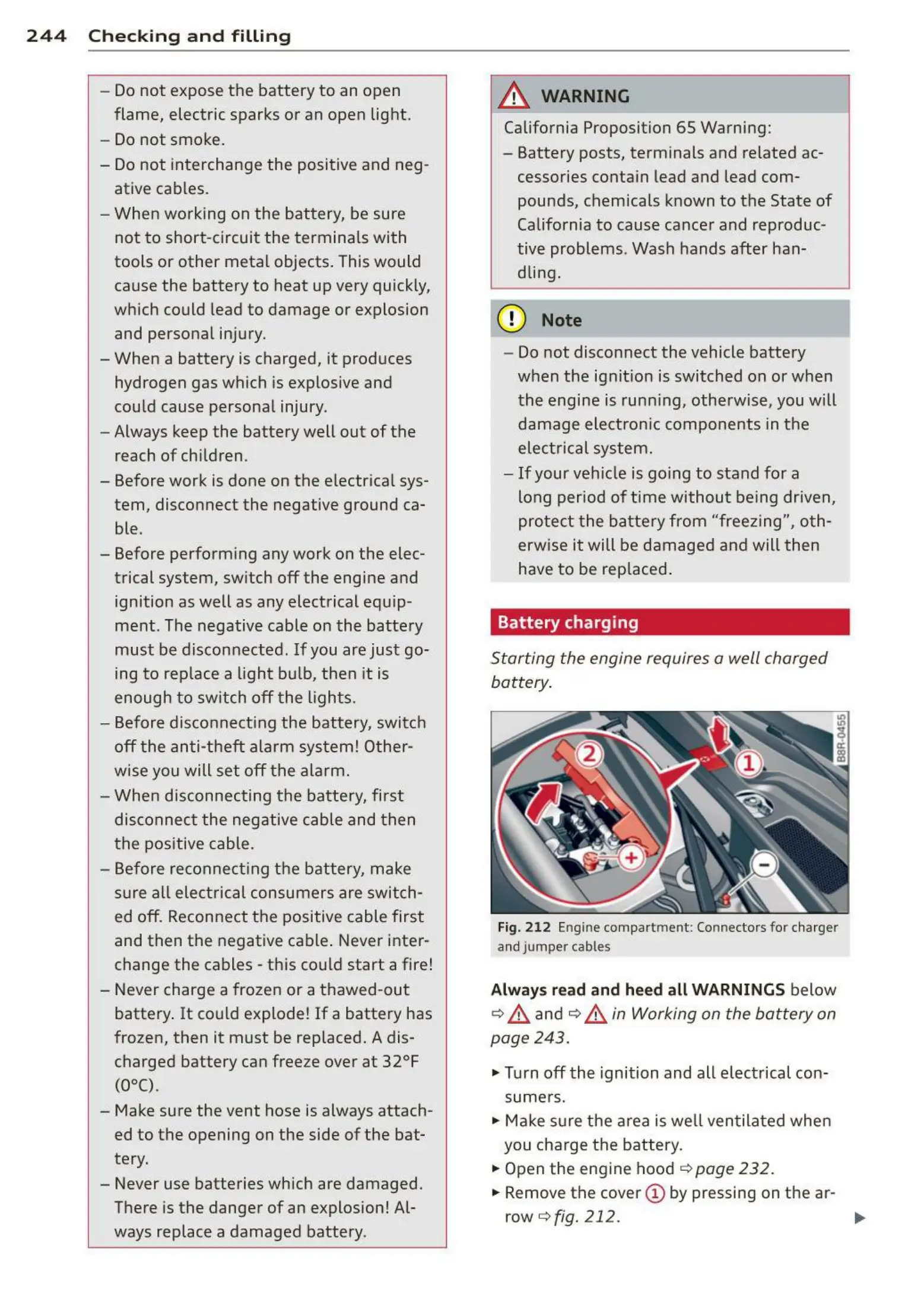
Fig. 212 Engin e compart ment : Conn ectors for charger
and j ump e r cables
Always read and hee d all WARNINGS below
~
.&. and q .&_ in Working on the battery on
page 243.
.,. Turn off the ignition and all electrical con-
sume rs.
.,. Make sure the area is we ll vent ilated when
you charge the battery.
.,. Open the eng ine hood
q page 232 .
.,. Remove the cover (D by pressing on the ar-
row
q fig. 212 . ..,.



 To Next Page