44
gas
Gas
GENERAL INFORMATION
Gas Bottles
Bottled Liquified Petroleum Gas (LPG) is the
most convenient portable source of fuel for
your vehicle.
Regularly check flexible gas hose, joints and
connections for tightness. Finally make sure
that each gas appliance is working efficiently
to the recommendations of the appliance
manufacturers.
Only use gas bottle cylinders that are located
within their dedicated position within the
gas bottle housing, never extend hose - hose
lengths must not exceed 400mm.
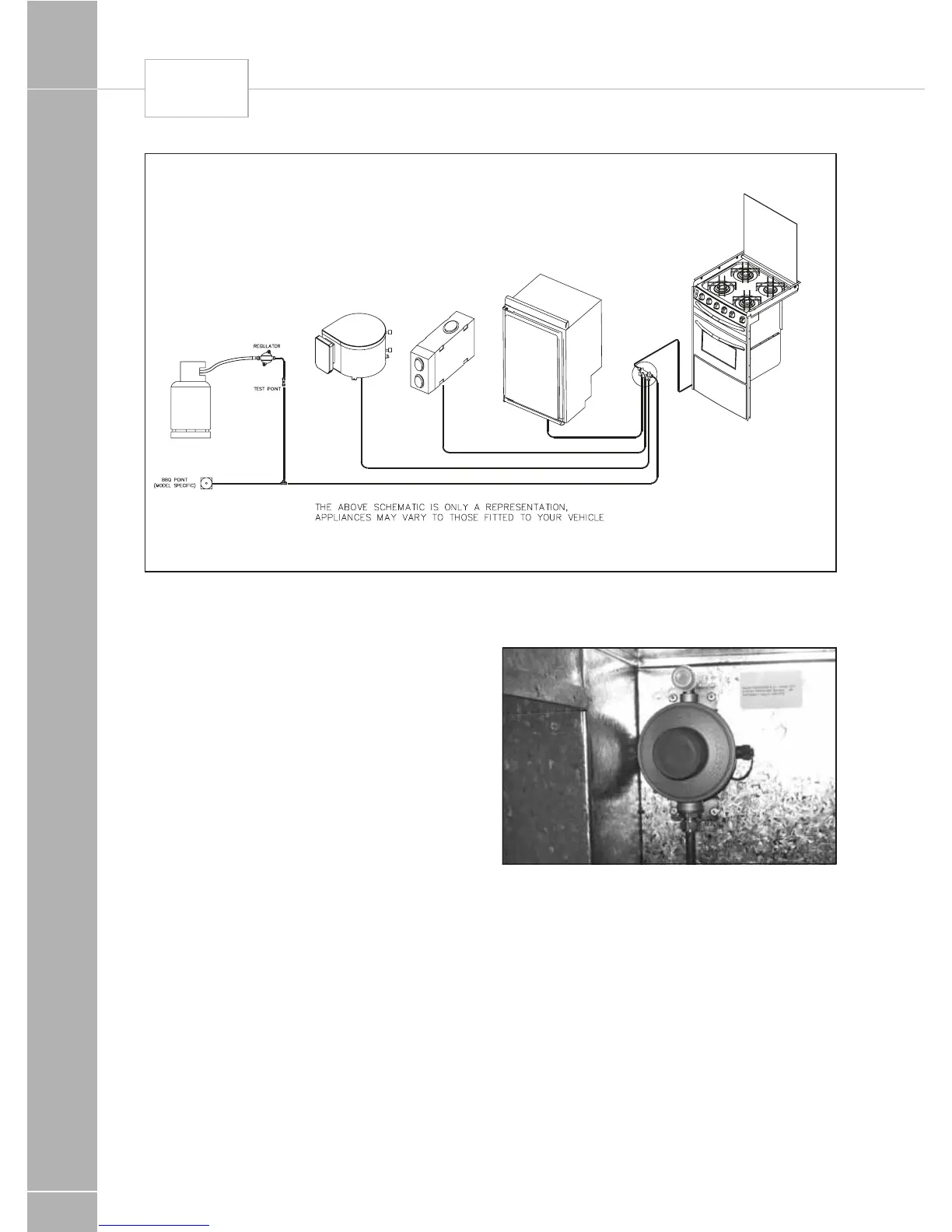
Regulator
Your vehicle is supplied with a wall mounted
gas regulator plumbed inside the gas bottle
compartment. The regulator and all appliances
work at a harmonised 30mb pressure, which
work with Butane and Propane gas.
Pressure regulation system in this vehicle has
a fixed working pressure of 30 mbar with a
owrateofeither1.2kg/Hor1.5kg/Hand
complieswiththerequirementsofEN12864
annex D.
We do not recommend the use of an inline
LPGBBQwiththe1.2kg/Hregulatorwhen
other LPG appliances are in use.
Standard regulator
Gas Hoses
High-pressurehosesorpigtailsastheyarecalled
must be used with the new style regulator.
LPG bottle i.e. Propane, Butane, BP and
CampingGazcylindersallhaveuniquebottle
adaptor connections. It is important to check
you have the correct hose and adaptor to suit
your gas bottles.
Push on hoses are no longer permitted under
the latest regulations.
The new high-pressure hoses have threaded
connections and must be securely attached to
the regulator and to the gas bottle.
TYPICAL GAS
SCHEMATIC DRAWING



 To Next Page