Need help?
Do you have a question about the Avalon A and is the answer not in the manual?
Immediate actions to take if a gas leak is detected, including evacuation and contacting authorities.
Mandatory qualified installation and adherence to manual instructions for safety.
Ensuring correct fuel (NG/LP) usage to prevent hazards and warranty issues.
Guidelines for safe stove placement regarding flammable materials and clearances.
Avoiding placement of flammable items near the stove and ensuring proper operation.
Instructions for handling hot surfaces and performing basic maintenance.
Instructing household members on how to shut off the gas supply in emergencies.
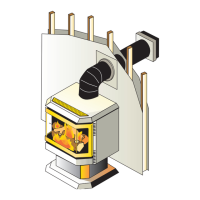
Details on various installation types like residential, corner, and alcove placements.
Highlights of the stove's capabilities, including power outage operation and blower.
Data on heating capacity, input rates, and efficiency for Natural Gas and Propane.
Stove dimensions and essential fuel type designation.
Steps for site preparation and listing all required installation components.
Instructions for assembling the main stove body and its pedestal base.
A sequential overview of the primary installation tasks.
Procedure for safely removing and reattaching the stove's front door.
Specific steps for securely attaching the pedestal to the heater unit.
Guide for assembling the side and top panels onto the stove body.
Securing stove panels and managing wiring for controls and blower.
Connecting the power cord and blower assembly to the main unit.
Setting the vent restrictor based on specific vent configurations for optimal performance.
Attaching the rear panel and installing the on/off switch.
Properly installing the strain relief for the main power cord.
Mounting the control cover and the protective grill.
Connecting the gas inlet and performing thorough leak checks on all connections.
Specifications for protective floor coverings based on flooring type.
Guidelines for safe stove positioning and maintaining distances from flammable items.
Specific requirements for installing the stove within an enclosed alcove space.
Visual aids showing required clearances for various installation types.
Adherence to codes for gas line installation, purging, and leak testing.
Verifying the correct fuel (Natural Gas or Propane) designation for the stove.
Specifications for inlet and manifold gas pressures essential for operation.
Maintaining proper air space and venting the appliance directly outdoors.
Requirements for both horizontal and vertical vent terminations.
List and description of vent pipes, elbows, and necessary support parts.
Diagrams and charts specifying valid vent system layouts.
Step-by-step instructions for adjusting the vent restrictor position.
Rules regarding the maximum number and type of elbows allowed in vent runs.
Calculating total vent length and accounting for overlaps and elbow additions.
Requirements for vertical venting using two 45-degree elbows, including height and offset.
Tables detailing offset length versus vertical rise for various vent configurations.
Specifications for horizontal venting, including maximum run, height, and restrictor positions.
Guide to selecting the correct restrictor position based on vent termination area.
Maximum horizontal run and height, and corresponding restrictor positions for this vent setup.
Mandatory clearances from structures and openings for horizontal vent terminations.
Chart correlating roof pitch to the minimum required vertical vent termination height.
Properly connecting the stove's power cord to a grounded outlet.
Step-by-step instructions for safely removing the stove's glass panels.
Important note regarding burner pan conversion during glass removal.
Detailed guide for correctly positioning the artificial logs and embers in the firebox.
Re-installing the glass and ensuring an airtight seal with the gasket.
Reattaching the stove door and cleaning it properly before use.
Verifying gas line integrity and checking pilot and main burner flame patterns.
Using the air shutter lever to fine-tune flame appearance and combustion.
Diagnosing flame lifting or ghosting, often related to improper venting.
Essential reading of manual sections and safety warnings before first use.
Identifying all control knobs, switches, and their respective functions.
Step-by-step instructions for safely lighting the pilot flame.
Understanding normal initial fumes, condensation, and flame color changes.
Methods for manually controlling the main burner or using thermostat/remote.
Modifying the flame size and heat output using the adjustment knob.
Controlling the convection blower speed for optimal heat distribution.
Identifying typical sounds from the pilot, blower, and gas valve.
Guidelines for cleaning and preserving the stove's finish and enamel.
Recommended annual maintenance tasks for safe and efficient operation.
Diagnosing issues preventing pilot or main burner ignition.
Troubleshooting problems with optional remote or thermostat controls.
Addressing blower not operating and incorrect flame color or height.
Explanation of the millivolt system, thermopile, and thermocouple safety functions.
How the pilot flame and gas valve prevent hazardous gas accumulation.
Advisory against placing objects near the stove for safety and operation.
Schematic illustration of the stove's electrical connections.
List of components that the consumer can replace.
Details on warranty duration, coverage, exclusions, and limitations.
Instructions for registering the product and initiating a warranty claim.
Information on product safety certifications and testing agencies.
Required safe distances from the stove to combustible materials.
Technical data on gas input rates, output capacity, and inlet pressures.
Detailed instructions for converting the stove from Natural Gas to Propane.
Step-by-step guide for installing the remote control receiver and transmitter.
Instructions for wiring and mounting the optional room thermostat.
Procedure for installing decorative gold trim pieces onto the stove.
How high altitude affects stove operation and necessary adjustments.
Guidance on using existing wood stove chimneys with the conversion kit.

 To Next Page
 General