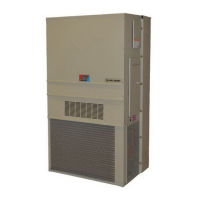
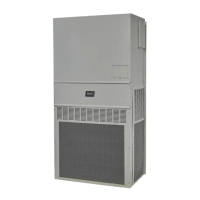
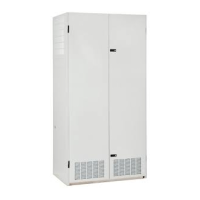
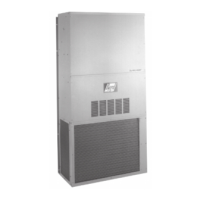
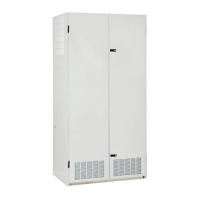
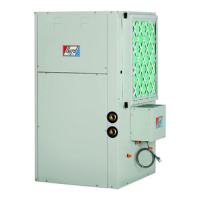
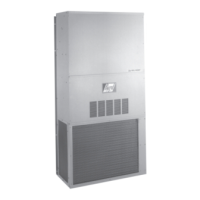
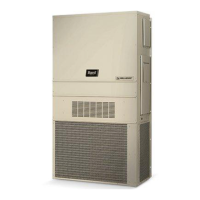
This document provides installation and maintenance instructions for a Bard wall-mounted packaged heat pump, designed for climate control in various settings. The manual covers a range of models, including C24H2-A, C36H1-A, and C48H1-A, among others, indicating a family of units with varying capacities and configurations.
Function Description
The device is a self-contained, air-cooled heat pump designed for both heating and cooling applications. It operates by moving heat between indoor and outdoor environments, providing efficient climate control. The unit is equipped with a solid-state heat pump control system that manages its operation, including a defrost cycle for optimal performance in colder temperatures. Electric heat options are available for supplemental heating, ensuring comfort even in very low ambient conditions. The system utilizes R-410A refrigerant and Polyol Ester oil, which are standard for modern, efficient heat pump systems.
Usage Features
The heat pump is designed for wall mounting, offering flexibility in installation. It can be used with or without ductwork, with flanges provided for attaching supply and return ducts when needed. For installations without return air ducts, a metallic return air grille is required, with specific louver spacing recommendations to ensure proper airflow.
The unit incorporates a fresh air intake system, with slots punched in the service door. Optional fresh air damper assemblies are available, allowing for controlled introduction of outdoor air. The damper blade is shipped in a locked, closed position and requires proper installation of maximum and minimum blade position stops to operate. For maximum energy efficiency, a blank-off plate can be installed in place of the fresh air damper.
The system includes pressure service ports for both high and low pressures, allowing technicians to monitor operating pressures. These ports utilize high-flow Coremax valves, which require a special tool for replacement without removing refrigerant.
The defrost cycle is controlled by temperature and time, activating when outdoor coil temperatures drop to 32°F or below. The heat pump control initiates a defrost mode after a set period (30, 60, or 90 minutes, with 60 minutes as the factory default), switching to cooling cycle, stopping the outdoor motor, and energizing electric heaters to melt accumulated frost. The system automatically returns to heating operations when the coil temperature reaches approximately 57°F. A built-in safety mechanism restores heating operation after 8 minutes if a prolonged defrost cycle occurs due to abnormal conditions.
For three-phase scroll compressor models, a 3-phase line monitor is included to prevent compressor damage from phase reversal. This monitor features two LEDs: a green LED indicates correct phasing and Y signal presence, while a red fault LED indicates reversed phases and inhibits compressor operation. If a fault occurs, reversing two of the supply leads to the unit can correct the phasing.
The unit also features a 5-minute compressor time delay to prevent short cycling, with a fast blinking LED on the control board indicating this delay. This delay can be overridden for service purposes by shorting the SPEEDUP terminals.
Maintenance Features
Maintenance aspects are integrated into the design to ensure longevity and performance. The manual emphasizes the importance of maintaining clean air filters, which are 1-inch throwaway filters as standard, easily serviced from the outside by removing an access panel. Optional 2-inch pleated filters can also be accommodated by adjustable internal filter brackets.
Periodic cleaning of the outdoor coil is essential to permit full and unrestricted airflow. The manual advises caution when removing service panels due to the risk of lacerations.
For troubleshooting, the manual provides detailed procedures, including LED blink codes on the solid-state heat pump control board that indicate various operational statuses and fault conditions (e.g., normal function, compressor delay, low/high pressure switch failures, defrost mode active). A comprehensive troubleshooting table links symptoms to possible causes and provides steps for checking and repairing issues, such as compressor not starting, outdoor motor not running, or the unit not entering/exiting defrost.
The temperature sensor, located in the outdoor unit circuit, can be checked for resistance using an ohmmeter and compared against a provided temperature-resistance chart to ensure it is within tolerance (±10%). If the sensor reads very low, is shorted, open, or out of tolerance, it should be replaced.
Instructions for removing the fan shroud are provided, which involves disconnecting power, removing grilles and screws, unwiring the condenser fan motor, and sliding out the assembly. This allows for servicing the motor/fan as needed.
For three-phase scroll compressors, verification of proper rotation direction is crucial during initial service. If improper rotation is detected (indicated by elevated sound, reduced current draw, and specific pressure behaviors), reversing any two line connections to the unit can correct it.
The manual also includes instructions for replacing the ECM control module for the indoor blower motor, stressing the importance of using the correct replacement module to avoid voiding warranties and ensuring proper operation. It details steps for safe removal and installation, including verifying motor lead resistance to the motor shell and proper orientation of connectors to prevent water ingress.



 To Next Page
 General