1268-600
VARIABLE SPEED JIGSAW
6
SPECIFIC SAFETY RULES FOR JIGSAW
WARNING: Know your jig saw. Do not plug in the jig saw until you have read and
understand this Instruction Manual. Learn the tool’s applications and limitations,
as well as the specific potential hazards related to this tool. Following this rule will
reduce the risk of electric shock, fire, or serious injury.
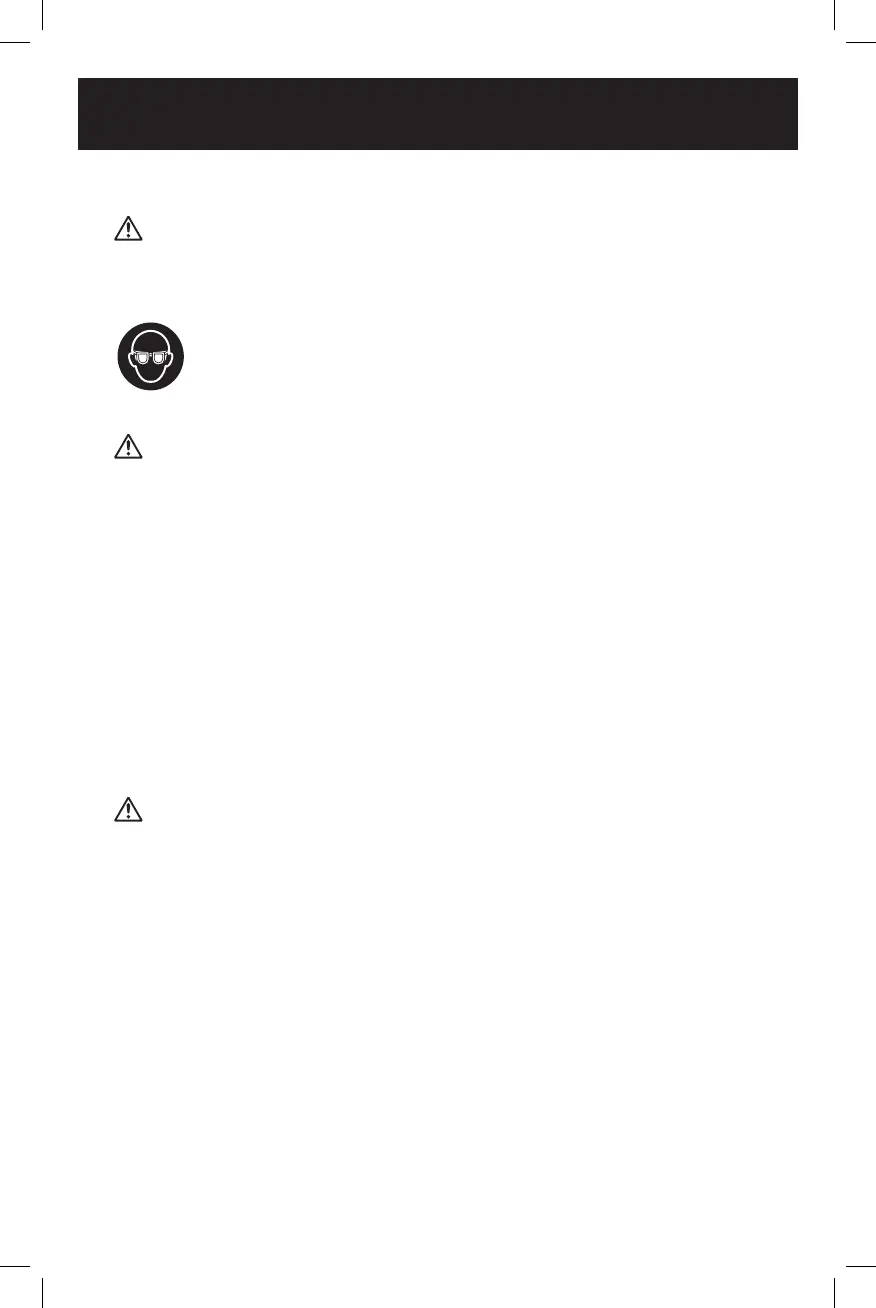
Always wear eye protection. Any power tool can throw foreign objects
into your eyes and cause permanent eye damage. ALWAYS wear safety
goggles (not glasses) that comply with ANSI safety standard Z87.1.
Everyday glasses have only impact resistant lenses. They ARE NOT
safety glasses.
WARNING: Glasses or goggles not in compliance with ANSI Z87.1 could
cause serious injury when they break.
Always wear safety goggles, hearing protection and a dust mask. Use only
in wellventilated areas. Using personal safety devices and working in a safe
environment reduces the risk of injury.
Hold the tool by insulated gripping surfaces when performing an operation where
the saw blade may contact hidden wiring or its own cord. Contact with a "live" wire
will make exposed metal parts of the tool "live" and shock the operator.
Always make sure the work surface is free of nails and other foreign objects. Cutting
into a nail can cause the blade and the tool to jump and damage the blade.
Never hold the workpiece in one hand and the tool in the other hand when sawing.
Never place your hands near or below the cutting surface. Clamping the material
and guiding the tool with both hands is much safer.
Never lay the workpiece on hard surfaces like concrete, stone, etc. The protruding
blade may cause the tool to jump.
DANGER: Always remove the plug from the power source when changing the
blade and when making adjustments.
Use only "U" or "T" shank blades that are designed specifically for jigsaw use. Never
use a broken blade, as it will not be securely held in the tool.
After changing a blade, make sure the blade is securely held in the blade holder.
Loose blades will be violently thrown.
Never touch the blade during or immediately after use. After use, the blade is too
hot to be touched by bare hands.
Never use dull or damaged blades. Sharp blades must be handled with care.
Damaged blades can snap during use. Dull blades require more force to cut the
workpiece, possibly causing the blade to break.
Always use the straight reciprocating action when cutting metal. Blades will last
longer and will be less likely to break.


 To Next Page