Oil Pump and Pressure Control
The oil pump has been redesigned with regard to the functionality and durability of the
Duroplast reciprocating slide valve. The oil pump used in the N55 engine is a further
development of the shuttle slide valve volume control oil pump. The activation of the oil
pump is adapted by the engine management and controlled through an oil pressure
control valve.
The delivered oil volume is controlled by means of the oil pressure, based on specific
requirements. The modifications, compared to previous pumps, are primarily in the pump
activation system. The oil pressure no longer acts directly on the control piston but rather
directly on the slide valve. The engine management activates the electrohydraulic
pressure control valve, which affects the oil pressure at the slide valve control mechanism
within the oil pump, altering the pump output. This has the advantage of avoiding power
losses by running the oil pump only when needed.
The electrohydraulic pressure control valve controls the pump output and is bolted to the
front of the engine block. It is operated based on a characteristic map within the DME
(ECM) which in turn is based on feedback from the oil pressure sensor. The N55 uses a
special oil pressure sensor for this purpose which functions in the similar way as the HPI
fuel pressure sensor.
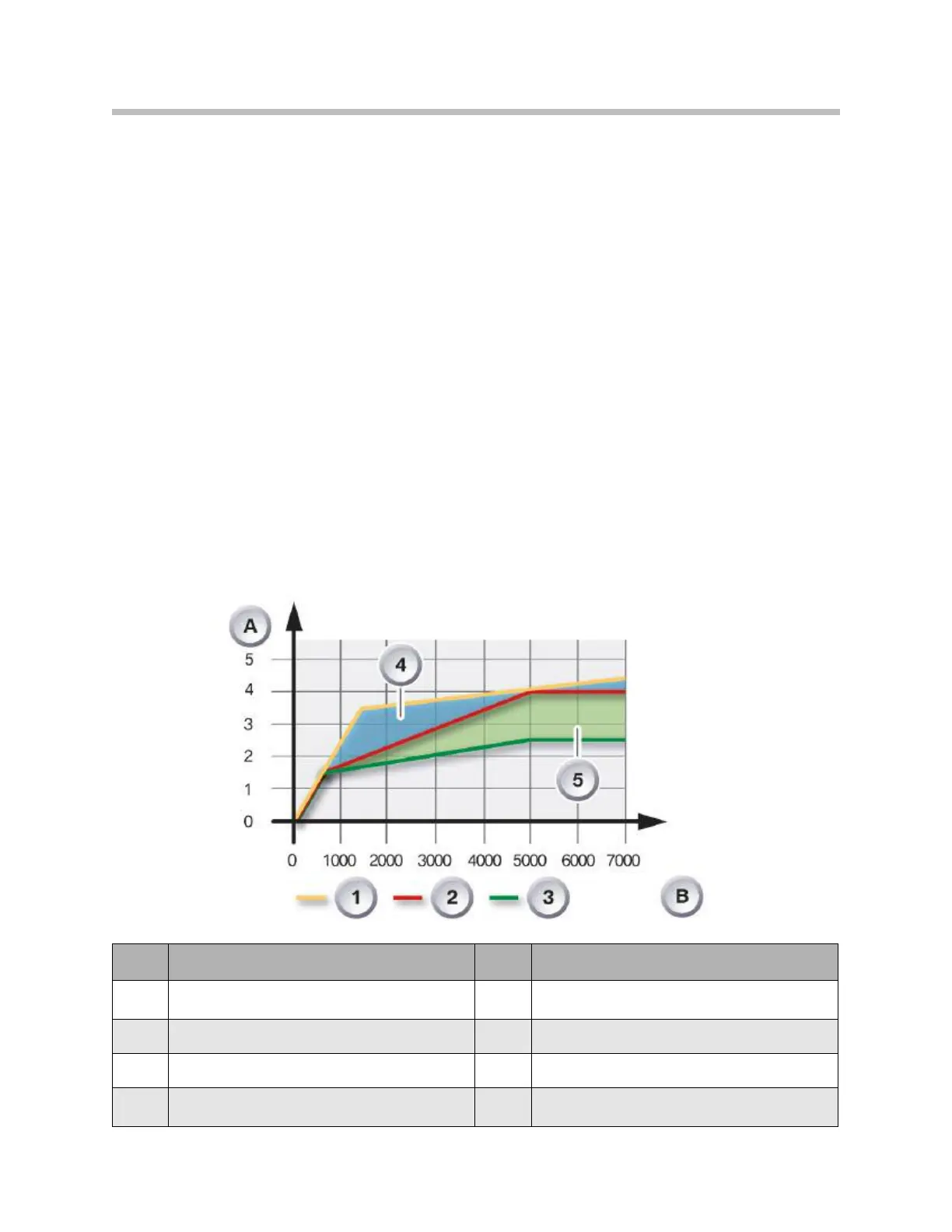
Characteristic map-controlled oil pressure
Index Explanation Index Explanation
A
Oil pressure (bar)
3
Characteristic map-controlled
oil pressure, no load
B
Engine speed (rpm)
4
Saving potential, full load
1
Oil pressure control, hydraulic/ mechanical
5
Saving potential, no load
2
Characteristic map-controlled
oil pressure, full load
24
N55 Engine


 To Next Page