EN | 65
EN
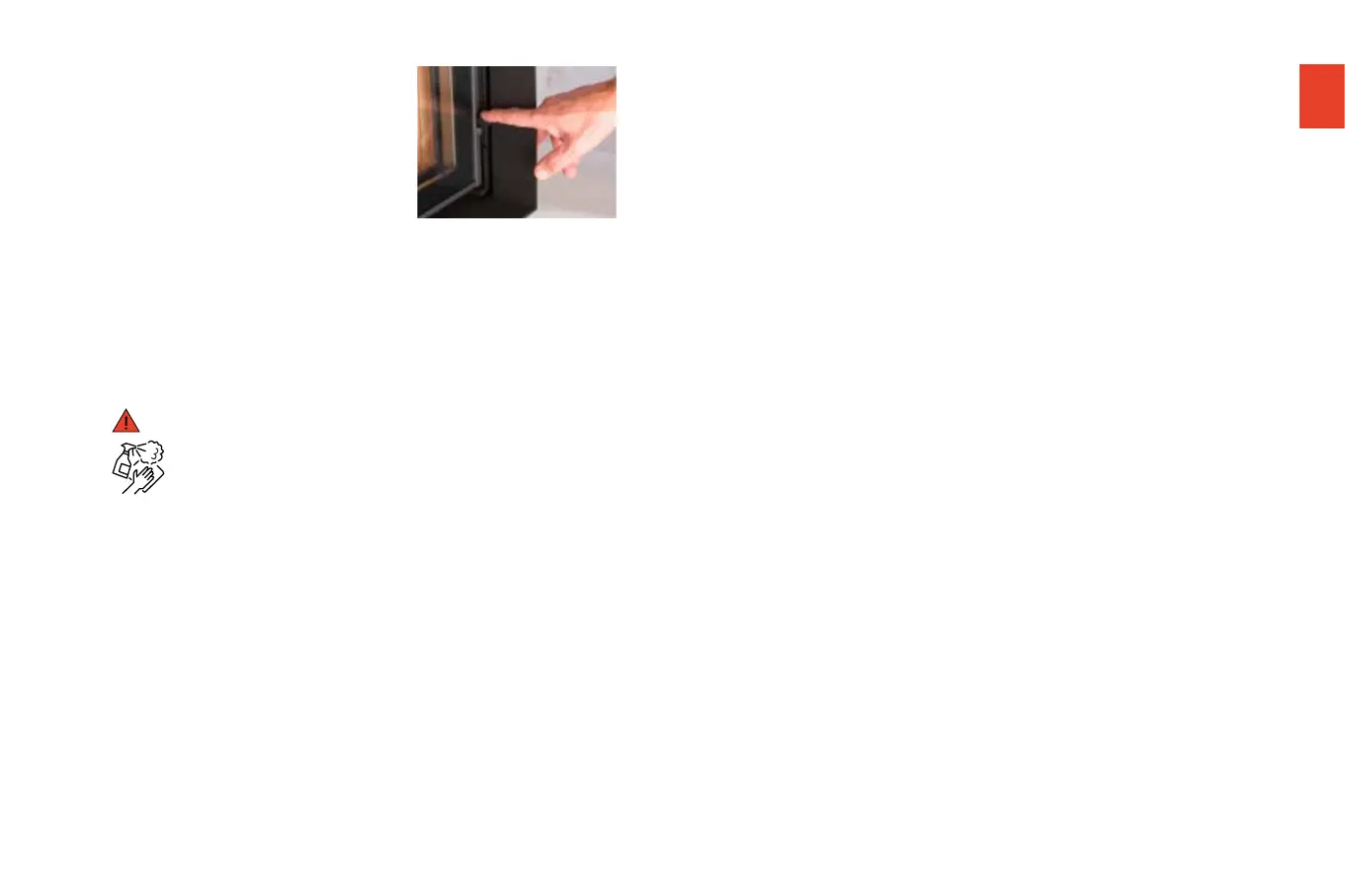
Corner formats:
On lifting doors in corner format, the
"click-clack" cleaning lock is located on
the side next to the short door leg. After
pressing the opener, the door can be
opened like a side - opening door.
Cleaning the coated glass ceramic
(GKB)
Coated panes are used to reduce heat radiation in the area of the firebox
opening. This may be necessary if flammable components (e.g. furniture,
doors, windows) are placed too close. The heat-reflecting coating is loca
-
ted on the outside of the glass ceramic. Doors are marked accordingly on
delivery.
Only clean the coated exterior with a soft cloth and commercially
available window glass cleaner. Do not use scouring pads or
abrasive cleaners, as these will damage the glass ceramic sur-
face.
Removing ash
Ideally, the ash bed should be 3-4 cm thick. An ash bed prolongs the
ember retention. Therefore, do not empty the stove completely, but only
remove the "excess" of ash when cold using a metal dustpan or an ash
vacuum cleaner. The ash/ ember bed should not block the side combus
-
tion air openings or reach up to the door frame or lower edge of the firebox
opening. If the embers are too high, sealing cords can be thermally dama-
ged.
Removing the baffles
To remove fly ash from the baffle plates of the afterburner chamber, they
can simply be removed. The proce- dure is described in chapter 12. We
recommend cleaning the afterburner chamber once a year.
13 CLEANING OF CATALYTIC CONVERTER
(OPTIONAL)
A coat of dry, powder-like deposits will build up with time on the inflow
side of the catalytic converter modules. Such deposits will more and more
block the openings of catalytic converter inserts; they lead to their lowered
performance and have a negative impact on the evacuation of combustion
gases. In extreme cases, the combustion gases cannot be led away suffi-
ciently and there is a risk that smoke will be released into the room – risk
of poisoning!
Deposits at the bottom of catalytic converter inserts must be cleaned on a
regular basis. We recommend cleaning after every 80 - 100 hours of oper-
ation. The contamination levels and the required cleaning intervals depend
on the operating conditions (hours of operation, quality of wood, negative
pressure inside the chimney etc.).
The catalytic converter does not have to be removed for cleaning. Cleaning
of upstream/bottom side using a brush attachment of a vacuum cleaner
is sufficient.
Catalytic converter cleaning must be performed in a cold fireplace.
"click-clack" locking mechanism on
the side of corner versions



 To Next Page