84
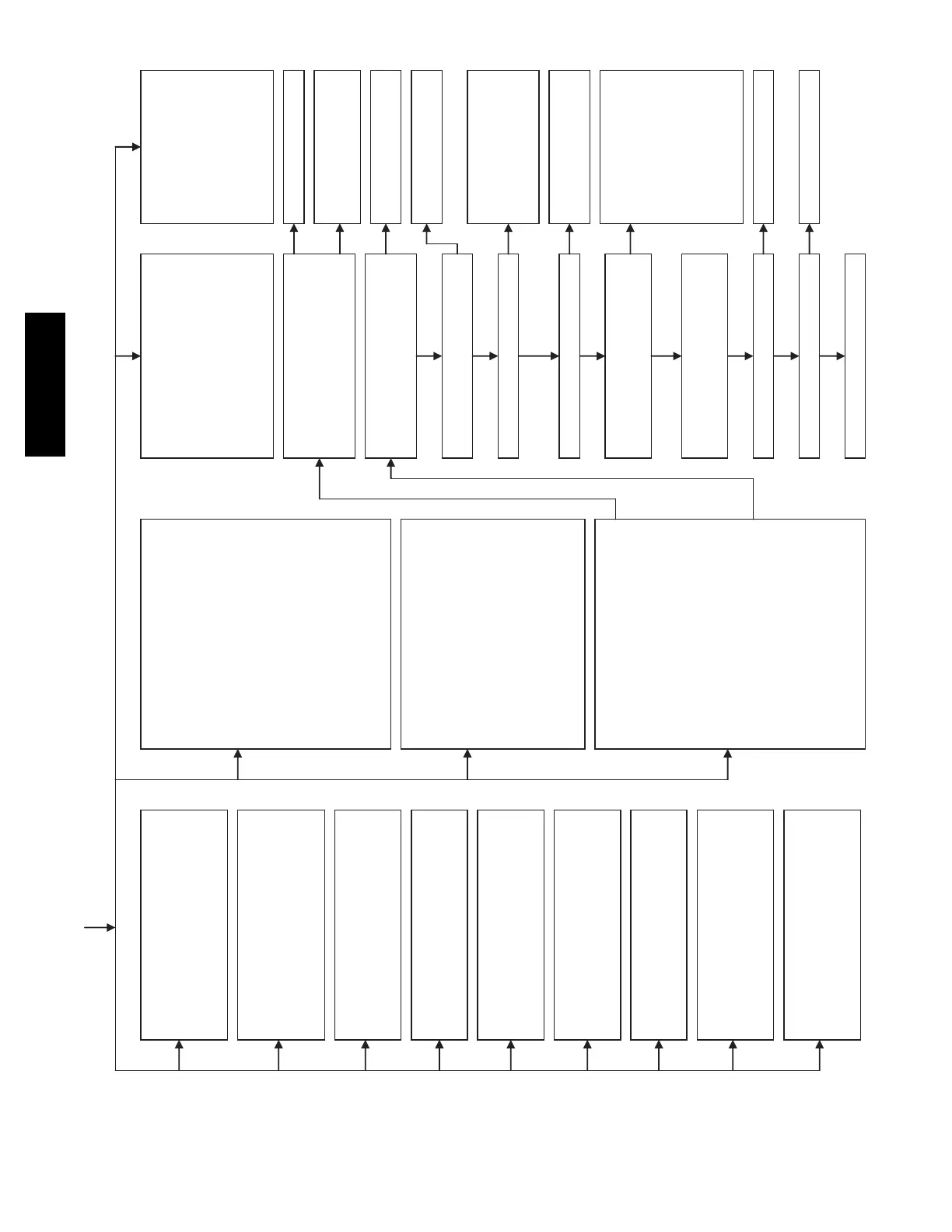
11 NO PREVIOUS CODE – Stored codes are
erased after 72 hours. Run system
through a low-heat, high-heat, or cooling
cycle to check system.
12 BLOWER ON AFTER POWER UP –
(115V OR 24V) – Normal operation.
Blower runs for the selected blower off-
delay, if unit is powered up during a call
for heat (R-W/W1 closed) or when (R-
W/W1 opens) during the blower on-delay
period.
13 LIMIT CIRCUIT LOCKOUT – Lockout
occurs if the limit or flame rollout is open
longer than 3 minutes. Control will auto-
reset after 3 hours. See code 33.
14 IGNITION LOCKOUT – System failed to
ignite gas and prove flame in 4 attempts.
Control will auto-reset after 3 hours. See
status code 34.
21 GAS HEATING LOCKOUT – Turn off
power and wait 5 minutes to retry. Check
for:
- Stuck closed gas valve relay on control.
- Miswire or short to gas valve wire.
22 ABNORMAL FLAME-PROVING SIGNAL
Flame is proved while gas valve is de-
energized. Inducer will run until fault is
cleared. Check for:
- Stuck open or leaky gas valve.
23 PRESSURE SWITCH DID NOT OPEN –
Check for:
- Obstructed pressure tube.
- Pressure switch stuck closed.
24 SECONDARY VOLTAGE FUSE IS OPEN
Check for:
- Short circuit in secondary voltage (24V)
wiring including thermostat leads.
Disconnect thermostat leads to isolate
short circuit.
32 LOW-HEAT PRESSURE SWITCH DID
NOT CLOSE OR REOPENED – If opens
during blower on-delay period, blower will
come on for the selected blower off-delay.
If open longer than 5 minutes inducer
shuts off for 15 minutes before retry.
Check for:
- Proper vent sizing.
- Air leak between vestibule and blower
compartment.
- Low inlet gas pressure (if LGPS used).
- Disconnected or obstructed pressure
tubing.
- Defective or miswired pressure switches
- Excessive wind.
- Plugged condensate drain
- Water in vent piping, possible sagging
pipe
- Restricted vent.
- Defective Inducer motor.
- Low inducer voltage (115 VAC)
33 LIMIT CIRCUIT FAULT – Indicates the
limit or flame rollout is open. Blower will
run for 4 minutes or until open switch
remakes whichever is longer. If open
longer than 3 minutes, code changes to
lockout #13. If open less than 3 min.
status code #33 continues to flash until
blower shuts off. Flame rollout requires
manual reset. Check for:
- Loose blower wheel.
- Defective switch or connections.
- Dirty filter or restricted duct system.
- Improper gas input adjustment
- Improper limit switch or no limit gasket.
34 IGNITION PROVING FAILURE – If flame
is not sensed during the trial for ignition
period, the control will repeat the ignition
sequence 3 more times before lockout #14
occurs. If flame signal is lost during the
blower on-delay period, blower will come
on for the selected blower off-delay.
Check the following items first before
proceeding to the next step.
- Gas valve turned off.
- Manual shut-off valve.
- Green/Yellow wire MUST be connected
to furnace sheet metal.
- Flame sensor must not be grounded.
To determine whether the problem is in
the gas valve, igniter, or flame sensor the
system can be operated in the component
test mode to check the igniter. First
remove the R thermostat connection from
the control and initiate the component test
sequence. Does the igniter glow
orange/white by the end of the 15 second
warm-up period?
45 CONTROL CIRCUITRY
LOCKOUT Auto-reset
after 1 hour lockout due
to:
- Flame circuit failure.
- Gas valve relay stuck
open.
- Software check error.
Reset power to clear
lockout. Replace control
if code repeats.
Unplug igniter harness from control and
initiate another component test
sequence. Check for 115V between pin
1 and NEUTRAL-L2 on the control. Was
115V present for the 15 second period?
Check for continuity in the
harness and igniter. Replace
defective component.
Reconnect the R thermostat lead and set
thermostat to call for heat. Connect
voltmeter across gas valve connections.
Does gas valve receive 24V?
Does gas valve open and allow gas to
flow?
Do the main burners ignite?
Do the main burners stay on?
Allow blower to come on and
repeat test to check for
intermittent operation.
Check that all gas valves are
turned on. Replace valve.
Check connections. If OK,
replace control.
Repeat call for heat and check flame
sensor current during trial for ignition
period. Is the DC microamps below 0.5?
Check connections and retry.
If current is near typical value
(4.0-6.0 nominal) and burners
will not stay on, repeat check
in high-heat. If burners will
still not stay on replace
control. If burners operate in
high-heat then switch to low-
heat, check manifold
pressure. If OK, check
burner carryover and flame
sensor location.
Clean flame sensor with fine steel wool
and recheck current. Nominal current is
4.0 to 6.0 microamps.
Is current near typical value?
Will main burners ignite and stay on?
31 HIGH-HEAT PRESSURE SWITCH OR
RELAY DID NOT CLOSE OR
REOPENED - Check for:
- Control relay may be defective.
- Gas valve is miswired.
- See status code 32.
43 LOW-HEAT PRESSURE SWITCH
OPEN WHILE HIGH-HEAT
PRESSURE SWITCH IS CLOSED -
Check for:
- Low-heat pressure switch stuck
open.
- Disconnected or obstructed
pressure tube.
- Miswired pressure switches.
- Low inlet gas pressure (if LGPS
used).
Check for:
- Inadequate flame carryover
or rough ignition.
- Low inlet gas pressure.
- Proper firing rate.
A11323B
Troubleshooting Guide (Cont)
925TA


 To Next Page