EasyManua.ls Logo

BUSCH Zebra - User Manual

BUSCH Zebra
28 pages
Print Icon
To Next Page IconTo Next Page
Loading...
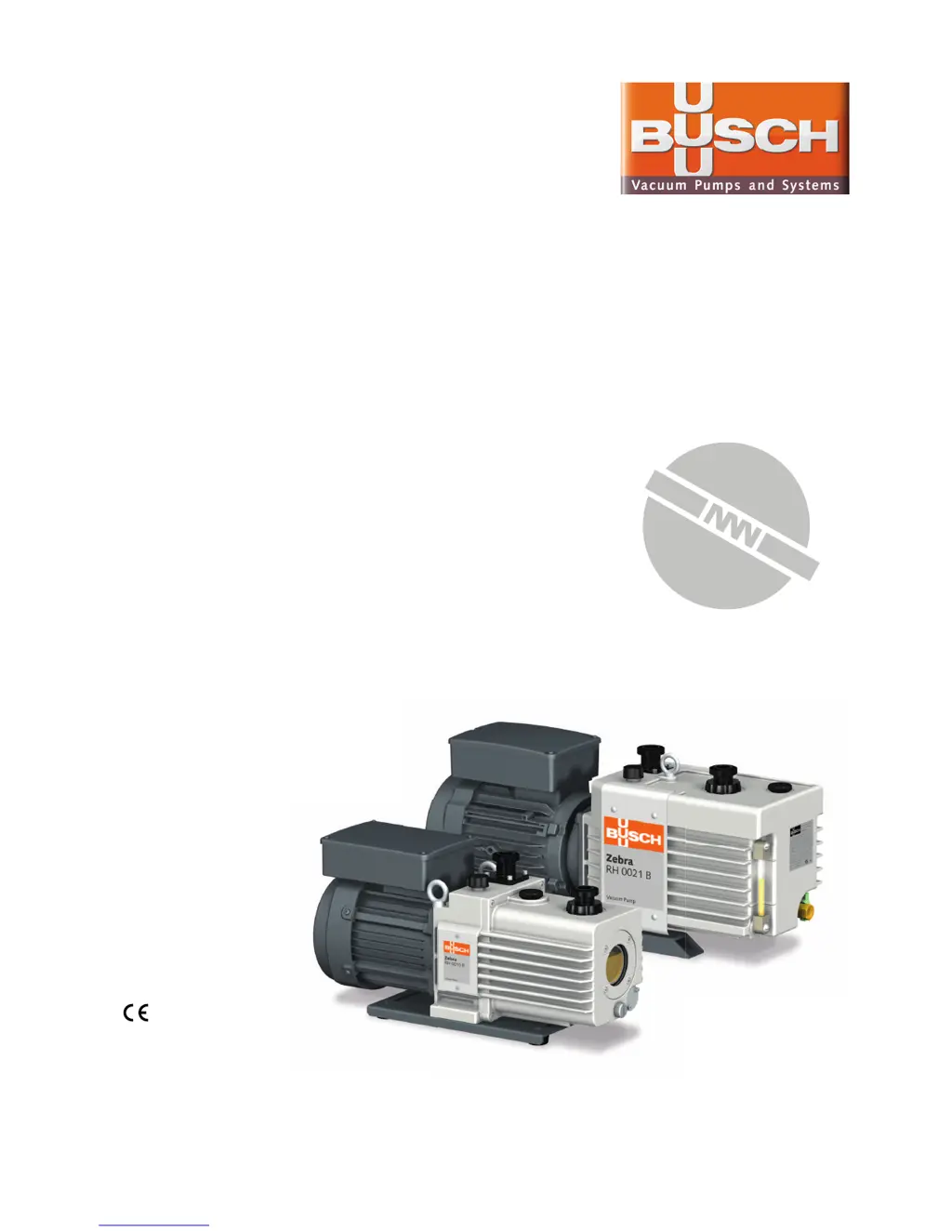
Instruction Manual
Zebra
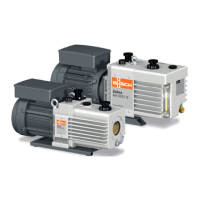
Two-Stage Rotary Vane Vacuum Pumps
RH 0003 B, RH 0010 B, RH 0015 B, RH 0021 B
0870169116/-0002_en / Original instructions / Modifications reserved 09/09/2016
Busch Produktions GmbH
Schauinslandstraße 1, 79689 Maulburg
Germany

Questions and Answers

  • D
    debrahornJul 28, 2025
    Why is my BUSCH Zebra fuming or expelling oil?
    • C
      Catherine ReyesJul 28, 2025
      If your BUSCH Water Pump is fuming or expelling oil droplets through the gas discharge, it could be due to several reasons. The oil level may be too high, so drain the oil until it reaches the specified level. If you're continuously operating at high suction pressure, consider installing an oil mist separator. The oil mist separator (if equipped) might be clogged, requiring replacement of the filter element. Also, ensure that the oil mist separator is assembled properly; if not, reassemble it correctly.
  • C
    carolinesextonAug 2, 2025
    What to do if my BUSCH Zebra Water Pump does not start?
    • P
      Pamela AustinAug 2, 2025
      If your BUSCH Water Pump doesn't start, several factors could be at play. It might be due to a low ambient temperature, so ensure the pump is operating within its permitted temperature range. Check that the motor is receiving the correct voltage by verifying the power supply. Solid foreign matter may have entered the machine; if so, remove it, or contact Busch for repair. In some cases, internal parts may be worn or damaged, requiring repair by Busch. The motor or the coupling could also be defective, necessitating replacement.
  • C
    Claire GreenAug 8, 2025
    Why is my BUSCH Zebra running too hot?
    • J
      Julie WilsonAug 8, 2025
      If your BUSCH Water Pump runs too hot, with the pump surface rising to around 100°C (212°F), several issues could be the cause. You might be operating continuously at too high a suction pressure, so try reducing it. Insufficient cooling could also be a factor; remove any dust and dirt from the machine. Ensure that the ambient temperature is within the permitted range. Check the oil level and top up if it's too low. The oil may not be circulating properly, requiring an overhaul (contact Busch). Lastly, the oil might have deteriorated, in which case you should perform a non-load operation with the vacuum valve closed and the gas ballast valve open, or replace the oil.
  • E
    Erin NewmanAug 15, 2025
    What to do if my BUSCH Zebra isn't reaching usual pressure?
    • Z
      zlynchAug 15, 2025
      If your BUSCH Water Pump is not reaching the usual pressure on the suction connection, there are several potential causes. The oil level might be too low, so top it up. The oil might not be circulating, requiring an overhaul (contact Busch). The oil could also be deteriorated; perform a non-load operation with the vacuum valve closed and gas ballast valve open, or replace the oil. Check if the inlet screen or the optional inlet filter cartridge is partially clogged and clean or replace them, respectively. Verify your measurement method and readings, checking the gauge and final pressure without any installation connected. Look for any leaks in the system and repair them. In some cases, internal parts may be worn or damaged, requiring repair by Busch.
  • D
    Daniel HannaAug 21, 2025
    Why is my BUSCH Zebra so noisy?
    • M
      Melvin LewisAug 21, 2025
      If your BUSCH Water Pump is running very noisily, several factors could be responsible. A worn coupling might be the cause, so consider replacing it. The oil level could be too low, so top it up. Alternatively, the oil might not be circulating properly, requiring an overhaul (contact Busch). Lastly, internal parts may be worn or damaged, which would require repair by Busch.

Summary

Safety

Product Description

2.1 Operating Principle

Explains the two-stage rotary vane principle and oil function.

2.2 Application

Details intended uses, environmental conditions, and material compatibility.

2.3 Standard Features

Lists standard features of the vacuum pumps.

2.3.1 Gas Ballast Valve

Describes the function of the gas ballast valve.

2.4 Optional Accessories

Lists optional accessories like inlet filters and oil mist separators.

2.4.1 Inlet Filter

Explains the purpose and type of inlet filter.

2.4.2 Oil Mist Separator

Describes the function and installation of an oil mist separator.

2.5 Motor Variants

Details the available motor types and voltage/frequency options.

Transport

Storage

Installation

5.1 Installation Conditions

Specifies required environmental and physical conditions for installation.

5.2 Connecting Lines; Pipes

Guidelines for connecting suction and discharge lines, including warnings.

5.2.1 Suction Connection

Details the suction connection size and safety precautions.

5.2.2 Discharge Connection

Provides connection sizes and safety advice for the discharge line.

5.2.3 Oil Mist Separator (Optional)

Instructions for fitting the optional oil mist separator.

5.3 Filling Oil

Step-by-step guide for filling the vacuum pump with oil.

5.4 Electrical Connection

Safety and connection procedures for the electrical supply.

5.4.1 Wiring Diagram Single-Phase Motor

Wiring diagram and instructions for single-phase motors.

5.4.2 Wiring Diagram Three-Phase Motor

Wiring diagrams and correct rotation instructions for three-phase motors.

Commissioning

6.1 Continuous Operation

Guidelines for operating the pump continuously, including pressure limits.

6.2 Conveying Condensable Vapours

Procedures for conveying condensable vapors, including gas ballast valve use.

Maintenance

7.1 Maintenance Schedule

Recommended intervals for routine maintenance tasks.

7.2 Oil Change Recommendations

Specific oil change intervals based on application purpose.

7.3 Oil Change

Detailed instructions for draining and filling the oil.

7.4 Coupling Maintenance

Procedure for checking and maintaining the coupling spider.

Overhaul

Decommissioning

9.1 Dismantling and Disposal

Steps for safely decommissioning, dismantling, and disposing of the machine.

Spare Parts

11 Accessories

Information on contacting Busch for accessory lists and references.

Troubleshooting

Technical Data

14 Oil

Details on oil types, viscosity, and part numbers.

EU Declaration of Conformity

BUSCH Zebra Specifications

General IconGeneral
BrandBUSCH
ModelZebra
CategoryWater Pump
LanguageEnglish

Related product manuals