Fiskars Boats, Inha Works Ltd 2010
7 (31)
4.2 Insurance
Boat insurance may compensate for damage that has occurred on the water, during
transportation or dry docking. Check separately the insurer's liability regarding
hoisting the boat. Insurance can also indirectly affect safety on the water, because in
the event of serious injuries it allows the essential focus to be on saving lives.
Insurance companies can provide more detailed information on various insurance
alternatives.
4.3 Training
The safe operation of boats requires training. A wealth of literature on boating is
available, and various boating associations and clubs organise navigation courses.
Courses and books provide a sound basis for your boating skills, although sureness
in handling, navigating, mooring and anchoring a boat are best acquired by means of
extensive practice.
5 Boat characteristics and operation
5.1 General
This Owner's Handbook is not a complete maintenance guide or repair manual. The
aim of the handbook is to help owners familiarise themselves with the characteristics
of their new boat as well as showing them how to use it properly.
5.2 Basic information about the boat
The basic information of the boat is as follows:
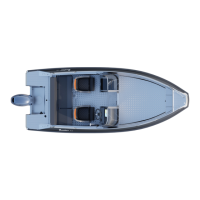
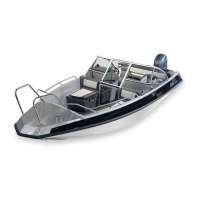
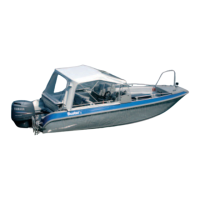
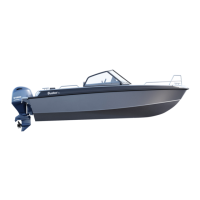
Boat model: Buster Lx
Design category: C (coastal waters)
See also paragraph 5.4 Loading.
Design category C is defined as follows:
The boat is designed to operate in conditions up to a maximum wind velocity of 6 on
the Beaufort scale (approx. 14 m/sec) and a corresponding swell (a significant wave
height of up to 2 m with occasional waves of 4 m maximum). Such conditions can
occur in open water on lakes, estuaries, and in coastal waters in moderate weather.
N.B.! The significant wave height is the average height value of
the upper third of the swell which roughly corresponds to an
experienced observer’s estimate of the wave height. Some
individual waves could be twice this height.


 To Next Page