Fiskars Boats, Inha Works Ltd 2010
20 (31)
close to the transom so as to minimise the twisting motion. Securely batten down the
equipment in the dinghy in case it capsizes. In a swell in open water, cover the
dinghy to avoid it filling with splash water.
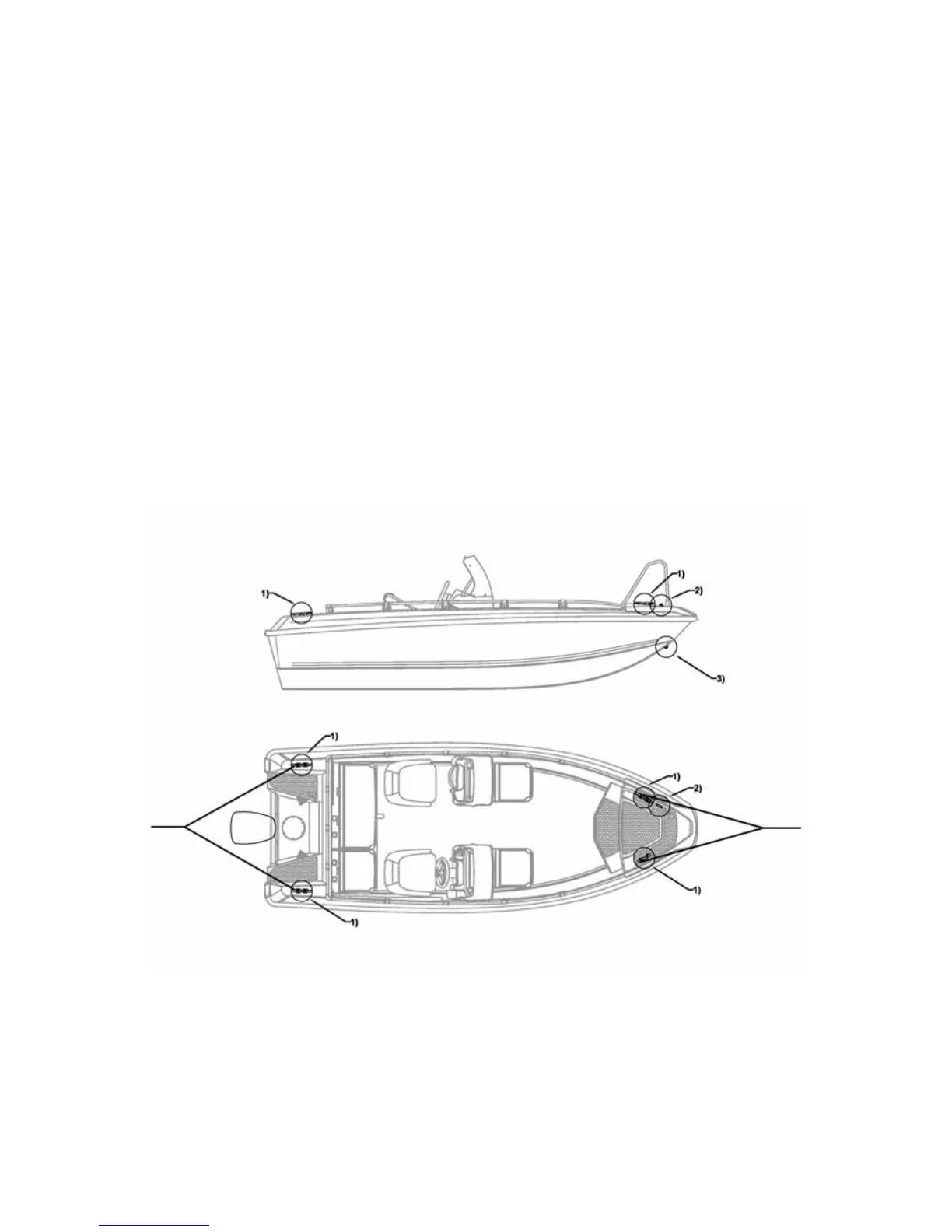
If you tow another boat, or your boat needs to be towed, attach the tow rope as per
the attaching points shown in Diagram 8.
WARNING! A tow rope is subject to high tension. If it snaps, the recoiling
speed at the breaking point can be highly dangerous. Always
use a sufficiently thick rope and stay well clear of it.
N.B.! If you tow another boat, or your boat needs to be towed,
always keep your speed sufficiently low. If the boat being
towed has a displacement hull, never exceed the boat's
designated hull speed.
N.B.! The towing rope must be attached so that it can be released
under tension.
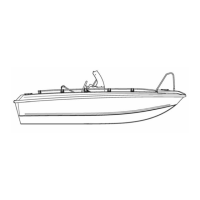
Diagram 8. Attaching points for towing, anchoring and mooring to a jetty: 1) Cleats
(attaching point strength is 13.3 kN for bow mooring and 9.2 kN for aft
mooring), 2) locking chain attaching point (hardened steel eyelet), 3)
trailer eyelet.


 To Next Page