Ultima 9
1
/
4
and Ultima 11 Manual 36
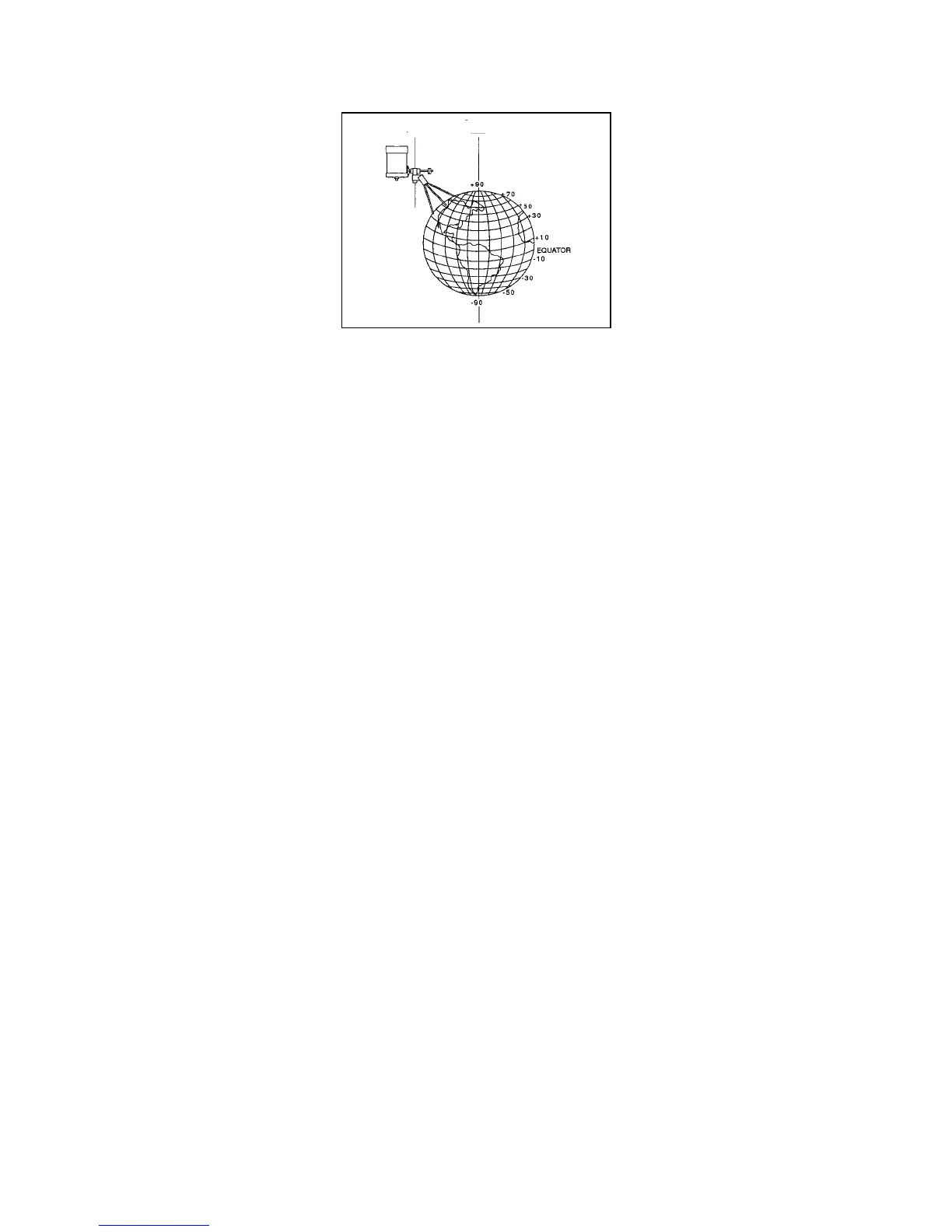
Figure 4-7
One might think that pointing at the pole produces a parallax effect, thus skewing the
telescope’s axis of rotation with that of the Earth’s. Polaris, however, is over 50 light
years away, thus making any parallax effect negligible. (One light year is 6.4 trillion
miles. To find the distance to Polaris in miles, multiply 6.4 trillion by 50!)
Declination Drift
This method of polar alignment allows you to get the most accurate alignment on the celestial pole and is
required if you want to do long exposure deep-sky astrophotography through the telescope. The declination
drift method requires that you monitor the drift of selected stars. The drift of each star tells you how far
away the polar axis is pointing from the true celestial pole and in what direction. Although declination drift
is simple and straight-forward, it requires a great deal of time and patience to complete when first
attempted. The declination drift method should be done after any one of the previously mentioned methods
has been completed.
To perform the declination drift method you need to choose two bright stars. One should be near the
eastern horizon and one due south near the meridian. Both stars should be near the celestial equator (i.e., 0°
declination). You will monitor the drift of each star one at a time and in declination only. While
monitoring a star on the meridian, any misalignment in the east-west direction is revealed. While
monitoring a star near the east/west horizon, any misalignment in the north-south direction is revealed. As
for hardware, you will need an illuminated reticle ocular to help you recognize any drift. For very close
alignment, a Barlow lens is also recommended since it increases the magnification and reveals any drift
faster.
When looking due south, insert the diagonal so the eyepiece points straight up. Insert the cross hair ocular
and align the cross hairs so that one is parallel to the declination axis and the other is parallel to the right
ascension axis. Move your telescope manually in R.A. and DEC to check parallelism.
First, choose your star near where the celestial equator and the meridian meet. The star should be
approximately within 1/2 an hour of the meridian and within five degrees of the celestial equator. Center
the star in the field of your telescope and monitor the drift in declination.
• If the star drifts south, the polar axis is too far east.
• If the star drifts north, the polar axis is too far west.




 To Next Page